

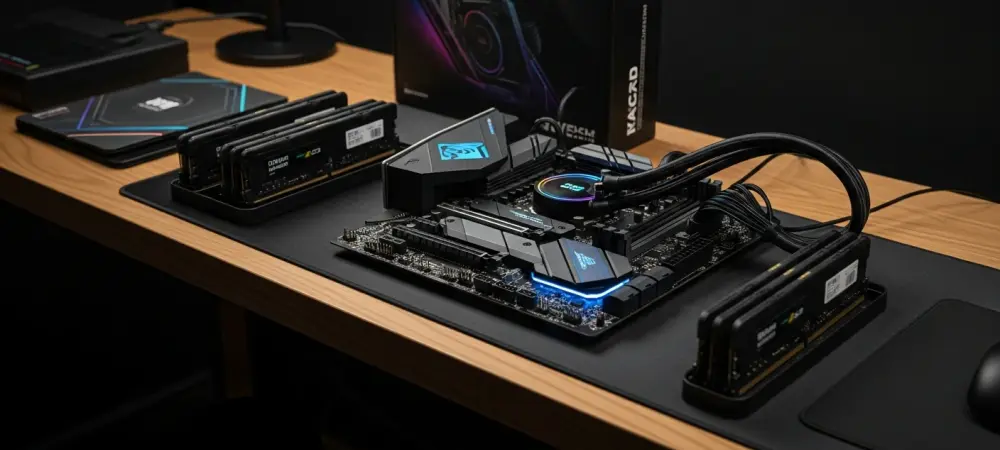
The landscape of personal computer assembly has undergone a radical transformation where high-performance components frequently demand prices that would have previously funded an entire high-end workstation. As builders navigate the complexities of modern architectures including the transition to advanced DDR5 memory standards and the thermal requirements of high-wattage processors, the traditional method of piecemeal purchasing has become increasingly prohibitive for the average enthusiast. This shift is not merely a reflection of inflation but stems from the rising costs of raw semiconductor materials and the sophisticated engineering required for the latest PCIe 5.0 motherboard standards. Consequently, consumers are looking for alternative procurement strategies to bypass the premium margins often found on individual retail units. The motherboard bundle has emerged as a primary vehicle for value, offering a rare opportunity to secure a CPU, memory, and motherboard as a single cohesive unit at a significant discount. This approach bridges the gap between high performance and realistic budgets.
Economic Shifts: Navigating the High Cost of Modern Hardware
Synergy and Savings: The Logic of Pre-Configured Hardware
Retailers have recognized that the friction of component selection often prevents casual builders from committing to a new upgrade or full system build. By curating specific combinations of processors and motherboards, major vendors can effectively clear out stock of mid-cycle components while providing a clear price advantage to the consumer. This strategy often involves manufacturer-direct rebates that are only available when parts are sold in tandem, allowing for price drops that would violate minimum advertised price policies if applied to individual items. For instance, a high-end X870 motherboard paired with a Ryzen 9 series processor might see a total price reduction of nearly twenty percent when purchased as a set. This collaborative approach between hardware manufacturers and retail outlets ensures that production lines remain efficient while inventory levels stay manageable. Furthermore, these bundles often include memory kits that have been pre-validated for the specific motherboard BIOS.
Technical Harmonization: Avoiding the Compatibility Trap
Beyond the financial incentives, motherboard bundles address the increasing technical complexity associated with matching high-speed DDR5 memory modules with specific processor architectures. In the current hardware environment, ensuring that a memory kit can actually achieve its rated overclocked speeds often requires meticulously checking the Qualified Vendor List of a specific motherboard, a task that many builders find tedious or confusing. Bundles remove this barrier by providing kits that have been pre-screened for stability on the included board, effectively guaranteeing out-of-the-box performance without the need for manual voltage adjustments. Furthermore, this integrated approach simplifies the firmware update process, as many retailers ensure that the motherboard ships with a BIOS version that supports the bundled CPU. This synergy reduces the failure rate during the initial assembly phase and provides a more streamlined experience for those who may be transitioning from older, less complex hardware standards.
Strategic Purchasing: Maximizing Value in the Current Market
Platform Longevity: Investing in Sustainable Architectures
Platform longevity plays a crucial role in determining the true value of any motherboard bundle, especially as socket lifecycles continue to evolve between major manufacturers. Choosing a bundle built around a socket with a guaranteed roadmap ensures that the initial investment remains relevant for several years without necessitating a total system overhaul. For example, platforms that support multiple generations of processors allow builders to start with a mid-range CPU included in a bundle and eventually upgrade to a flagship chip later in the decade. This long-term thinking is essential in 2026, where the rapid pace of technological advancement can make hardware feel obsolete within a short window. Beyond the socket itself, the inclusion of modern connectivity standards like USB4 and WiFi 7 in these packages provides a level of future-proofing that justifies the upfront cost. Strategic shoppers have learned to prioritize bundles that offer high-quality power delivery modules for better system stability.
Market Analysis: Identifying the Optimal Entry Point
Navigating the volatile hardware market successfully required a disciplined approach to identifying the best opportunities for component acquisition. It became evident that the most successful builders were those who monitored inventory cycles and prioritized bundles during major seasonal promotional windows throughout the year. These individuals focused on packages that balanced current performance needs with the potential for future expansion, rather than simply chasing the lowest possible price point. It was observed that bundles offering a mix of a high-performance CPU with a mid-range motherboard provided the most reliable price-to-performance ratio for gaming enthusiasts. For those who looked ahead toward 2027 and 2028, the most effective strategy involved securing platforms that embraced open standards and modularity. Prospective builders evaluated local retail availability and compared it against online offers to find the best value. By analyzing these trends, it was concluded that motherboard bundles represented a fundamental shift.