

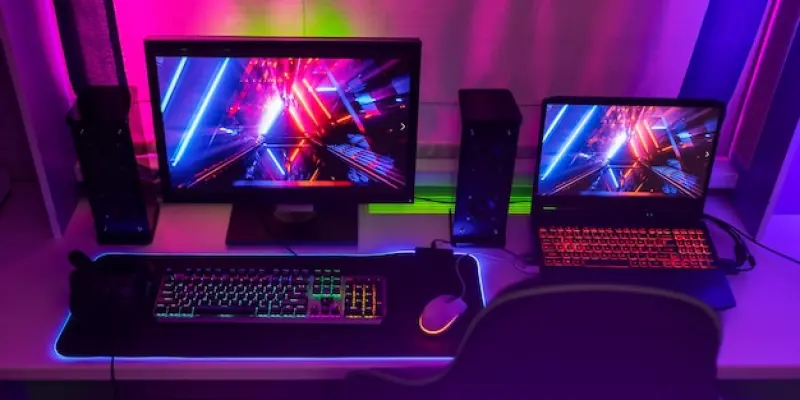
With the rapid evolution of technology, the gaming industry continues to be one of the most dynamic fields. Companies like Maingear are vying for the attention of gamers by launching systems that leverage the latest advancements. The new MG-1 pre-built gaming systems are making waves, chiefly due to their integration of NVIDIA’s cutting-edge RTX 5060 and RTX 5060 Ti GPUs. These graphics cards, part of the Blackwell family, promise enhanced gaming performance and features that cater to today’s high-resolution demands. The MG-1 Gold configuration, which incorporates the RTX 5060 Ti GPU, is already available for enthusiasts, while the RTX 5060-based setups are expected to hit the market shortly. Their arrival is anticipated to coincide with the general retail release of the GPU, drawing significant interest from those who follow gaming innovations closely.
A Game-Changing Integration
The strategic incorporation of NVIDIA’s RTX 5060 series GPUs in Maingear’s latest systems significantly enhances the gaming experience. Notably, these graphics cards are renowned for their advanced features such as Multi-Frame Generation and the Transformer Model Deep Learning Super Sampling (DLSS). These improvements are pivotal for gamers aiming to enjoy titles at high resolutions like 1080p and 1440p without compromising on quality or performance. The MG-1 Gold system, featuring a Ryzen 5 9600X CPU, 16 GB of DDR5 memory, and a spacious 1 TB of storage, is available at a starting price of $1699. This pricing structure reflects the advantages and convenience of opting for a pre-built system. A one-year warranty adds a layer of reliability and peace of mind. As gaming graphics standards rise, Maingear positions itself as a company ready to offer solutions that respond to these heightened demands.
Balancing Performance and Convenience
The increasing trend among OEMs like Maingear to leverage the launch of new GPUs shows a keen insight into gaming market priorities. Buying individual components might save money, but assembly demands significant time and effort—tasks not everyone is eager to tackle. For those who prioritize ease and dependability, pre-built systems like the MG-1 offer an enticing option. They eliminate assembly hassles and come ready for competitive gaming, delivering peak performance right from the start. This appeals to gamers who value their time and desire a balance between stellar performance and operational simplicity. Maingear’s MG-1 stands as evidence of a shift toward more efficient gaming solutions, mirroring industry trends that favor a blend of top-tier performance with practicality. Thus, the introduction of Maingear’s MG-1 marks a new era for gaming enthusiasts, adeptly fusing advanced tech, like NVIDIA’s RTX 5060 series GPUs, with convenience, suggesting future advancements will continue this luxury-performance mix.