

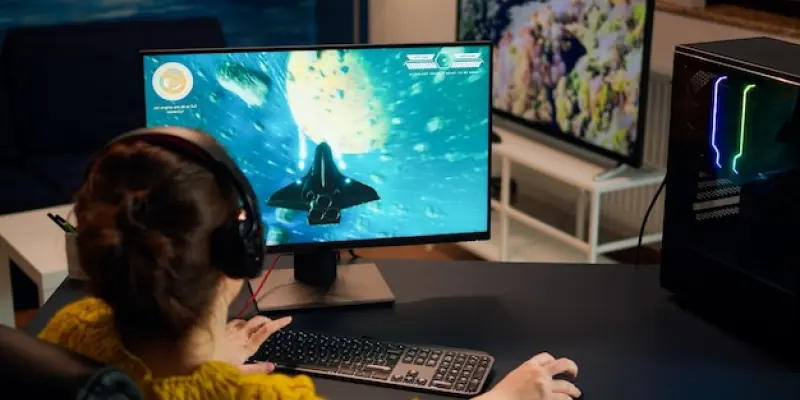
In the era of high-definition gaming, the choices for 4K monitors have transformed significantly, making them more accessible and varied than ever before. Once, gamers hesitated at the thought of adopting this technology due to price and performance concerns, but recent advancements and market shifts have largely tackled these obstacles. Modern monitors offer enhanced features like better resolution, superior display technologies, and competitive pricing, all tailored toward creating immersive and engaging gaming experiences. This evolution has opened doors for both competitive gamers and casual enthusiasts alike, providing a plethora of options to suit different demands and setups.
Technological Landscape and Pricing
Advancements in Display Technology
The evolution of display technology over recent years has fundamentally reshaped the world of gaming monitors, pushing boundaries in terms of visual quality and performance. A significant trend includes the surge of OLED technology into prominence, bridging the gap between high-end visuals and affordability. Unlike traditional LCDs, OLED panels provide remarkable advantages such as ultra-fast transition times, which lead to elite motion clarity and responsiveness. They also offer local pixel adjustments, achieving true black levels and per-pixel dimming—a feature pivotal for HDR performance. This evolution marks a revolution in how games are visually interpreted, providing vibrant colors and depth previously unforeseen in gaming visuals.
OLED panels have diversified into subcategories over the years, with particular models such as QD-OLED and WOLED gaining traction. Each type holds distinct benefits, including differences in core screen coating technologies and dual-mode functionality. This dual-mode feature enables gamers to switch between various settings and resolutions depending on their gaming environment or style, which is crucially beneficial in an era where customization and adaptability are key. The introduction of dual-mode OLED monitors exemplifies the commitment to providing versatile solutions that cater to both immersive experiences and competitive demands in gaming.
Shift from Luxury to Accessibility
Once deemed a luxury due to their high price tags, 4K monitors have become increasingly affordable, democratizing the technology for a wider audience. The pricing landscape has seen dramatic shifts, driven by improved upscaling technologies and mass production of OLED panels. Where consumers might have previously spent upwards of $500 for a quality display at 1440p resolution, they can now upgrade to 4K without breaking the bank. This transition underscores a trend away from exclusivity, offering quality high-definition experiences accessible to varying budget brackets.
This surge in affordability also includes high-quality SDR displays, featuring advanced IPS panels. While not offering the HDR capabilities seen in OLEDs, these monitors still provide impressive performance for mid-range prices. This makes them a considerable option for gamers looking for a balance between cost and performance. Recognized brands have capitalized on this opportunity, developing models that integrate a wide variety of features to cater to different needs without sacrificing quality. The availability of these models transcends the distinction between luxury and accessibility, welcoming a mainstream adoption of superior gaming experiences.
Features and Benefits of 4K Gaming Monitors
OLED vs. LCD: Comparative Analysis
The ongoing debate between OLED and LCD panels has led to keen insights into the performance capabilities of these technologies, highlighting their strengths and weaknesses from a gaming perspective. OLED monitors have captured significant attention due to their substantial lead in delivering high-performance visuals for both HDR and SDR content. Their superior response times, alongside exceptional ability to produce deep blacks, grant them an edge that remains unmatched by traditional LCD options. As a result, gamers seeking immersive experiences often lean towards OLED solutions, knowing that these panels can faithfully present the vibrant landscapes and intricate details found in modern games.
Nonetheless, OLEDs aren’t without their considerations. Concerns regarding potential burn-in, particularly with static images, have been a point of discussion. However, advancements in both software management and user-aware practices have made strides in minimizing these risks. Consequently, OLED’s dominant position is being constantly reinforced by innovation in safeguarding panel longevity without compromising quality. Meanwhile, LCD options like the Samsung Odyssey Neo G7 continue to offer competitive HDR alternatives, appealing to those who wish to avoid OLED-related concerns while still enjoying stellar performance.
Screen Size Considerations
Beyond technology choices, screen size plays a fundamental role in aligning monitor selection with user needs and environment. A prevalent preference among gamers is for larger screens, typically around the 32-inch mark, known for their ability to deliver immersive experiences. This inclination stems from the enhanced field of view offered, engrossing players deeper into elaborate virtual worlds. However, not all gamers have the luxury of accommodating larger screens, making 27-inch models a popular alternative for more compact setups. These smaller monitors retain high performance while being suitable for diverse room conditions and space constraints.
Brands such as Asus, MSI, Dell, Gigabyte, and Samsung have been quick to respond to varying consumer demands, providing a range of options that come bundled with additional features. These include glossy versus matte finishes, Dolby Vision support, and the aforementioned dual-mode configurations. The monitor’s characteristics and size choices ultimately give rise to specialization, and gamers are encouraged to select based on personal preference combined with practical setup considerations. The emphasis on screen size highlights the industry’s commitment to delivering tailored experiences that focus on user adaptation and satisfaction.
Market Trends and Consumer Insights
Pricing and Tariff Influences
As 4K gaming monitors have become mainstream, the volatile aspect of pricing and tariffs remains an integral component influencing purchasing decisions. Tariffs, alongside stock availability, have the potential to impact costs, introducing fluctuations that can affect accessibility. As manufacturers navigate these challenges, consumers often find themselves at the mercy of shifting market conditions. Nonetheless, competitive pricing strategies employed by leading brands have mitigated some volatility, demonstrating a consistent effort to harmonize the cost-performance balance.
Despite these influences, the core trend remains one of democratization, where premium monitor characteristics are increasingly obtainable for varied budgets. Buyers are advised to stay informed about potential market shifts and to align their purchasing strategies accordingly. Recognizing this dynamic helps empower buyers in understanding the fluctuations while making informed decisions. Thus, the spotlight on pricing and tariffs emphasizes not only the challenges but the resilience of manufacturers in making top-tier technology available for all.
Manufacturer Differentiation and Consumer Choices
Another significant finding is the role manufacturers play in differentiating their products beyond the basic panel technology. The customization and tuning process often leads to distinctive performance attributes and enhanced features, offering gamers a wealth of options. Additions such as variable refresh rate technologies, multiple user modes, and external connectivity options create a tailored experience. These nuances reveal that brand loyalty and product choice are not solely influenced by base technology but by how a manufacturer attunes its features to maximize gaming joy and user satisfaction.
Consumers often face a myriad of choices in this diverse landscape, where differentiating points among products can be fascinatingly nuanced. Careful evaluation of the full feature suite, brand reputation, and specific use cases aligned with preferences is vital. The focus on manufacturer roles and consumer insights underscores personalization as the golden rule, where technology adaptation harmonizes with gamer expressiveness to result in ideal outcomes.
Navigating the Future of Gaming Monitors
In recent years, the realm of high-definition gaming has witnessed a remarkable transformation in the availability and variety of 4K monitors. Previously, this cutting-edge technology was often out of reach for many gamers, due to high costs and potential performance limitations. However, thanks to technological advancements and shifting market trends, these barriers have significantly diminished. Today’s 4K monitors not only boast higher resolutions and superior display capabilities but also come with competitive price tags, making them a worthwhile investment for a broader audience.
This progress has led to the democratization of 4K monitors, catering to both hardcore competitive gamers and casual players. With enhanced features that prioritize immersive and dynamic gaming experiences, these monitors come equipped with better refresh rates, improved color accuracy, and faster response times. Now, there’s a wide array of choices available, tailored to meet diverse preferences and gaming setups. Whether you’re a seasoned professional or just looking to enjoy your favorite titles in stunning visual fidelity, the options are more abundant and accessible than ever before. Ultimately, the evolution of 4K monitors signifies a significant leap forward in gaming technology, bridging the gap between aspiration and reality for gaming enthusiasts. The current landscape offers something for everyone, ensuring that no gamer is left wanting when it comes to experiencing their games in the finest detail possible.