

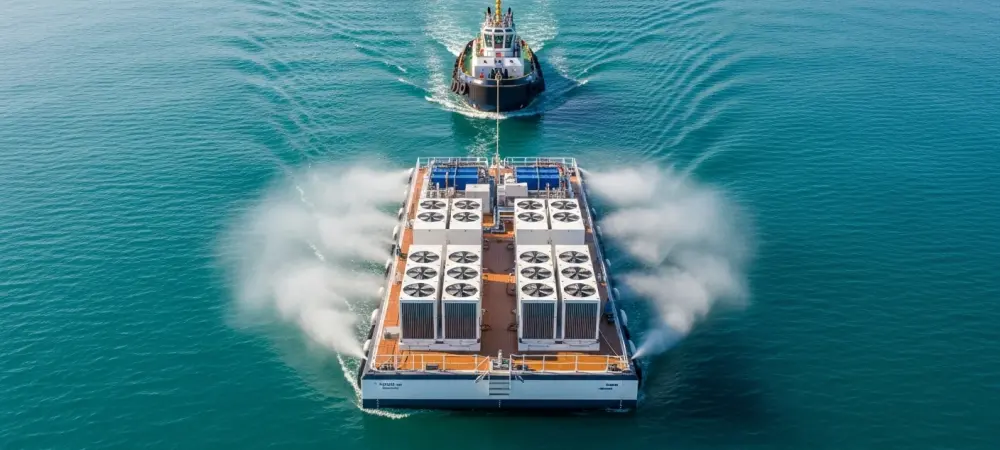
The relentless expansion of artificial intelligence has moved beyond the digital realm to trigger a physical crisis characterized by a desperate search for space, power, and water. As generative AI models grow in complexity, the traditional brick-and-mortar data center is rapidly reaching its breaking point. This article explores the emergence of maritime data infrastructure—specifically the strategic partnership between Nautilus Data Technologies and Hitachi—as a transformative solution to these constraints. By moving high-density compute clusters from land to sea, the industry aims to bypass terrestrial bottlenecks and establish a new standard for environmental responsibility. This shift represents a move toward “blue” infrastructure, where the ocean serves as both a foundation and a cooling mechanism for the digital age.
The Terrestrial Infrastructure Crisis and the Need for Change
The journey toward maritime computing is born of necessity rather than mere novelty. For decades, the industry relied on sprawling land-based facilities, but the recent AI boom has exposed the fundamental fragility of this model. Data centers are no longer just buildings; they are massive energy sinks that threaten to overwhelm local power grids. Currently, global data center electricity consumption is on a trajectory to reach nearly 1,000 terawatt-hours by 2028. This surge is largely attributed to the immense computational hunger of Large Language Models (LLMs) utilized by tech giants like Google and OpenAI, which require constant, high-density power delivery.
Beyond energy, the industry is grappling with a thermodynamic challenge of unprecedented proportions. Traditional facilities consume billions of gallons of freshwater to maintain operational temperatures through evaporation, leading to friction in drought-prone regions and significant permitting delays. In some markets, project timelines have been pushed to five years or more due to community pushback and environmental assessments. Historically, the industry has seen minor shifts in cooling technology, but nothing as radical as the move to the water. Understanding this background is essential to realizing why maritime deployments are no longer an experiment, but a vital pressure valve for a sector nearing its physical limits.
The Mechanics of Maritime Cooling and Efficiency
Thermal Management and Resource Conservation
The primary advantage of a floating data center lies in its superior thermal management. By utilizing the surrounding body of water—whether a river, a bay, or the ocean—as a natural heat sink, these facilities can eliminate the need for massive, water-consuming cooling towers and traditional air conditioning units. Nautilus Data Technologies’ proprietary designs leverage a closed-loop heat exchange system that can reduce the energy required for cooling by up to 60%. Because cooling typically accounts for nearly 40% of a facility’s energy budget, this efficiency fundamentally improves the operating economics of AI workloads. Furthermore, because the system does not evaporate water, it can reduce freshwater consumption by 100%, making it an ideal choice for water-stressed regions.
Accelerated Deployment and Industrial Scalability
Transitioning from civil engineering on land to industrial manufacturing in a shipyard offers a significant advantage in speed. Traditional data centers are often bogged down by local zoning laws and complex utility interconnection queues that stall growth. In contrast, a floating data center can be constructed as a modular unit within a shipyard—much like a modern vessel or an offshore platform—and then towed to its final destination. This approach can potentially slash the time to market to as little as 18 to 24 months. By treating the data center as a manufactured product rather than a construction project, companies can deploy high-tier compute capacity with unprecedented agility.
Navigating Operational Realities and Maintenance
While the concept of underwater data centers proved that servers could thrive in a submerged environment, they faced a critical flaw regarding serviceability and hardware replacement. Nautilus and Hitachi have opted for a more pragmatic surface-level approach using barges. This design maintains the cooling benefits of the water while ensuring that technicians have physical access to the hardware for routine maintenance and upgrades. This vessel-style architecture addresses the misconceptions that maritime computing must be inaccessible or overly complex. By staying on the surface, these facilities can dock near existing subsea cable landing stations, ensuring high-speed connectivity and low latency for global applications.
Emerging Trends and the Strategic Shift in Infrastructure
The partnership between Nautilus and Hitachi signals a move from niche innovation to a global industrial strategy. Hitachi brings the industrial muscle needed to scale this technology, including expertise in power grid infrastructure and marine-grade materials. We are seeing a trend where data centers are no longer viewed as isolated buildings but as mobile, energy-integrated nodes. In markets like Japan and Singapore, where land is scarce and seismic activity is a concern, floating facilities offer a flexible, plug-and-play alternative. Expert predictions suggest that as regulatory pressure on land-based water usage intensifies, the maritime model will evolve from a supplemental option to a primary choice for hyperscale providers.
The convergence of AI demand and maritime engineering is also fostering a new class of “data havens” at sea. These facilities are increasingly being integrated with renewable energy sources, such as offshore wind farms or tidal energy systems, to create self-sustaining compute clusters. As the digital economy becomes more decentralized, the ability to position massive amounts of processing power near coastal population centers without consuming valuable urban real estate provides a competitive edge. This shift is driving a revaluation of maritime assets, where decommissioned ports and industrial waterfronts are being reimagined as high-tech hubs for the next generation of the internet.
Implementation Strategies and Best Practices
For businesses and investors looking to enter the maritime data space, the focus must remain on sustainability and long-term durability. Navigating the legalities of data vessels requires a deep understanding of maritime law and insurance, which differ significantly from terrestrial real estate. Best practices include site selection near existing fiber backbones to minimize latency and the use of specialized, corrosion-resistant materials to withstand harsh saltwater environments. Companies should view floating data centers as part of a hybrid infrastructure strategy, using them to alleviate pressure in high-density regions or land-constrained urban centers.
Furthermore, operational resilience depends on creating a robust supply chain for marine-grade server components. Maintaining these facilities requires a workforce trained in both IT management and maritime safety, highlighting a need for cross-disciplinary expertise. Organizations that prioritize modularity will be better positioned to upgrade their hardware as AI requirements evolve, ensuring that the physical vessel remains viable across multiple technology cycles. Strategic planning should also involve early engagement with local port authorities to secure long-term mooring rights and power access, which are becoming as valuable as traditional land deeds.
The Future of Global Digital Infrastructure
The integration of maritime engineering and data infrastructure served as a calculated response to the physical constraints of the AI era. By slashing cooling energy and eliminating freshwater waste, floating data centers offered a more sustainable path forward for a world increasingly dependent on high-performance computing. While challenges regarding maritime security and regulatory frameworks remained, the strategic backing of industrial giants suggested a clear path to commercial reality. The ocean, which long served as the highway for global data via subsea cables, became the home for the servers themselves, ensuring that the development of AI was as resilient as it was innovative.
Industry stakeholders recognized that the transition to the sea required more than just technical prowess; it demanded a fundamental shift in how the world perceived digital utility. Governments began to integrate maritime data zones into their national infrastructure plans, acknowledging the importance of “blue” energy efficiency. The success of early deployments proved that the environmental footprint of AI could be managed without sacrificing performance. Ultimately, the industry moved toward a model where the boundaries between terrestrial and maritime infrastructure blurred, creating a global network that utilized the planet’s natural resources more intelligently and responsibly.