

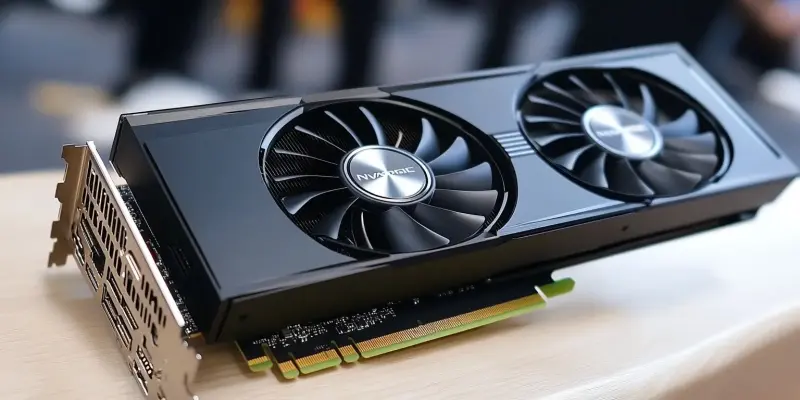
The recent sale of Nvidia RTX 5090 graphics cards with missing Raster Operations Pipeline (ROP) units marked as “B-Stock” by the German retailer, Alternate, has raised significant concerns among tech enthusiasts. This incident highlights a major issue within the supply chain of Nvidia’s RTX 50 series GPUs. The Nvidia RTX 5090, 5090D, 5080, and 5070 Ti models have been reported to ship with fewer than the advertised 176 ROPs, with some units featuring only 168 ROPs. This defect can result in a potential ten percent drop in gaming performance, sparking debate over consumer rights and product value.
Nvidia’s Delicate Balance
Nvidia has admitted that a small fraction of these GPUs indeed come with fewer ROPs than initially promised. However, the company asserts that this defect does not affect AI or productivity workloads, narrowing the concern primarily to gaming performance. Interestingly, users have reported similar issues in various laptop GPUs, though Nvidia has consistently denied these claims. The acknowledgment from Nvidia places a spotlight on the delicate balance between meeting heightened demand and maintaining product integrity.
Despite this, Nvidia has limited its direct response to addressing these defects, instead encouraging customers to contact their vendors. Retailers like Alternate, capitalizing on high demand and limited supply, have sold these defective GPUs at inflated prices, as evidenced by the sale of a Zotac RTX 5090 with 168 ROPs for €2,899—€670 above the Manufacturer’s Suggested Retail Price (MSRP). These “B-Stock” products include a warning on their product page yet still manage to sell out quickly, indicating a robust market demand that overshadows concerns over potential defects.
Consumer Impact and Reaction
The sale of defective GPUs at premiums has sparked widespread discussion among consumers who feel they are being shortchanged. High-end graphics cards are a major investment for many, and discovering that the product does not meet advertised specifications can be particularly disheartening. The inability to exchange these “B-Stock” GPUs for non-defective units, coupled with the reliance on EU regulations for refunds, adds to consumer frustration. This has led buyers to become more vigilant, meticulously verifying product specifications before purchase to ensure they receive what they paid for.
However, the challenge remains in educating the broader consumer base about these potential pitfalls. Given the complex technical nature of graphics cards, not all consumers are equipped to fully understand the implications of missing ROP units. Retailers like Alternate may provide warnings, but these often go unnoticed by buyers enticed by the mere availability of high-performance GPUs in a market plagued by shortages. Nvidia’s stance on the matter, advising customers to deal directly with vendors, further complicates the issue, as it leaves consumers without a straightforward solution from the manufacturer.
The Bigger Picture
The recent sale of Nvidia RTX 5090 graphics cards labeled “B-Stock” by German retailer Alternate has alarmed tech enthusiasts. These cards, marked as having missing Raster Operations Pipeline (ROP) units, spotlight a significant issue in the supply chain for Nvidia’s RTX 50 series GPUs. Both the Nvidia RTX 5090, 5090D, 5080, and 5070 Ti models have been shipped with fewer ROPs than advertised, specifically 168 instead of the expected 176. This reduction can lead to about a ten percent decline in gaming performance, causing widespread concern about consumer rights and product value. Customers feel cheated, as they paid for a higher-performing card but received one that doesn’t meet the specifications. This discrepancy has led to calls for greater transparency from Nvidia and its retailers. Enthusiasts argue that such defects undermine buyer trust and highlight the need for better quality control measures. As debates continue, many hope for a resolution that protects consumers and ensures such issues do not recur in future GPU releases.