

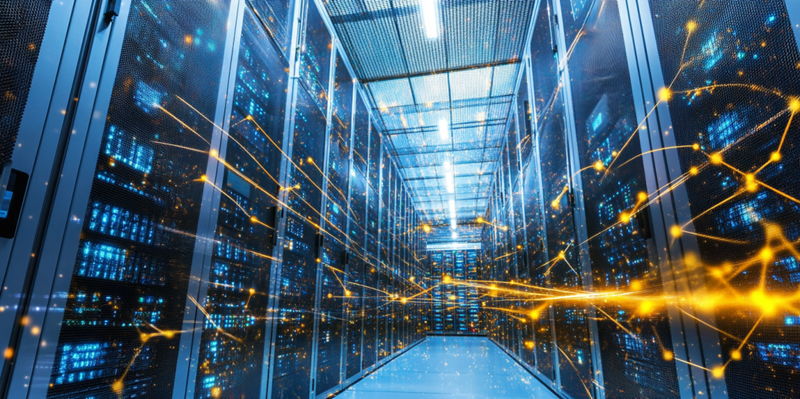
Investors are pouring unprecedented amounts of capital into data centers, driven largely by the explosive growth of Artificial Intelligence (AI) technologies. AI applications require massive computational power, making high-performance data centers an essential component in their ecosystem. As a result, investment in these facilities has surged, reflecting their critical role in supporting AI’s rapid advancements. This article delves into the escalating demand for data centers, the financial opportunities they present, and how strategic partnerships are enhancing their capacities to meet the increasing requirements of AI technologies.
The AI industry’s swift expansion has dramatically heightened the need for robust data center infrastructures capable of handling intricate computational tasks. From machine learning algorithms to complex neural networks, AI processes require immense amounts of data storage and processing power, making data centers indispensable. Investors, recognizing the long-term growth potential and stable returns of these facilities, are heavily investing in expanding and upgrading data center capabilities. This burgeoning interest is evident from the rapid pace at which new data centers are being developed and existing ones are being upgraded to accommodate the sophisticated demands of AI applications.
Partnerships between tech companies and real estate developers have become critical in scaling up data center infrastructure. These collaborations aim not only to increase capacity but also to improve efficiency and sustainability. For instance, tech giants are teaming up with real estate developers to construct data centers that are both energy-efficient and capable of supporting the enormous computational needs of AI. These partnerships are proving mutually beneficial: tech companies gain the infrastructure needed to support their AI initiatives, while real estate developers secure lucrative, long-term investments with stable returns. This synergistic relationship is helping meet the growing demands of AI technologies while ensuring sustainable growth in the data center sector.
The global reach of this investment trend cannot be overstated. While traditional financial hubs continue to see substantial investments in data centers, emerging markets are also actively seeking to establish robust AI infrastructure. Countries around the world are vying to become leaders in AI technology, and a critical step in achieving this is building and maintaining state-of-the-art data centers. Whether through local investments or foreign partnerships, these regions are prioritizing the development of data centers to attract and support AI initiatives. The global push for AI infrastructure underscores the universal importance of data centers in the modern technological landscape.
Investor Confidence and Future Projections
Investors are pouring unprecedented amounts of capital into data centers, driven largely by the explosive growth of Artificial Intelligence (AI) technologies. AI applications require massive computational power, making high-performance data centers an essential component in their ecosystem. As a result, investment in these facilities has surged, reflecting their critical role in supporting AI’s rapid advancements. This article delves into the escalating demand for data centers, the financial opportunities they present, and how strategic partnerships are enhancing their capacities to meet the increasing requirements of AI technologies.
The AI industry’s swift expansion has dramatically heightened the need for robust data center infrastructures capable of handling intricate computational tasks. From machine learning algorithms to complex neural networks, AI processes require immense amounts of data storage and processing power, making data centers indispensable. Investors, recognizing the long-term growth potential and stable returns of these facilities, are heavily investing in expanding and upgrading data center capabilities. This burgeoning interest is evident from the rapid pace at which new data centers are being developed and existing ones are being upgraded to accommodate the sophisticated demands of AI applications.
Partnerships between tech companies and real estate developers have become critical in scaling up data center infrastructure. These collaborations aim not only to increase capacity but also to improve efficiency and sustainability. For instance, tech giants are teaming up with real estate developers to construct data centers that are both energy-efficient and capable of supporting the enormous computational needs of AI. These partnerships are proving mutually beneficial: tech companies gain the infrastructure needed to support their AI initiatives, while real estate developers secure lucrative, long-term investments with stable returns. This synergistic relationship is helping meet the growing demands of AI technologies while ensuring sustainable growth in the data center sector.
The global reach of this investment trend cannot be overstated. While traditional financial hubs continue to see substantial investments in data centers, emerging markets are also actively seeking to establish robust AI infrastructure. Countries around the world are vying to become leaders in AI technology, and a critical step in achieving this is building and maintaining state-of-the-art data centers. Whether through local investments or foreign partnerships, these regions are prioritizing the development of data centers to attract and support AI initiatives. The global push for AI infrastructure underscores the universal importance of data centers in the modern technological landscape.