

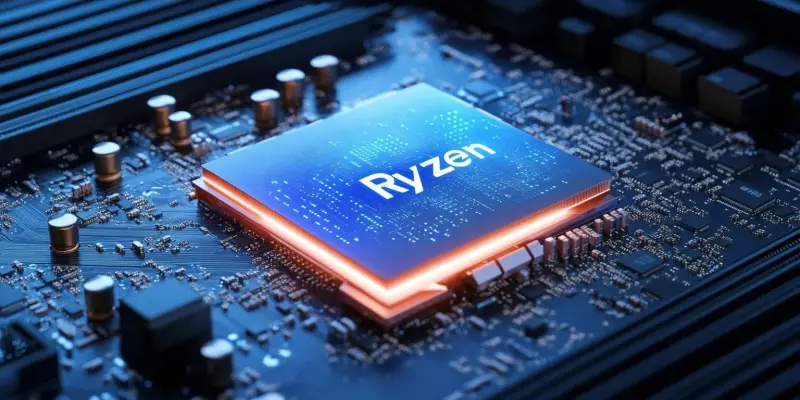
As the tech world eagerly anticipates the next wave of innovation, AMD’s upcoming release of the Ryzen 9 9950X3D and Ryzen 9 9900X3D processors is generating significant buzz. Initially showcased at CES this January, these advanced processors promise to revolutionize both gaming and productivity landscapes, thanks largely to the utilization of AMD’s 3D V-Cache technology. The announcement has sparked discussions about the future of computing performance for both enthusiasts and professionals alike.
Launch Confirmation and Anticipated Pricing
Upcoming Release Dates
Set to make their debut on March 12th, the Ryzen 9 9950X3D and Ryzen 9 9900X3D processors have made waves in the tech community since their initial reveal at CES. AMD strategically chose the Consumer Electronics Show to introduce these products, emphasizing their commitment to pioneering advancements in processor technology. Known for delivering reliable and efficient CPUs, AMD’s launch confirmation for these processors has been eagerly awaited, considering the excitement surrounding their potential performance enhancements.
The launch date aligns closely with leaks and rumors that had previously hinted at mid-March availability. Enthusiasts and professionals eagerly marking their calendars for the release are keen to see how these processors shape up against competitors in real-world applications. As the date draws nearer, the spotlight remains firmly on AMD’s technological prowess and the anticipated performance benefits that these new CPUs promise to deliver.
Estimated Pricing
While official prices have yet to be announced, leaks suggest the Ryzen 9 9950X3D will be approximately $772, and the Ryzen 9 9900X3D around $634. Previous reports indicated U.S. prices could hover around $699 and $599 respectively, aligning them closely with the pricing of their predecessor models, the Ryzen 9 7900X3D and 7950X3D. This pricing strategy is significant as it reveals AMD’s approach to positioning their new high-end processors competitively within the market.
Understanding this pricing context is crucial for professionals considering upgrades and for gamers seeking top-tier performance. These leaks, although unconfirmed, suggest a pricing structure that aims to balance value with advanced technological features. It showcases AMD’s strategic consistency in offering powerful hardware at accessible price points, making these processors attractive options for a wide range of users looking to elevate their computing experience without exorbitant costs.
Technical Specifications and Innovations
Core Configurations and Cache Enhancements
The Ryzen 9 9900X3D will feature a robust 12-core configuration accompanied by an additional 64 MB L3 cache on one CCD, significantly amplifying its processing capabilities. These enhancements are engineered to boost the performance levels across various applications, from high-demand gaming to professional software use. The sophisticated cache setup is designed to minimize latency and maximize data retrieval speed, translating directly into faster and more efficient processing power.
Meanwhile, the Ryzen 9 9950X3D boasts an impressive 16-core configuration with a similar 64 MB L3 cache on one CCD, mirroring the structure of its sibling model. This processor promises identical clock speeds to its non-X3D counterparts, ensuring top-notch performance across diverse computing tasks. The substantial core count and strategic cache setup highlight AMD’s focus on delivering processors that cater to both demanding gamers and productivity-driven professionals.
Compatibility and Graphics Integration
Both of these next-generation CPUs will support all AM5 chipsets, offering seamless compatibility with current and future motherboard options. This feature ensures that users investing in these processors can expect a straightforward upgrade path, leveraging the latest platform advancements. The support for up to DDR5-5600 memory translates into faster data transfer rates and improved overall system performance, making these processors well-suited for high-end computing needs.
Furthermore, AMD has incorporated RDNA 2 Compute Units (CUs) for integrated graphics within both processors, ensuring solid performance even without a dedicated GPU. This integration is particularly beneficial for users who may not require the highest-end graphics cards but still demand reliable graphical performance for everyday tasks and light gaming. It underscores AMD’s holistic approach to processor design, balancing raw power with versatile, integrated solutions that cater to a broad user base.
Implications for the Future of Computing
Enhanced Performance Metrics
The advancements presented by the Ryzen 9 9950X3D and 9900X3D aren’t merely incremental steps but rather signify substantial leaps in performance metrics. By focusing on advanced cache configurations and robust core structures, AMD aims to set new benchmarks in both gaming and professional computing fields. The seamless handling of multi-threaded applications and demanding workloads speaks to these CPUs’ versatility and capability to tackle modern computing challenges head-on.
It’s the emphasis on efficiency and speed that truly distinguishes these processors, embedding them as potential game-changers in the market. Enthusiasts and professionals alike stand to benefit from reduced latency, enhanced speed, and overall system responsiveness, translating into less downtime and more productive hours. These innovations craft a semblance of future computing, where workload management and gaming are executed with unprecedented fluidity and precision.
Market Position and Competition
As the tech community eagerly awaits the next wave of innovation, the upcoming release of AMD’s Ryzen 9 9950X3D and Ryzen 9 9900X3D processors is generating considerable excitement. These advanced processors were initially revealed at CES this past January and are expected to make significant strides in both gaming and productivity applications. One of the standout features of these processors is AMD’s revolutionary 3D V-Cache technology, which is designed to enhance performance significantly. This announcement has ignited discussions about the future of computing performance, appealing not only to PC enthusiasts but also to professionals who rely on high-performance machines for their work. The integration of 3D V-Cache technology is anticipated to set a new benchmark in processor capabilities, making these processors a hot topic in the tech world. As the release date approaches, both gamers and productivity users are keen to see just how much of an impact these processors will have on their respective fields.