

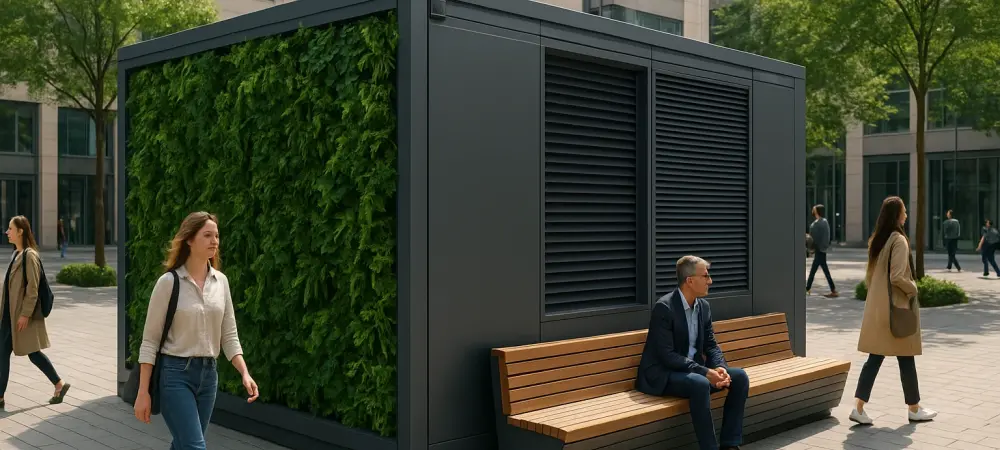
The sleek, windowless monoliths that once stood in isolated industrial parks are undergoing a radical metamorphosis as designers seek to turn these resource-hungry facilities into vibrant community anchors. For years, the digital economy relied on a “black box” model of infrastructure—vast, utilitarian warehouses that operated in total isolation from their surroundings. This extractive approach, which prioritizes raw processing power over environmental or social integration, has reached a breaking point. As artificial intelligence and cloud services demand ever-increasing physical footprints, the architectural community is leading a shift toward a more symbiotic relationship. Instead of viewing servers as isolated machines, visionaries now treat them as vital organs of the modern city, transforming data centers from resource-intensive liabilities into “thermal goldmines” that provide tangible benefits to local residents. This evolution marks the end of the data center as a silent neighbor and the beginning of its role as a civic asset.
From Industrial Eyesores to Civic Assets
The transition away from the windowless warehouse represents a fundamental change in how society values digital infrastructure. Historically, data centers were designed with a singular focus on security and cooling efficiency, leading to the proliferation of bland, concrete boxes that offered nothing to the public eye. However, the sheer scale of modern computing requirements has forced a redesign that prioritizes transparency and aesthetic value. By moving beyond the utilitarian constraints of the past, architects are proving that data infrastructure can contribute to the urban fabric rather than detracting from it. These new designs often feature living walls, public plazas, and educational centers that demystify the technology powering the modern world.
Moreover, the conceptual shift involves recognizing that the massive amount of energy consumed by these facilities does not have to be a one-way street. The extractive model of the previous decade is being replaced by a circular philosophy where the byproduct of computation—heat—is harvested as a primary resource. When servers are integrated into the thermal network of a city, they become functional components of the utility grid. This reimagining allows for a deeper level of urban integration, where the presence of a data facility is not just tolerated but welcomed for its ability to lower energy costs and provide essential services to the surrounding neighborhood.
The Growing Friction Between Big Tech and Local Neighborhoods
The urgency of this architectural pivot is driven by a stark reality: public opposition to traditional data centers has skyrocketed. As of 2026, data indicates a 70% public opposition rate toward local AI data center developments. This resistance stems from a well-founded concern over the environmental and social costs associated with hyperscale facilities. Communities are increasingly wary of the massive freshwater consumption required for evaporative cooling and the immense strain these buildings place on local power grids. In many regions, the rapid expansion of data infrastructure has threatened the stability of utility prices, leading to a “not in my backyard” sentiment that halts progress.
Furthermore, the “job-to-space” paradox remains a significant point of contention for local governments. While a data center may span hundreds of thousands of square feet, it often employs only a handful of technicians once construction is complete, offering very little economic stimulation compared to the agricultural or residential land it displaces. Beyond the lack of employment, neighbors frequently cite noise pollution from industrial cooling fans and light trespass as major detriments to their quality of life. This “Good Neighbor” crisis has made it clear that if tech giants wish to continue expanding their physical reach, they must move away from the isolated campus model and find ways to mitigate the loss of agricultural land through smarter, more compact design.
Innovative Models: Reciprocal Infrastructure and Circular Systems
One of the most effective ways to address community concerns is through the use of subterranean and invisible architecture. By leveraging the natural insulation of the earth, designers can eliminate the need for traditional water-based cooling systems entirely. The Pionen model in Sweden, which repurposed a Cold War-era nuclear bunker, demonstrates how secure, hidden storage can thrive beneath the surface without disrupting the landscape. These underground voids allow for vertical integration, preserving the surface land for housing, parks, or traditional industry while keeping the data infrastructure secure and thermally regulated by the surrounding stone.
Beyond the earth’s crust, agricultural symbiosis is proving that data centers can actually enhance local food security. The immense heat generated by servers is no longer being vented into the atmosphere; instead, it is being funneled into large-scale greenhouse farming. Innovative projects in Sweden and Korea have shown that just 1 MW of power—a fraction of the output of a standard facility—can provide enough thermal energy to sustain massive food production throughout the year. This creates a powerful economic incentive for local farmers, who can significantly reduce their electricity and heating costs by tapping into the data center’s shared thermal energy, turning a computational hub into a local breadbasket.
In urban environments, this reciprocity takes the form of district heating and residential integration. Computation is becoming a literal utility, providing the heat necessary to keep thousands of homes warm in harsh climates. In Helsinki, a large-scale project has successfully integrated server exhaust into the municipal heating network, providing warmth for over 20,000 apartments. This allows the city to move toward carbon neutrality by replacing traditional fossil fuel boilers with recycled energy. Similarly, the NEST project in Switzerland is exploring modular buildings that “digest” their own computational heat locally, creating a self-sustaining ecosystem where the energy used for digital work simultaneously powers the physical comfort of the occupants.
Expert Perspectives: The Architecture of Computation
Architect Blaine Brownell has frequently argued that public resistance to data centers is primarily a failure of design rather than a technical limitation. From his perspective, treating servers as hidden equipment to be tucked away in a corner of the city is what creates the disconnect with the public. If the infrastructure is designed as an integrated component of the building’s life cycle, it becomes a visible and valuable part of the community. Research across Europe supports this view, showing that the scalable impact of heat recovery is a crucial factor in meeting municipal energy goals. When residents see their heating bills drop because of a nearby server farm, the narrative of the “extractive” neighbor quickly disappears.
The shift in architectural mindset also focuses on transparency as a tool for public acceptance. Success stories from the current 2026 to 2028 development cycle highlight how multi-use designs—where a data center might share a roof with a public library or a community garden—have flipped public sentiment. By removing the literal and figurative walls around these facilities, architects are creating a new typology of civic space. The goal is to move from a state of grudging tolerance to one of active partnership, where the physical presence of the internet is celebrated as a feat of engineering that provides more than just data.
Strategies: Integrating Data Centers into Urban Planning
The move toward an “Edge” model is a critical strategy for future-proofing urban planning. Rather than building massive, sprawling hyperscale campuses on the outskirts of cities, planners are favoring smaller, modular facilities located closer to the end-user. These modular units are easier to blend into existing residential and commercial zones, reducing the need for massive land clearing and high-voltage transmission lines. This distributed approach not only improves digital performance by reducing latency but also makes heat-sharing agreements between tech companies and local municipalities far more logistically feasible.
Planners also adopted rigorous design guidelines to address the persistent issues of noise and aesthetic blending. They mandated the use of zero-water cooling standards to protect local watersheds and required facilities to implement advanced sound-dampening materials in their facades. By establishing these frameworks early in the development process, cities successfully turned computational infrastructure into a predictable and beneficial part of the environment. The industry recognized that the path forward required a radical departure from the status quo, ensuring that the next generation of data centers functioned as a cornerstone of sustainable, integrated urban growth. These efforts transformed a source of public friction into a model of circular economy and social utility.