

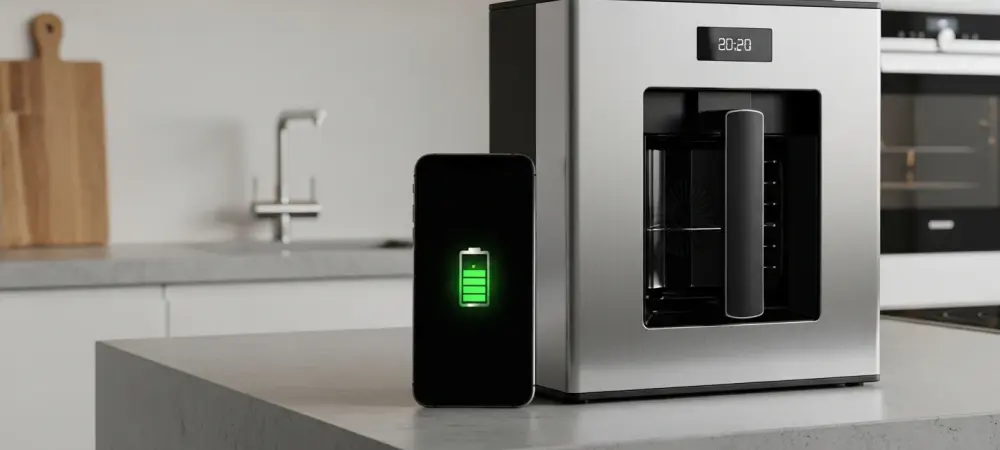
With the smartphone market more saturated than ever, it’s rare to see a new player emerge, let alone one from the world of home appliances. We’re sitting down with Dominic Jainy, a veteran IT professional and tech analyst, to unpack the surprising entry of Dreame Technology into the mobile space. We’ll explore how a company known for vacuum cleaners plans to compete, what its first phone, the Dreame E1, tells us about its strategy, and whether this blend of high-end aesthetics and practical features can find a footing in such a cutthroat industry.
Dreame, a household appliance brand, is entering the smartphone market with the E1, which boasts a ‘Class A’ energy rating and over 54 hours of usage. How might their background in energy efficiency influence their marketing strategy against established phone manufacturers?
This is a classic case of playing to your strengths, and it’s a very shrewd move. Dreame isn’t going to out-innovate Samsung on display technology or Apple on processing power overnight. Instead, they’re leveraging their core brand identity, which is built on reliability and efficiency. When you buy a home appliance, you expect it to last and to not run up your energy bill. By highlighting that ‘Class A’ energy rating and the incredible 54-plus hours of usage, they’re framing the E1 not just as a phone, but as a dependable tool. Their marketing won’t be about flashy performance benchmarks; it will be about alleviating the biggest pain point for modern users: battery anxiety. It’s a message of practicality and long-term value, which could resonate deeply with consumers tired of phones that die by mid-afternoon.
The Dreame E1 combines a high-resolution 108MP main camera and a 50MP selfie camera with modest 2MP secondary sensors. What does this specific hardware configuration tell us about the target consumer and the potential cost-engineering choices Dreame is making?
This camera setup is a masterclass in mid-range market psychology. The big numbers—108 megapixels and 50 megapixels—are what grab your attention on a spec sheet. They create the perception of a high-end, flagship-level camera experience. However, the inclusion of those two 2-megapixel sensors for macro and depth is a dead giveaway of cost-engineering. They add very little functional value and are mostly there to allow the marketing team to say “triple camera setup.” The target consumer is someone who wants to take great-looking photos for social media with the main and selfie cameras but isn’t necessarily a photography enthusiast who needs a powerful telephoto or ultrawide lens. Dreame is betting that for their target audience, the perceived value of those huge megapixel counts will far outweigh the practical limitations of the secondary lenses.
The phone’s design reportedly mimics the Galaxy S25 Ultra but includes legacy features like a headphone jack and microSD slot. Can you walk us through how this blend of premium aesthetics and practical features might help the Dreame E1 carve out its niche?
It’s a “have your cake and eat it too” strategy, and it’s brilliant for a newcomer. By adopting the design language of a top-tier flagship like the Galaxy S25 Ultra, the E1 immediately looks and feels more expensive and desirable than it probably is. This solves the first problem: getting noticed. But then they pivot to address the frustrations of a very vocal segment of the market by including the 3.5mm headphone jack and a microSD card slot. Major brands have abandoned these features in the name of slimness or to push users toward more expensive wireless earbuds and cloud storage. By reintroducing them, Dreame is sending a clear message: we listen to what users want. This creates a powerful niche for people who crave a modern aesthetic but refuse to give up practical, user-friendly features.
With a ‘B’ rating for repairability and a battery rated for 800 cycles, the E1 seems to focus on longevity. How significant are these metrics to today’s buyers, and what engineering steps might Dreame have taken to achieve these specific durability claims?
While the average consumer might not check repairability scores first, these metrics are becoming increasingly important. There’s a growing awareness around e-waste and the right-to-repair movement. A ‘B’ rating suggests a device that isn’t impossible for third-party shops to fix, which is a huge departure from the glued-shut designs of many flagships. The 800-cycle battery rating is even more significant; it directly promises that the phone will maintain over 80 percent of its health for well over two years of daily charging. To achieve this, Dreame likely used higher-quality battery cells and implemented smart charging software to reduce degradation. These features position the E1 as a smart, long-term investment rather than a disposable gadget, aligning perfectly with the durable, built-to-last ethos of a home appliance brand.
What is your forecast for appliance brands like Dreame entering the highly competitive smartphone market?
The path is incredibly challenging, and history is littered with brands that have tried and failed. However, Dreame has a fighting chance if it plays its cards right. Success won’t come from trying to be the next Apple or Samsung. It will come from doubling down on its unique identity: the ultra-reliable, long-lasting, practical smartphone. They need to lean into their ‘Class A’ energy efficiency, the 800-cycle battery, and the user-friendly features like the headphone jack. If they can offer this package at a competitive price point and leverage their existing brand trust in other product categories, they could capture a loyal niche of pragmatic consumers. It’s an uphill battle, but by focusing on real-world problems instead of spec wars, they just might carve out a sustainable place for themselves.