

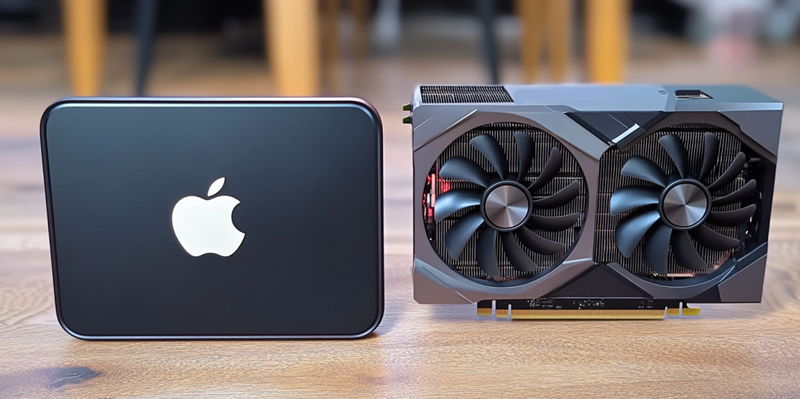
Recent rumors surrounding Apple’s highly anticipated M4 Ultra chip suggest that it may surpass Nvidia’s flagship RTX 4090 GPU in terms of graphical performance. New benchmark data shared by Yadim Yuryev from Max Tech on YouTube indicates that the M4 Ultra will potentially score 330,000 on the Geekbench 6 test, substantially higher than the RTX 4090’s score of 317,379. This estimation is derived from the impressive scaling of GPU performance observed with the M4 Max, which has achieved a score of 192,812.
Benchmark Implications
Performance Metrics and Comparisons
If these benchmark projections hold true, Apple could significantly enhance its position in the gaming market, which has traditionally been dominated by high-performance gaming PCs and laptops. The integration of graphically intensive games, such as Cyberpunk 2077, on the Mac platform reinforces Apple’s confidence in the capabilities of its M4 chip family, particularly the M4 Ultra. However, it is crucial to approach these preliminary scores with caution as they are extrapolations based on M4 Max results and could be subject to change following official releases and further testing.
It’s worth noting that the gaming industry has placed a considerable emphasis on GPU performance, making this an area of intense scrutiny. Nvidia’s RTX series has been the gold standard for gaming graphics, acclaimed for its brute computational power and efficiency. Should Apple manage to exceed the RTX 4090’s capabilities, it would mark a revolutionary shift in the tech landscape, reshaping perceptions around Mac computers’ potential for gaming. However, actual performance in real-world scenarios, including cooling systems, power efficiency, and software compatibility, will ultimately determine the true worth of the M4 Ultra.
Potential Impact on Mac Gaming
The implications of the M4 Ultra outperforming the RTX 4090 extend beyond mere benchmark scores. Such a breakthrough could trigger a renaissance for Mac gaming, with Apple closing the performance gap between Macs and leading gaming hardware. Historically, the limited availability of popular games on macOS has been a significant hurdle, preventing Apple’s comprehensive penetration into the gaming industry. By introducing top-tier performance chips capable of running demanding games smoothly, Apple is strategically positioning itself to attract more gamers.
Yet, even if the hardware proves to be exceptional, the software ecosystem needs to catch up. Bringing titles like Cyberpunk 2077 to Mac is a commendable start, signaling developers’ growing interest and confidence in the platform. If Apple can maintain this momentum and continue to cultivate a diverse and rich gaming library, it bolsters the consumer appeal of Macs as viable gaming machines. Moreover, collaborations with major game developers to optimize their games for the M4 architecture could further solidify macOS’s stance in the competitive gaming market.
Challenges and Future Prospects
Addressing Software Ecosystem Gaps
Regardless of the promising specifications of the M4 Ultra, Apple faces the daunting challenge of overcoming macOS’s current limitations within the gaming sector. A comprehensive gaming ecosystem not only relies on top-notch hardware but also requires robust software support and game availability. Currently, many mainstream games and gaming platforms have yet to integrate fully with macOS, hindering a seamless gaming experience for users. This represents a significant obstacle Apple must address to genuinely challenge PC gaming supremacy.
Developers need to be incentivized to port their games to macOS or, better yet, develop natively for Apple’s hardware. This involves ensuring ample support and resources for game development on the Mac, such as developer kits, financial incentives, and technical assistance. Apple has made strides in this regard, but a sustained and enhanced effort is essential for long-term success. Furthermore, the introduction of user-friendly tools and frameworks that simplify the transition from PC to Mac gaming could also help in bridging this gap.
Strategic Steps for Continued Growth
Recent speculation about Apple’s eagerly awaited M4 Ultra chip hints it may outclass Nvidia’s top-tier RTX 4090 GPU in graphical performance. According to new benchmark data shared by Yadim Yuryev from Max Tech on YouTube, the M4 Ultra is predicted to score around 330,000 on the Geekbench 6 test. This is a significant leap from the RTX 4090’s impressive score of 317,379. This expectation is based on the stellar GPU performance scaling seen with the M4 Max, which has already hit a score of 192,812.
This potential surpassing of Nvidia’s flagship GPU by Apple’s newest chip signals a remarkable advancement in computing and graphics technology. If these benchmarks hold true, the M4 Ultra will not only elevate Apple’s position in the tech world but could also set new standards in performance metrics. The possibility of Apple producing a chip that leads the industry in graphical power is an exciting prospect for tech enthusiasts and professionals alike. This suggests that Apple’s innovations continue to push the boundaries of what is possible in terms of hardware performance.