

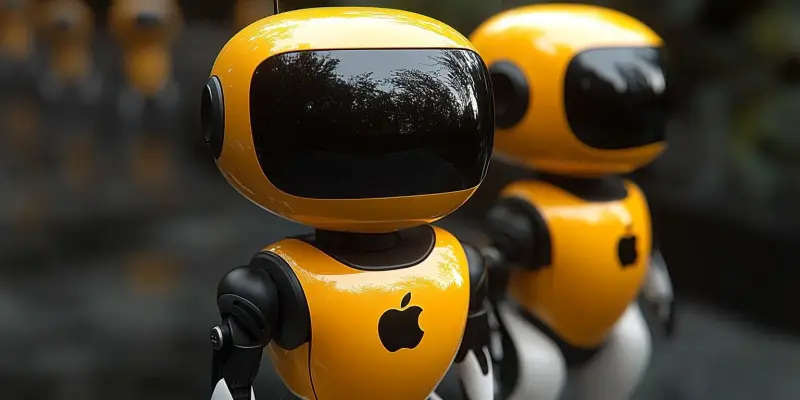
Apple, renowned for revolutionizing personal computing and mobile devices, is now venturing into robotics, particularly focusing on humanoid robots. This effort is not just expanding Apple’s product range but aims to integrate AI and robotics into daily life, particularly within smart homes. Currently in the proof-of-concept (POC) phase, Apple is testing both humanoid and non-humanoid robots, prioritizing seamless human-robot interaction over physical design, in line with its user experience tradition.
Timeline and Challenges
Cautious Timeline for Mass Production
The timeline for mass production is cautiously set for 2028, allowing Apple ample time to refine the technology, address AI, battery life, and sensor accuracy challenges, and evaluate market readiness. This careful approach mirrors Apple’s history of preferring late, perfected releases over early, flawed ones. Humanoid robotics presents significant challenges, including complex engineering, cost, and energy management. Consumer-market robots must be affordable, but current development and production costs hint at a premium price, possibly exceeding Apple’s high-end products like the Vision Pro.
Developing a humanoid robot that seamlessly fits into daily life involves overcoming significant technical challenges. Battery life is a crucial concern, as robots need to operate for extended periods without frequent charging. Additionally, sensor accuracy is paramount for robots to reliably interpret and respond to various human activities. Addressing these issues is essential for creating a useful and reliable product, which Apple is meticulously working towards.
Engineering and Cost Obstacles
The significant engineering complexity of humanoid robots poses a formidable obstacle for Apple’s venture. The intricate mechanics and software required to create robots that mimic human movements and interactions are not only challenging to develop but also expensive to produce.
Moreover, the energy management of these robots must be finely tuned to avoid exorbitant running costs or excessive resource consumption. Developing robots that can perform a variety of tasks without draining their batteries quickly is crucial.
Potential Applications and Market Impact
Integration with Smart Home Ecosystems
Apple envisions robots as smart home extensions, possibly performing tasks such as adjusting home settings, sorting mail, or reminding users of appointments. This approach could catalyze household robotics adoption, pushing competitors like Tesla’s Optimus project and various startups to innovate or collaborate.
Integrating robots with existing Apple ecosystems like HomeKit could offer users an unprecedented level of convenience and automation. These robots might interact seamlessly with other Apple devices, responding to commands via Siri, executing tasks based on voice or gesture input, and even learning user preferences to predict actions.
Industry Influence and Competitive Pressure
Apple’s entry into the robotics market is likely to create ripple effects across the tech industry. By showcasing its robotics research and early concepts, Apple is signaling to the market and competitors that it is committed to leading in this burgeoning field.
This burgeoning competition could foster a surge of innovation, with companies striving to offer unique features and capabilities to stand out in the market. Collaborations and partnerships may also emerge as players seek to leverage each other’s strengths to keep pace with Apple’s ambitions.
Strategic Transparency and Future Prospects
Transparent Research and Talent Acquisition
Uncharacteristically, Apple has been relatively transparent about its robotics research, likely aiming to attract top talent in robotics, AI, and related fields. By sharing early research and concepts, Apple positions itself as a leader in this emerging sector, drawing the best minds to work on potentially revolutionary technology.
The strategic openness also signifies that Apple is serious about its long-term commitment to robotics. Engaging the tech community and fostering a dialogue around its research efforts allows Apple to gather valuable feedback and insights that can inform the development process.
Market Readiness and User Experience
Apple, famous for transforming personal computing and mobile devices, is now entering the field of robotics, with a particular focus on humanoid robots. This new direction isn’t just about expanding Apple’s product portfolio; it aims to weave AI and robotics into everyday life, especially within smart homes. Currently, in the proof-of-concept (POC) phase, Apple is experimenting with both humanoid and non-humanoid robots, emphasizing seamless human-robot interaction rather than just physical design, maintaining its tradition of enhancing user experiences.
Apple places significant emphasis on sensor technology, with a vision of creating robots that can interpret and react to human activities. These robots could potentially integrate with existing Apple devices like HomeKit, boosting their functionalities through voice commands, gestures, or predictive actions based on user habits.