

The trajectory of the global personal computing market has shifted remarkably during the second quarter of 2026, abruptly halting a persistent nine-quarter expansion cycle with a 4.9% decrease in total shipments. This pivot signals a new era of volatility where hardware manufacturers must confront a complex intersection of softening consumer interest and escalating production costs. Current market data serves as a critical indicator for the industry, highlighting a significant transition from the post-pandemic hardware refresh to a more cautious procurement environment. This analysis explores the growing disconnect between shipment volumes and corporate profitability, the widening gap between industry leaders, and the tactical shifts required to survive a resource-constrained landscape.
Resilience Amid a Volatile Computing Landscape
The global computing sector is currently navigating a period of intense turbulence, as the explosive growth seen in previous years officially begins to cool. This downturn is not merely a reflection of low interest but represents a fundamental shift in how value is captured in the hardware market. While total shipments have dipped, certain manufacturers have demonstrated an ability to maintain high revenue levels through strategic pricing and product positioning. This resilience suggests that the market is bifurcating into a high-value premium segment and a struggling commodity segment.
Industry leaders are now forced to navigate a marketplace where traditional volume-based strategies no longer guarantee success. The current landscape favors companies with robust brand equity and the ability to justify premium price points. As we observe these shifts, it becomes clear that the focus has moved from aggressive expansion to sustainable profit management. Manufacturers that fail to adapt to this new reality of lower unit turnover but higher per-unit costs risk being left behind in an increasingly competitive and expensive environment.
Understanding the Roots of the Current Market Slump
To grasp the full weight of the current contraction, one must look back at the foundational instability of the supply chain following the recent hardware refresh cycle. For years, the industry relied on lean manufacturing principles that prioritized immediate efficiency over long-term resilience. As geopolitical tensions intensified and the costs of raw materials began to climb, these efficiencies transformed into liabilities. The current slump is a direct result of these structural vulnerabilities finally reaching a breaking point, limiting the ability of vendors to meet even moderate demand.
Historical context reveals that the prolonged growth of previous years created a false sense of security regarding component availability. As manufacturers focused on meeting the surge in remote work hardware needs, they overlooked the impending depletion of critical semiconductor and memory resources. Today, the industry is paying the price for that oversight. Understanding these background factors is essential for any stakeholder, as they highlight that the current market dip is not a temporary phase but a structural adjustment to a world where high-tech resources are no longer abundant or inexpensive.
Navigating the Supply Chain Crisis and Competitive Divide
The Crippling Impact of the Global Memory Deficit
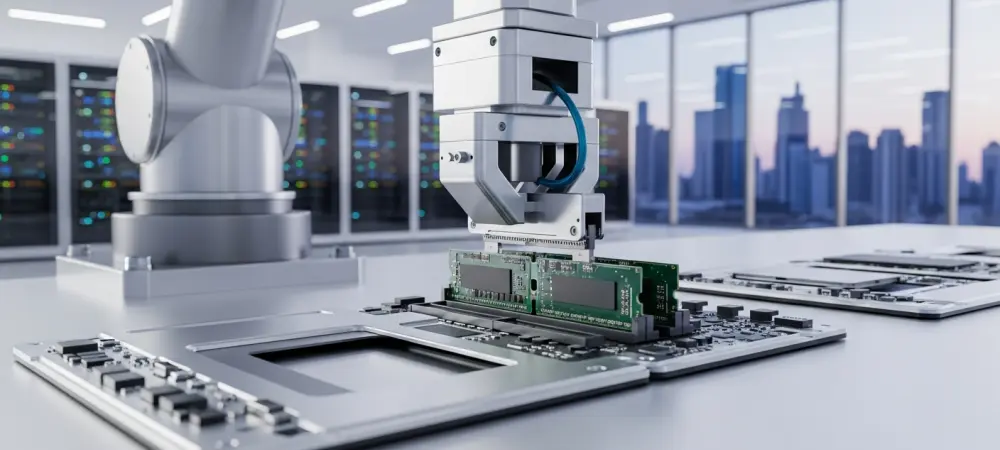
A primary driver of the current market contraction is the severe and persistent global memory shortage that is projected to continue through early 2028. This deficit has fundamentally altered the economics of computer production, driving component costs to heights that make budget-friendly hardware nearly impossible to produce. In Q2 2026, the industry saw total shipments fall to 68.2 million units, largely because manufacturers were unable to secure enough memory modules to sustain previous volumes. This constraint has forced many vendors to prioritize high-margin professional machines over affordable consumer models.
Apple’s Strategic Triumph: The Success of the MacBook Neo
In stark contrast to the broader industry decline, Apple has managed to achieve a 10.1% surge in shipments, largely powered by the successful introduction of the MacBook Neo. While traditional competitors like Lenovo, HP, and Dell saw their shipment volumes slide by as much as 9%, Apple secured a 9.9% share of the total market. By leveraging strong brand prestige and a closed ecosystem, Apple has effectively bypassed the price sensitivity that is currently crippling other manufacturers. This success proves that innovation and status can insulate a company from the supply-side shocks that affect commodity-driven hardware makers.
The x86 Struggle: Availability and Marketing Pitfalls
The challenges facing traditional x86 manufacturers are exacerbated by a failure to align technological potential with retail reality. Despite the high-profile launch of the Core Series 3 chips designed to rival the efficiency of modern silicon, the actual rollout has been marred by inconsistency. Many of these new machines remain listed as unavailable or suffer from prolonged shipping delays, leaving retail channels stocked with older, less efficient inventory. Furthermore, x86 vendors have struggled to communicate a compelling value proposition, allowing the narrative of Apple’s dominance to go largely unchallenged in the premium consumer sector.
Toward a Local Compute Revolution and AI Integration
The future of the personal computing industry is increasingly tethered to the rise of local Artificial Intelligence and the decentralization of compute power. As the ongoing costs of cloud-based subscriptions continue to climb, consumers and enterprises alike are seeking hardware capable of processing complex AI tasks directly on the device. This shift toward local compute is expected to trigger a significant hardware upgrade cycle as the decade progresses toward 2028. Manufacturers are already pivoting their research and development to focus on integrated neural processing units that can handle generative tasks without a constant cloud connection.
Technological advancements in on-device AI will likely become the primary differentiator for future laptops and workstations. This transition also necessitates a more robust and diverse component sourcing strategy to avoid the shortages that have defined recent quarters. Companies are following the lead of market innovators by lobbying for a more localized supply of components to mitigate the impact of geopolitical instability. The integration of high-performance AI hardware is not just a luxury; it is becoming a core requirement for a resilient and future-proof computing environment.
Strategic Recommendations for a Shifting Market
For businesses and professionals operating in this volatile climate, the priority must shift from price-to-spec ratios to availability and long-term performance. Investors and procurement officers should favor vendors that demonstrate high supply chain transparency and proactive component sourcing. The current trend suggests that waiting for a return to budget-level pricing may be a futile strategy, as memory costs are unlikely to recede in the immediate term. Instead, the most viable path forward involves investing in premium hardware that offers significant AI processing capabilities to avoid premature obsolescence.
Vendors, on the other hand, must reconsider their marketing strategies to emphasize the tangible benefits of local compute over traditional cloud-dependent workflows. By focusing on the security and cost-saving advantages of on-device processing, traditional PC makers can regain ground in a market currently dominated by brand prestige. Building a resilient supply chain that utilizes multiple regional suppliers will be the only way to ensure retail availability and avoid the inventory “ghosting” that has plagued the x86 segment. Resilience, rather than mere efficiency, will be the hallmark of the next generation of industry leaders.
Conclusion: Adapting to the New Standard of Personal Computing
The recent fluctuations in global PC shipments underscored a significant evolution within the modern computing industry. While a memory shortage and macroeconomic pressures slowed the momentum of traditional hardware giants, the success of Apple demonstrated that innovation and proactive supply chain management remained the ultimate competitive advantages. This era marked a transition where the value of a personal computer was measured by its independence from the cloud and its resilience against unpredictable global shocks. Moving forward, the industry prioritized local AI capabilities and supply chain diversity to ensure that the next wave of growth rested on a more stable and technologically advanced foundation. Companies that embraced these changes secured their place in a landscape that rewarded long-term strategy over short-term volume.