

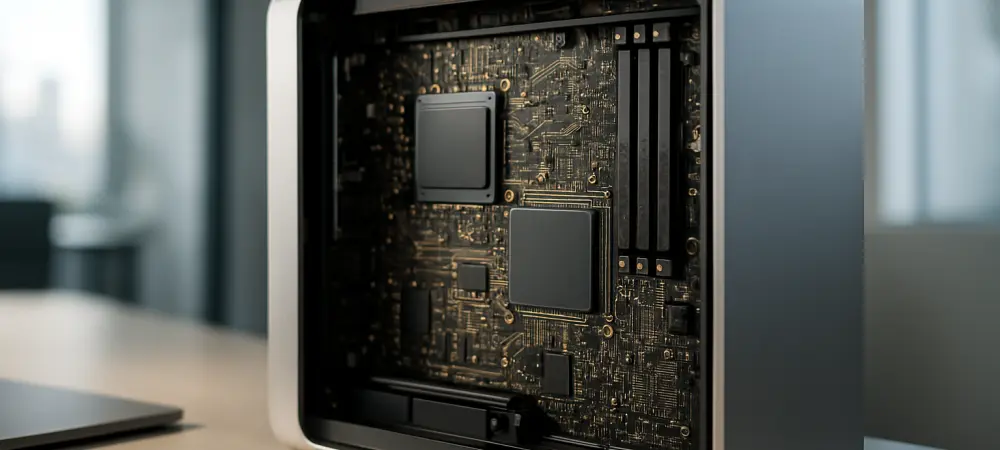
Apple has once again redefined the landscape of desktop computing with the simultaneous launch of the M6 and M5 Ultra silicon, marking a pivotal transition in its hardware philosophy. This new generation of chips isn’t just about raw speed; it represents a strategic pivot toward local, high-capacity artificial intelligence processing that challenges the necessity of expensive cloud-based inference. With the semiconductor industry facing unprecedented supply constraints and shifting wafer allocations, these releases signal a bold move by the tech giant to secure its position in an era where on-device intelligence is the primary metric of success.
The M6 architecture marks a significant milestone as the first 2nm chip, specifically by integrating three distinct core tiers into a single SoC. How does this triple-tier approach change the way the processor manages complex, AI-heavy workloads compared to its predecessors?
The shift to a 2nm process is a technical marvel, but the real story lies in the CPU’s 12-core architecture that finally blends two super cores, four performance cores, and six efficiency cores together. By running all three tiers simultaneously, the system can more intelligently delegate tasks, allowing those massive super cores—originally seen in the M5 Max—to handle the heavy lifting while the efficiency cores maintain background stability. This synergy is exactly why we are seeing a 1.2x boost in multithreaded throughput over the M5 and a staggering 40% jump in CPU performance over the M4. You can almost feel the responsiveness in the system frameworks when they dispatch to the dual 16-core Neural Engines simultaneously, providing a seamless experience even when the storage is being pushed at its rated 15GB/s. It is a sophisticated dance of power management that ensures the “world’s fastest” single-threaded performance doesn’t come at the cost of thermal throttling or inefficiency.
The M5 Ultra remains on a 3nm process yet is being hailed as a much larger leap for AI workloads than even the M6. What makes the quad-die design and the UltraFusion interconnect so transformative for users who are moving away from cloud-based AI services?
The M5 Ultra is an absolute beast of a chip because it effectively fuses two dual-die M5 Max chips into a single, cohesive quad-die package that the operating system treats as one unit. The secret sauce here is the UltraFusion interconnect, which delivers an incredible 4.4TB/s of inter-die bandwidth and six times the connection density of previous iterations. With up to 36 CPU cores and 80 GPU cores at your disposal, the sheer scale of the hardware allows for a 4.5x increase in peak GPU compute for AI compared to the M3 Ultra. It feels like having a localized server farm on your desk, especially when you consider the 512GB of unified memory running at 1.2TB/s, which is essential for loading massive open-weight models that would otherwise be sluggish. For a developer watching their cloud token bills climb, the ability to run these models locally with such high throughput is a total game-changer for their daily workflow and their bottom line.
There is a fascinating trend of developers and hobbyists “daisy-chaining” Mac minis and Studios to create distributed inference clusters. How does the official support for Thunderbolt 5 with RDMA facilitate this, and what does it mean for the future of the Mac Studio as a professional workstation?
We are seeing a total reimagining of the Mac Studio from a creative professional’s tool to the ultimate on-device AI hub, specifically through its new clustering capabilities over Thunderbolt 5. By utilizing RDMA to pool memory across systems, users can connect multiple machines to hit up to 3x the inference throughput of a single unit, which is a massive win for those running large-scale LLMs. It is quite a sight to see a stack of Mac minis acting as an “always-on” agentic machine, providing a low-latency alternative to expensive Nvidia rack hardware. This shift is supported by the new Core AI framework and macOS 26.2, which were designed specifically to handle this type of distributed communication. It solves the primary frustration of consumer hardware—the inability to hold a frontier-level model in a single machine’s memory—by letting the hardware grow with the user’s needs.
The pricing for these new machines has seen a noticeable increase, with the entry-point for the Mac mini rising by 50% in just a couple of months. What are the underlying economic pressures and “structural reallocations” in the semiconductor industry that are driving these aggressive price hikes?
The reality of the hardware market right now is quite brutal, as we’ve seen DRAM pricing skyrocket by 90% in the first quarter of this year, followed by another 50% increase in the second quarter. This isn’t just a typical market cycle; it’s a structural reallocation where wafer capacity is being diverted to High Bandwidth Memory for AI, leaving less room for standard laptop and desktop RAM. When you see a maxed-out Mac Studio crossing the $15,000 threshold or an extra 8GB of RAM costing $200, it reflects the massive costs Apple and others are absorbing to secure components. Even with a new assembly line in Houston, the demand is so high that some configurations have faced wait times of weeks or even months. This scarcity has forced a situation where the higher upfront cost of hardware is being marketed as a way to avoid recurring AI service fees, but it certainly puts a strain on the average consumer’s wallet.
With Tim Cook’s tenure ending on August 31 and John Ternus taking the helm, we are entering a new era of leadership. What is your forecast for the direction of Apple’s hardware strategy under this new leadership?
I expect the transition to John Ternus will usher in an era of even more aggressive hardware experimentation, starting with the upcoming rumors of the first foldable devices and touchscreen MacBooks. Ternus has been a key architect of the Mac’s resurgence, so he likely views the integration of hardware and local AI as the company’s primary defensive moat against cloud-centric competitors. We will probably see a deeper focus on the “agentic” capabilities of the Mac mini and a push to make the 512GB memory tiers more accessible, even if the base prices remain high due to supply constraints. The goal will be to make the Apple ecosystem the definitive place for private, high-speed intelligence, moving away from the “creator” niche and toward a broader “AI-first” identity. It is a bold new chapter that will likely define the next decade of personal computing, focusing on machines that don’t just process data but actively participate in the user’s workflow.