

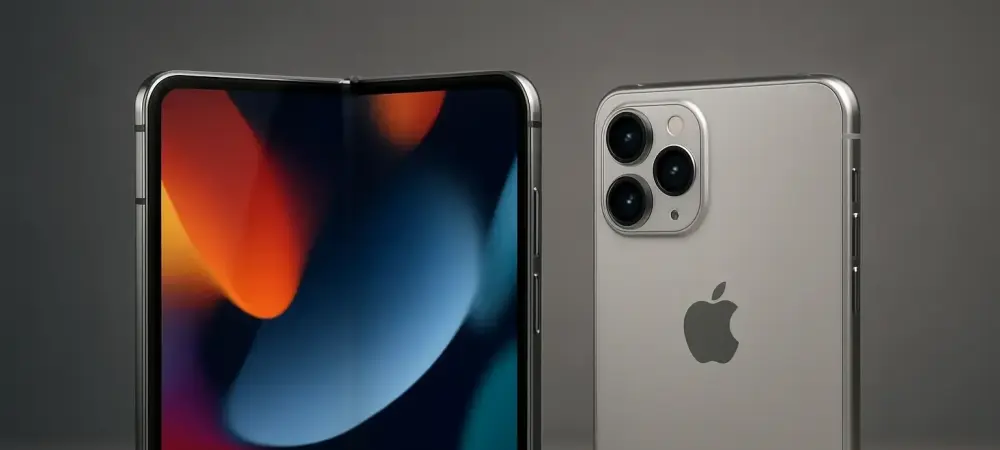
While the foldable smartphone market has steadily gained traction over the last several years, the industry’s most influential player has conspicuously remained on the sidelines, meticulously planning its entry. This review will explore the rumored design, key features, and performance specifications of Apple’s first foldable device, based on recent leaks and industry analysis. The purpose of this review is to provide a thorough understanding of the rumored iPhone Fold, its potential innovations, and its position in the evolving foldable market ahead of its anticipated 2026 launch.
The Dawn of Apple’s Foldable Era
Apple’s anticipated entry into the foldable market is a study in deliberate strategy rather than a race to be first. While competitors have navigated the early pitfalls of this technology, Apple has seemingly observed from a distance, allowing the market to mature. This methodical approach suggests a goal not just to participate but to define the category, leveraging its ecosystem to create a device that feels polished and purposeful from day one.
The introduction of an iPhone Fold is poised to send ripples across the premium smartphone landscape. Its arrival would validate the foldable form factor for a wider audience, potentially accelerating mainstream adoption. Moreover, it represents a significant evolution for the iPhone lineup, introducing a new ultra-premium tier that could reshape consumer expectations and competitive dynamics for years to come.
Engineering a New Form Factor
A Slim Book Style Design
Based on extensive leaks and renders, the iPhone Fold is expected to adopt a book-style form factor with a wide-display philosophy akin to the Google Pixel Fold. The design reportedly incorporates a generous 7.8-inch internal screen for tablet-like experiences and a practical 5.5-inch external display for conventional smartphone tasks. This configuration prioritizes usability in both its open and closed states.
Beyond its screen dimensions, the device’s physical profile is rumored to be a key differentiator. With a purported thickness of just 4.5mm when unfolded and 9mm when closed, it would be remarkably thinner than current competitors. This exceptional slimness, combined with Apple’s signature rounded corners, points toward a device engineered for aesthetic elegance and superior portability.
The Quest for a Creaseless Screen
A central engineering focus for Apple is reportedly the elimination of the screen crease, a persistent cosmetic and tactile issue in existing foldables. To achieve a near-seamless surface, the company is rumored to be developing an advanced hinge mechanism that fundamentally rethinks how the display is supported when folded and unfolded.
This sophisticated system is said to integrate a pressure-dispersing metal plate and components made from liquid metal to ensure durability and a flat internal surface. By combining this hardware with an in-cell touch panel, Apple aims to deliver a screen that is not only visually unblemished but also maintains precise touch accuracy across its entire expanse, setting a new benchmark for foldable display quality.
Next Generation Internals and Performance
The A20 Pro Chipset and C2 Modem
Powering the device will likely be the next-generation A20 Pro chipset, built on a cutting-edge 2nm fabrication process. This leap in manufacturing technology is expected to deliver substantial gains in both processing power and energy efficiency, ensuring the iPhone Fold can handle demanding multitasking and graphics-intensive applications without compromising battery life. Complementing the new chip is the rumored integration of Apple’s proprietary C2 modem. This in-house component would give Apple greater control over its device’s connectivity performance, potentially offering faster speeds, improved reliability, and deeper integration with the iOS software. This move continues Apple’s long-term strategy of vertical integration for its core technologies.
Camera and Biometric Systems
The camera system is expected to feature a dual rear-camera setup and dual selfie shooters, providing versatile photography options for both the internal and external displays. This configuration ensures a consistent high-quality imaging experience regardless of how the device is being used.
In a notable departure from recent flagship iPhones, the Fold is rumored to forgo Face ID in favor of integrating Touch ID into the power button. This design choice is likely a practical concession to the device’s slim profile and complex hinge mechanics, offering a reliable and space-efficient method for biometric security.
Redefining the User Experience
The true potential of the iPhone Fold lies in how it could transform the iOS experience. A dual-screen form factor opens up new possibilities for multitasking, allowing users to run two apps side-by-side with more screen real estate than ever before on an iPhone. This could revolutionize productivity on the go, turning the device into a powerful mobile workstation.
Beyond productivity, the foldable design stands to enhance content consumption dramatically. The expansive 7.8-inch internal display would offer a more immersive canvas for watching videos, playing games, and reading. Apple’s challenge and opportunity will be to create an intuitive software experience that seamlessly transitions between the compact external screen and the larger internal one.
Overcoming Foldable Hurdles
Apple’s primary task is to solve the technical challenges that have plagued earlier foldables. Screen durability and the visible crease are chief among these, and the success of the rumored hinge system will be critical. Delivering a device that feels as robust and reliable as a traditional iPhone is non-negotiable for the brand.
Equally important are the market obstacles. Foldable devices carry a significant price premium, and Apple will need to craft a compelling value proposition to convince consumers that the benefits of a foldable screen are worth the investment. Success will depend on demonstrating unique use cases that are not just novel but genuinely useful.
The Future of the iPhone Lineup
A successful launch of the iPhone Fold would likely have a profound impact on Apple’s entire product ecosystem. It would establish a new “ultra-premium” category above the Pro models, catering to early adopters and users seeking the pinnacle of mobile technology. This could set a precedent for future innovations across the lineup.
In the long term, the technologies developed for the iPhone Fold could trickle down to other devices. A foldable iPhone may also blur the lines between the iPhone and iPad, potentially influencing the future design and function of both product categories. Its success could solidify Apple’s dominance in the high-end market for the next decade.
Final Verdict on the Rumors
The leaked specifications and design details painted a compelling picture of a device engineered to address the core weaknesses of the current foldable market. The analysis presented here explored Apple’s meticulous approach, from its focus on an ultra-slim form factor to its ambitious goal of creating a creaseless display. The combination of a next-generation A20 Pro chip and a refined user experience suggested a product with immense potential. If these rumors materialized, the iPhone Fold stood not just to compete but to set a new standard, reinforcing Apple’s position as a defining force in mobile technology.