

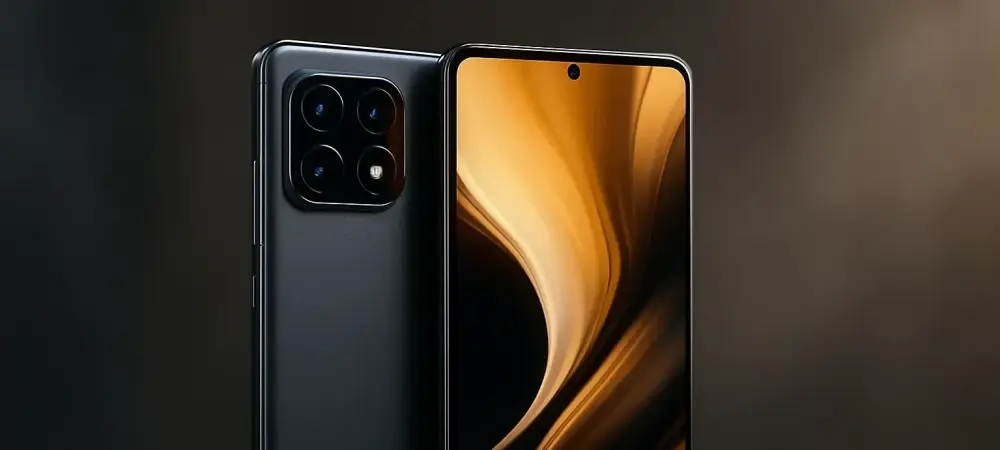
Today, we’re sitting down with Dominic Jainy, an IT professional whose work at the intersection of artificial intelligence and consumer hardware gives him a unique lens on the latest technology. We’ll be diving deep into the Poco F8 Ultra, a device that aims for the high-end market but makes some interesting compromises along the way. Our conversation will explore the tangible experience of its unique design and groundbreaking audio, the real-world implications of its powerful-yet-flawed performance, and the delicate balance between a long-term software promise and the daily intrusion of bloatware. We’ll also touch upon the surprisingly capable camera system and the remarkable battery life that might come with its own long-term costs.
You mentioned the unique denim blue nanomaterial and the Bose speakers with a subwoofer setting new standards. Can you walk us through how these features impact the user experience, from the phone’s tactile feel to the audio immersion during media consumption?
Absolutely. When you first pick up the device in that denim blue finish, it’s immediately clear this isn’t just another glass slab. The nanomaterial provides a wonderful, grippy texture that feels secure and comfortable in the hand, and despite its thin 8.3 mm profile, the phone feels incredibly stable with almost no creaking. It’s a tactile experience that cheap phones just can’t replicate. Then you turn on a movie or a song, and the Bose speakers completely steal the show. The inclusion of a dedicated subwoofer is a game-changer for a smartphone, producing a richness and depth of sound that sets a new standard. It’s an immersive, almost physical audio experience that makes media consumption a genuine pleasure.
The Poco F8 Ultra packs a Snapdragon 8 Elite Gen 5, but you noted it throttles and overheats, reaching up to 50°C. Could you describe the specific stress tests where this occurred and how this thermal issue might affect an average user during demanding tasks like gaming?
This is where the phone’s ambition meets a harsh reality. On paper, the Snapdragon 8 Elite Gen 5 is all about pure performance, and for short bursts, it delivers. However, during our sustained stress tests, which are designed to simulate continuous heavy load like a long, graphic-intensive gaming session, the device really struggled to dissipate heat. It became noticeably hot to the touch, with internal temperatures climbing as high as 50°C. For an average user, this isn’t just a number on a screen. It means that after 20-30 minutes of high-fidelity gaming, you’ll likely feel the phone get uncomfortably warm and see performance stutters as the system throttles itself to prevent damage. It’s a significant weakness that undermines its credibility as a top-tier gaming device.
Poco promises four years of system updates but burdens HyperOS 3.0 with bloatware. Based on your review, how intrusive is this advertising in day-to-day use, and how does this software approach compare to cleaner experiences from competitors in a similar price range?
It’s a frustrating paradox. On one hand, the promise of four years of system updates on top of Android 16 is fantastic and signals long-term value. But this commitment is soured by the software experience itself. The bloatware and integrated advertising are more than just a minor annoyance; they are a constant buzzkill. You’ll encounter them when installing apps, within system folders, and in various notifications. Compared to competitors who offer a much cleaner, near-stock Android experience, it makes the Poco F8 Ultra feel less premium. It’s a clear trade-off where the initial cost of the high-end hardware is subsidized by these intrusive ads, and it fundamentally cheapens the day-to-day interaction with an otherwise powerful device.
The triple 50 MP camera setup delivers balanced photos. Can you elaborate on the Light Fusion 950 sensor’s performance in challenging low-light conditions and how the optical image stabilization on the zoom lens performed when capturing distant subjects?
The camera system is a real highlight, striking a great balance for its price point. The main 50 MP sensor, the Light Fusion 950, performs admirably when the lights go down. It produces what I would call genuinely good low-light shots, capturing more detail and color than you’d expect without introducing excessive noise, which is where many “flagship killers” falter. For distant subjects, the dedicated zoom lens is made truly useful by the inclusion of optical image stabilization (OIS). The OIS effectively counteracts the natural shake of your hands, allowing you to capture crisp, clear photos of faraway objects without needing a tripod. It’s a practical feature that ensures the zoom lens isn’t just a spec on a sheet but a functional tool.
A 22-hour Wi-Fi runtime from the 6,500 mAh battery is impressive, as is the 35-minute full charge. Could you detail your testing process for achieving that runtime and discuss any potential long-term battery health trade-offs associated with such rapid 100W charging?
The battery performance is truly exceptional. Our testing involves a standardized script that simulates continuous web browsing and video streaming over a Wi-Fi connection, and the 6,500 mAh battery consistently lasted for a remarkable 22 hours. This is more than enough to get even the heaviest users through a full day and then some. The charging is equally impressive; going from zero to full in just 35 minutes with the 100W wired charger is incredibly convenient. However, there is a valid concern about the long-term trade-offs. Pushing that much power that quickly generates significant heat, which is a known factor in battery degradation over time. While the convenience is undeniable today, it’s possible that two or three years down the line, the battery’s overall health and capacity may degrade faster than a device with a more conservative charging speed.
What is your forecast for the future of “flagship killer” smartphones?
Based on devices like the Poco F8 Ultra, I believe the “flagship killer” category will become even more defined by strategic, high-impact features rather than trying to be an all-around champion. We’ll see manufacturers focus on delivering one or two truly premium, headline-grabbing experiences—like Poco did here with the Bose audio and the massive battery—while making very deliberate compromises in less-marketable areas like thermal management or a clean software experience. The future isn’t about perfectly matching a $1,200 phone for $700; it’s about delivering 90% of the experience with a couple of standout features that make the consumer feel like they’re getting a steal. The challenge for buyers will be to look past the marketing and decide which compromises they can live with.