
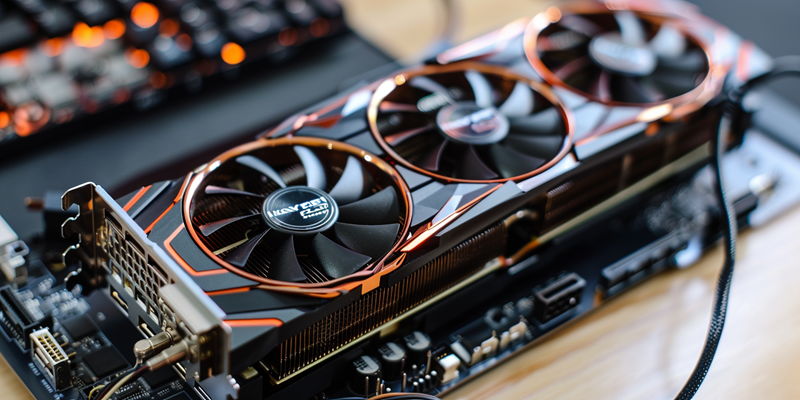
AMD’s Radeon 800M iGPUs Rival Nvidia RTX 2050 in Benchmarks

AMD is making headlines as their latest Radeon 800M series integrated GPUs have showcased exceptional performance capabilities. Built on the advanced RDNA 3.5 architecture, these GPUs are not only exhibiting substantial performance improvements but are also demonstrating competitive prowess against Nvidia’s lauded RTX 2050 discrete GPUs. The world got its first glimpse of this cutting-edge technology at Computex 2024, where MSI’s Ryzen AI 300-powered laptops were on display. The Radeon 800M series, particularly the Radeon 890M iGPU, appears set to redefine expectations for integrated graphics performance.

Game-Changing Performance

The Radeon 890M iGPU’s impressive credentials came to light when it scored over 3600 points in the 3DMark Time Spy Graphics test, highlighting the potential for high-end graphical capabilities within the integrated GPU market. Such results were from a flagship laptop housing the formidable Ryzen AI 9 HX 370 CPU – a powerhouse that not only shines graphically but also excels in computational tasks. It has achieved astonishing scores with over 2000 points in Cinebench R23’s single-core and scaled beyond 20,000 points in multi-threaded tests. When juxtaposed with previous generations, these numbers manifest a striking 20% elevation in CPU performance.

A Promising Future for Integrated Graphics

AMD’s Radeon 800M series integrated GPUs are making significant ripples in the tech industry, flaunting remarkable performance feats. Engineered on the sophisticated RDNA 3.5 architecture, these iGPUs are surpassing expectations with robust enhancements in performance, challenging Nvidia’s esteemed RTX 2050 discrete GPUs in head-to-head competition. Unveiled at Computex 2024, this impressive leap forward was witnessed within MSI Ryzen AI 300-powered laptops, which housed the technology. The Radeon 800M series, and especially the standout Radeon 890M iGPU, seems poised to revolutionize the standard for what’s expected in integrated graphics prowess. In a marketplace where discrete GPUs have typically held the crown for superior graphics, AMD’s latest venture may well shift the landscape, heralding a new era where integrated solutions can go toe-to-toe with discrete counterparts.

Explore more

Hotels Must Rethink Recruitment to Attract Top Talent

With decades of experience guiding organizations through technological and cultural transformations, HRTech expert Ling-Yi Tsai has become a vital voice in the conversation around modern talent strategy. Specializing in the integration of analytics and technology across the entire employee lifecycle, she offers a sharp, data-driven perspective on why the hospitality industry’s traditional recruitment models are failing and what it takes

Trend Analysis: AI Disruption in Hiring

In a profound paradox of the modern era, the very artificial intelligence designed to connect and streamline our world is now systematically eroding the foundational trust of the hiring process. The advent of powerful generative AI has rendered traditional application materials, such as resumes and cover letters, into increasingly unreliable artifacts, compelling a fundamental and costly overhaul of recruitment methodologies.

Is AI Sparking a Hiring Race to the Bottom?

Submitting over 900 job applications only to face a wall of algorithmic silence has become an unsettlingly common narrative in the modern professional’s quest for employment. This staggering volume, once a sign of extreme dedication, now highlights a fundamental shift in the hiring landscape. The proliferation of Artificial Intelligence in recruitment, designed to streamline and simplify the process, has instead

Is Intel About to Reclaim the Laptop Crown?

A recently surfaced benchmark report has sent tremors through the tech industry, suggesting the long-established narrative of AMD’s mobile CPU dominance might be on the verge of a dramatic rewrite. For several product generations, the market has followed a predictable script: AMD’s Ryzen processors set the bar for performance and efficiency, while Intel worked diligently to close the gap. Now,

Trend Analysis: Hybrid Chiplet Processors

The long-reigning era of the monolithic chip, where a processor’s entire identity was etched into a single piece of silicon, is definitively drawing to a close, making way for a future built on modular, interconnected components. This fundamental shift toward hybrid chiplet technology represents more than just a new design philosophy; it is the industry’s strategic answer to the slowing