

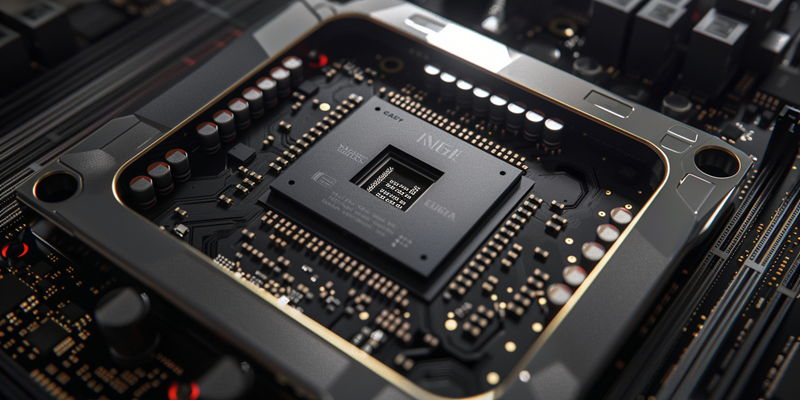
The relentless progression of technology in the server and data center environments is a race where prowess is measured by performance, power efficiency, and cost-effectiveness. AMD’s latest entry into this competitive arena, the EPYC 4004 Series, leverages modern architectural advancements to claim the upper hand over industry titan Intel’s offerings. The series promises a revolution in processors for small and medium-sized businesses, driving performance to new heights while maintaining a keen eye on the ever-critical element of energy efficiency.
A New Caliber of Performance
AMD’s EPYC 4004 Series CPUs herald a new chapter in the realm of server processors. Built on the cutting-edge “Zen 4” architecture, these chips have shattered expectations of what affordable CPUs can deliver. With variants ranging from 4 to 16 cores and boasting up to 128 MB of L3 cache, there’s an EPYC 4004 model to suit a swath of business needs. The notable EPYC 4564P CPU in particular, an 8-core marvel, demonstrates a stunning lead over its counterparts, accelerating ahead with an 80% performance boost and a 50% increase in energy efficiency, all while being easier on the budget. It’s a statement that performance does not necessitate a premium price or heightened power consumption.
The fabric that interconnects performance, energy efficiency, and cost is finely woven in AMD’s EPYC 4004 Series. Industry benchmarks underline this with numbers that resonate across the market: a 1.7x leap in overall performance, a 1.5x advantage in both performance-per-dollar and performance-per-watt, when pitted against Intel’s Xeon E-2400 series. A performance gap of such magnitude doesn’t merely nudge AMD ahead – it propels them into a distinct lead, raising eyebrows and expectations of what’s achievable for businesses running on tighter financial constraints.
Efficiency That Transforms Industries
AMD has thrown down the gauntlet with its EPYC 4004 Series, directly challenging the dominance of Intel in server and data center tech. This new series is a testament to AMD’s commitment to pushing the boundaries in performance, power efficiency, and cost-effectiveness. Targeting small to medium-sized enterprises, the EPYC 4004 Series is poised to redefine processor standards with its cutting-edge architecture. Not only does it aim to catapult computational speeds to unprecedented levels, but it also does so with an eye on the crucial aspect of energy consumption. This balance of speed and sustainability marks a significant stride forward, marking the EPYC 4004 Series as a potentially transformative option in the pursuit of powerful yet energy-efficient server solutions. With this release, AMD is not just issuing a challenge to the competition but also offering businesses a new avenue to enhance their technological infrastructure.