

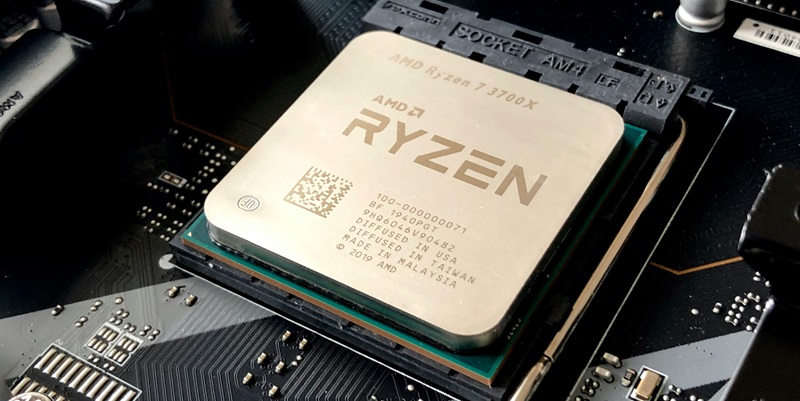
The highly anticipated debut of AMD’s 10-core Ryzen AI 9 365 CPU on Geekbench has generated significant interest in the tech world. Featured in an Acer Swift laptop with 16 GB of RAM, the Ryzen AI 9 365 CPU is part of AMD’s latest Zen 5 architecture. In the recent Geekbench 6.2 benchmark tests, it scored 2,730 and 13,032 points in single-core and multi-core tests, respectively. Despite operating under significant throttling conditions that prevented it from reaching its advertised boost clock of 5.0 GHz, the Ryzen AI 9 365 achieved scores comparable to its 12-core counterpart, the Ryzen AI 9 HX 370. This performance highlights both the potential and the current limitations of AMD’s latest offering.
Analysis of Ryzen AI 9 365’s Performance
Throttling and Potential Performance Improvements
The analysis of the Ryzen AI 9 365’s performance reveals that the throttling experienced is likely due to the pre-production hardware or software configurations. The pre-release nature of the hardware suggests that there is potential for significant improvements in the final retail units, which could see the boost clock reaching the advertised 5.0 GHz. This would enable the CPU to fully exploit its Zen 5 cores’ capabilities, potentially improving both single-core and multi-core scores substantially. AMD’s Zen 5 architecture, known for its efficiency and performance, seems to have effectively been utilized in the Ryzen AI 9 365, indicating that once the throttling issues are resolved, it could become a formidable competitor in the CPU market.
The Ryzen AI 9 365 and its sibling, the Ryzen AI 9 HX 370, share the same Zen 5 CPU cores. This similarity in architecture results in comparable single-core and multi-core performances between the two models. The scores achieved by the Ryzen AI 9 365, despite the throttling, are impressive and suggest that with optimized hardware and software, the CPU could outperform many of its competitors. As AMD refines its technology, the potential for enhanced performance in the final retail units of the Ryzen AI 9 365 is high, positioning it as a strong contender in the laptop CPU market.
Comparing with Previous and Competing Models
When compared to previous generation models such as the Ryzen 9 8945HS, the Ryzen AI 9 365 shows a noticeable improvement in performance. This advancement is a testament to the capabilities of the Zen 5 architecture, which has managed to bring significant gains over previous generations. However, the Ryzen AI 9 365 still lags behind Intel’s Core Ultra 9 185H in multi-core performance tests while managing to outperform it in single-core scores. This mixed result underscores the competitive landscape between AMD and Intel, with both companies pushing the boundaries of CPU performance.
A broader trend observed is the impressive showing of AMD’s new Zen 5 architecture in the laptop segment. This trend is exemplified by the Ryzen AI 9 HX 370, which has been trading blows with the Ryzen 9 7950X in single-core tests of Cinebench 2024. Such performances place AMD in a favorable position against its primary competitor, Intel. However, it is worth noting that Intel’s Core i9-14900HX still holds the lead in Geekbench 6.2 single-core performance metrics, indicating that AMD has room to improve and potentially dethrone Intel in future benchmarks.
The Future of AMD’s Zen 5 Architecture
Anticipation for Retail Units and Potential
The debut of the AMD Ryzen AI 9 365 has highlighted some initial challenges, particularly in terms of throttling. However, the CPU’s performance in benchmark tests has shown promising potential once these issues are addressed. The Ryzen AI 9 365’s overall performance closely mirrors that of the more robust Ryzen AI 9 HX 370, suggesting that AMD’s Zen 5 architecture is competitive and capable of delivering high performance. As AMD continues to refine its technology and address the initial throttling conditions, the performance of the Ryzen AI 9 365 could significantly improve, making it a formidable competitor in the CPU market.
The imminent release of AMD’s Strix Point series is highly anticipated, with expectations that it could be one of the company’s largest laptop launches to date. This release marks a significant milestone in AMD’s advancements in the laptop CPU market. If the Strix Point series can build on the performance capabilities demonstrated by the Ryzen AI 9 365 and the Ryzen AI 9 HX 370, it could mark a turning point for AMD, positioning it strongly against Intel. The anticipation surrounding the Strix Point series underscores the tech community’s interest in AMD’s continued innovation and performance improvements.
Positioning Against Intel and Future Prospects
The much-anticipated unveiling of AMD’s 10-core Ryzen AI 9 365 CPU on Geekbench has stirred substantial excitement in the tech community. This newest addition, showcased in an Acer Swift laptop with 16 GB of RAM, is a product of AMD’s cutting-edge Zen 5 architecture. In the latest Geekbench 6.2 benchmark tests, the Ryzen AI 9 365 scored 2,730 points in single-core tests and 13,032 points in multi-core tests. Despite experiencing significant throttling that prevented it from reaching its advertised boost clock speed of 5.0 GHz, the CPU managed scores comparable to the 12-core Ryzen AI 9 HX 370. This noteworthy performance underscores both the impressive potential and the current limitations of AMD’s newest processor. Tech enthusiasts are eager to see how this processor will perform under less restrictive conditions, appreciating its promise and the advancements it brings to the table. As more devices integrate this CPU, the broader implications for computing performance will become evident, marking a pivotal moment for AMD.