

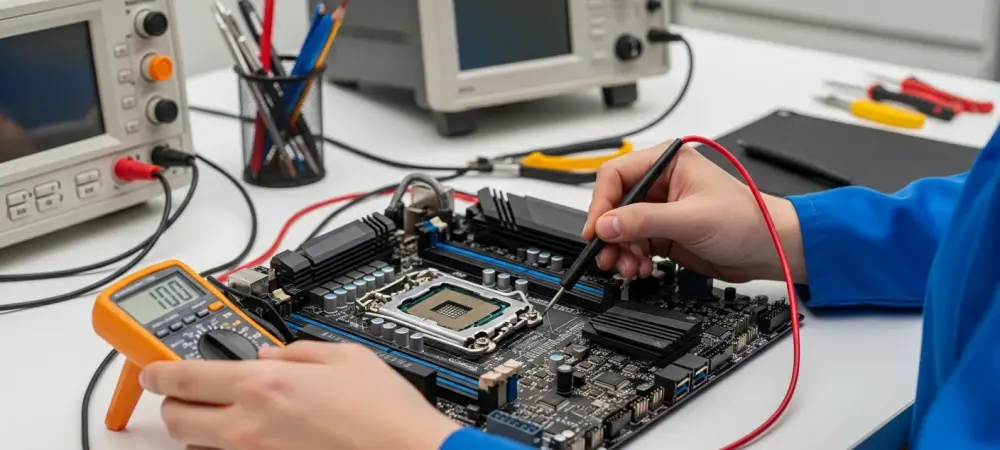
From Enthusiast Dream to Worrisome Reality: The Unfolding Crisis
A high-end processor revered for its gaming prowess is now at the center of a growing controversy, leaving PC builders questioning the reliability of their premium investments. The AMD Ryzen 9800X3D, a component expected to be the unshakeable core of elite gaming systems, has become associated with sudden and catastrophic failures. For a community that invests heavily in performance and stability, an unexpected hardware death in this top tier is more than an inconvenience; it represents a significant breach of trust between consumers and manufacturers. This article delves into the mounting reports of CPU failures, the specific and alarming connection to ASUS motherboards, and the implications for both current and future builders.
Unraveling the Pattern of Component Failure
Evidence Mounts: A Closer Look at the Recent Spate of Incidents
The alarm bells began ringing loudly when three separate failures were reported in a single day, cementing a disturbing pattern. These incidents spanned a range of ASUS motherboards, from the high-end ROG Crosshair X870 Hero and ROG Strix X870E-E Gaming to the mid-tier TUF B850M-Plus WiFi. The evidence of failure was stark and undeniable: one case presented a CPU with visible burn marks, while another system refused to post, displaying a diagnostic “00” error code. This recent cluster of failures builds upon two previously reported incidents, suggesting the problem is not only real but potentially accelerating.
The Sudden Death Phenomenon Baffling Owners
A particularly unsettling thread connects these hardware failures: the abrupt and total demise of the CPU. Owners report their systems running flawlessly for weeks or even months before suddenly refusing to boot, with no warning signs. This unpredictability strikes at the heart of user confidence, as it deviates from typical component issues that either appear immediately or result from gradual degradation. The community is now actively debating the root cause, with theories pointing toward volatile voltage regulation, problematic BIOS settings, or a fundamental incompatibility between the components.
A Widespread Concern: Failures Across Diverse ASUS Motherboard Tiers
Initially, some speculated that the issue might be confined to ultra-high-end motherboards pushed to their limits. However, the data now proves otherwise. With confirmed failures on both premium X870 chipset boards and more mainstream B850 models, the problem transcends a single product tier. This revelation is critical, as it suggests a more systemic vulnerability within the ASUS product line when paired with this specific CPU. Consequently, the pool of potentially affected users is far wider than first imagined, complicating diagnostic efforts and heightening concern across the market.
The Broader Landscape: Placing the ASUS Surge in Industry Context
To understand the full picture, it is important to consider wider market statistics. While data indicates that ASRock motherboards have been associated with the highest number of overall CPU failures, the recent and rapid spike involving the AMD and ASUS combination is a distinct and noteworthy trend. This acute situation stands apart from general hardware failure rates, leading to speculation about a unique, adverse interaction. Experts are questioning whether AMD’s advanced 3D V-Cache technology is conflicting with ASUS’s specific power delivery systems or firmware implementations.
Navigating the Risk: Key Takeaways and Protective Measures for Owners
The evidence points to a clear and concerning pattern linking the Ryzen 9800X3D with failures on various ASUS motherboards. For those who own this combination or are considering it, proactive measures are essential. The most immediate step is to ensure the motherboard BIOS is updated to the latest version, as manufacturers often release updates to address stability and voltage issues. Furthermore, owners should diligently monitor system voltages using software tools and carefully document any custom settings that have proven stable. Should a problem arise, having a record of system behavior and installed firmware can be invaluable when contacting customer support and navigating warranty claims for either the CPU or motherboard.
An Unstable Foundation: The Future for High-Performance Builds
The trust that the enthusiast community places in high-end component manufacturers is currently being tested by these unexplained hardware failures. For the stability of the PC building ecosystem, transparency from both AMD and ASUS is paramount in diagnosing and resolving this issue before it causes further damage to their reputations. The path forward relies heavily on community-driven efforts, and users are encouraged to share their experiences, both positive and negative. By pooling data and maintaining vigilance, builders can help identify the root cause, protect one another from potential hardware loss, and hold manufacturers accountable for the reliability of their flagship products.