

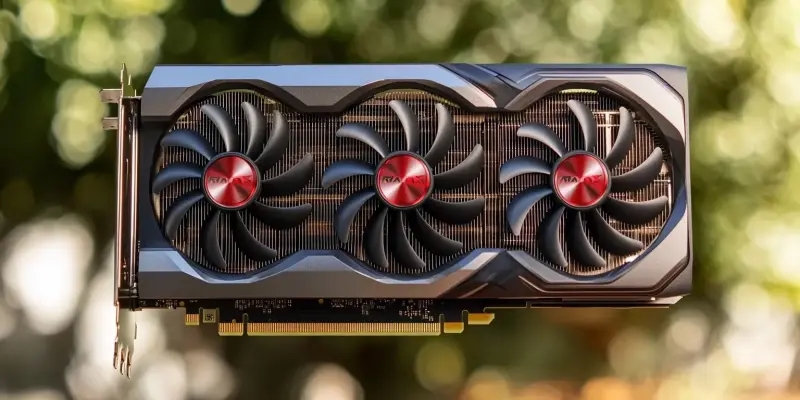
When new graphics cards hit the market, gamers and tech enthusiasts eagerly await to see if the performance leaps justify the upgrade costs. Recently, leaked performance metrics of AMD’s upcoming Radeon RX 9070 XT and RX 9070 GPUs revealed significant improvements over their predecessors, sparking considerable interest in the tech community. According to the leaked slides, the RX 9070 XT is set to outshine the RX 7900 GRE by a significant margin, making this an exciting development in AMD’s RDNA 4 lineup.
Performance Metrics and Improvements
Marked Improvement Over RX 7900 GRE
The leaked data suggests that the RX 9070 XT delivers an impressive 38% performance boost over the RX 7900 GRE at 1440p resolution, and a staggering 42% increase at 4K resolution. Similarly, the RX 9070 also shows a notable uplift of 20-21% in both resolutions. These figures illustrate a substantial generational leap, potentially setting new standards for AMD’s mid-range GPU offerings. The results indicate that the RX 9070 XT could perform on par with NVIDIA’s RTX 4080 and 4080 Super, positioning it as a formidable competitor in the current market.
The analysis of these performance improvements reveals critical insights into the architectural advancements made in the RX 9070 series. One significant enhancement is its improved Ray Tracing (RT) capabilities, a feature that the RX 7900 GRE struggled with in comparison to NVIDIA’s counterparts. With the new RDNA 4 architecture, the RX 9070 series promises better gaming experiences both with and without Ray Tracing, making it a compelling choice for gamers who crave high-quality visuals. These improvements underscore AMD’s commitment to pushing the technological envelope and maintaining a competitive edge in the GPU market.
Architectural Enhancements and Market Competition
While the performance metrics are promising, they must be weighed against pricing strategies to determine their impact on the market. The RX 9070 series, particularly the XT model, could pose a serious challenge to NVIDIA if AMD adopts a competitive pricing strategy. The NVIDIA RTX 5070 Ti, which is officially priced at $749, often costs over a thousand dollars due to limited availability. If AMD prices the RX 9070 series more affordably, it could attract gamers seeking high performance without breaking the bank.
Another factor contributing to the RX 9070 series’ potential success is its enhanced native resolution performance and superior RT capabilities. These improvements position AMD’s new GPUs as strong contenders in the mid-range market segment, challenging NVIDIA’s dominance. The detailed assessment from the leaked data suggests that the RX 9070 series could significantly alter market dynamics if these claims hold true. Gamers and tech enthusiasts alike are eagerly awaiting independent reviews and benchmarks to validate AMD’s promises and determine the true impact of these new GPUs on the competitive landscape.
Release Dates and Market Impact
Key Dates and Expectations
The official unveiling of the RX 9070 series is scheduled for February 28, with retail availability beginning March 6. These dates are crucial as they mark the introduction of AMD’s new RDNA 4 lineup and its potential to disrupt the current market dynamics. The anticipation surrounding the RX 9070 series is palpable, with many hoping that AMD’s performance claims will be substantiated by independent reviews. If the RX 9070 series delivers on its promises, it could reshape the competitive landscape, offering gamers a high-performance alternative to NVIDIA’s offerings at a potentially lower price point.
The upcoming release of the RX 9070 series has generated significant buzz, leading to widespread speculation about its potential impact on the GPU market. Some analysts predict that the RX 9070 XT, in particular, could become a game-changer if it matches the leaked performance metrics. The combination of improved gaming performance, enhanced RT capabilities, and competitive pricing could make it a top choice for gamers and content creators alike. As the release date approaches, the tech community eagerly awaits further details and independent benchmarks to confirm AMD’s bold claims.
Future Considerations and Industry Implications
When new graphics cards debut, gamers and tech enthusiasts eagerly scrutinize their performance to determine if the upgrade is worth the expense. Recently, leaks about AMD’s upcoming Radeon RX 9070 XT and RX 9070 GPUs have revealed substantial performance boosts over previous models, igniting significant excitement within the tech community. According to these leaked metrics, the RX 9070 XT is poised to greatly outperform the RX 7900 GRE, marking a striking advancement in AMD’s RDNA 4 lineup. This development has generated a great deal of anticipation and speculation among technology fans. The visuals and gaming experiences promised by these new cards hint at remarkable enhancements in speed, efficiency, and overall graphics quality. This could mean smoother gameplay, higher frame rates, and possibly new levels of detail in gaming environments, all of which enhance the immersive experience that players seek. These leaks provide an intriguing glimpse into the potential of the new Radeon cards, promising exciting advances for both casual and competitive gamers alike.