

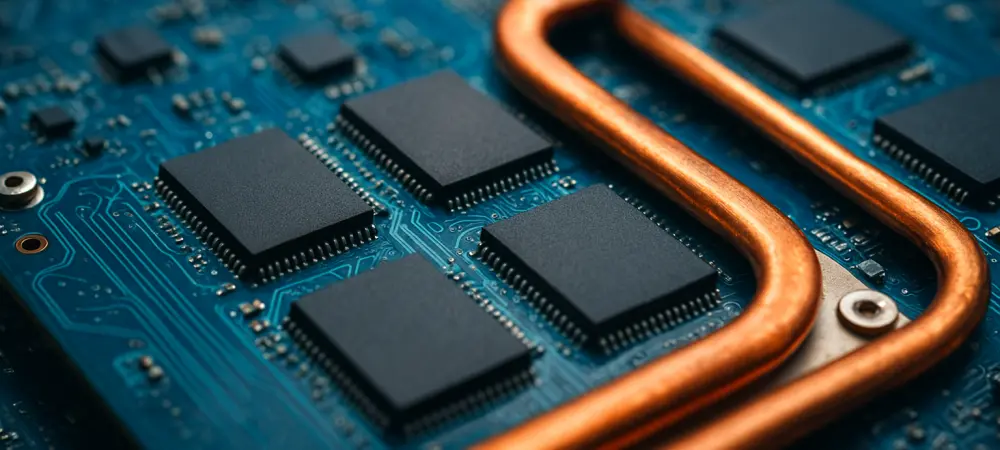
The relentless race for graphical dominance has pushed the limits of the aging GDDR6 standard to its breaking point, forcing silicon engineers to rethink how data traverses the path between the memory controller and the pixel-crunching core. GDDR7 represents the most significant leap in memory technology in several hardware cycles, offering a massive increase in bandwidth that is essential for modern high-resolution workloads. AMD has taken a proactive stance by integrating early support into the open-source Linux kernel to ensure that its hardware remains competitive from the moment of release.
Introduction to AMD’s Transition to GDDR7
This strategic move toward GDDR7 marks a necessary departure from the reliance on GDDR6 and its slightly faster variants. By updating the AMDGPU driver stack, the company is preparing for a hardware environment where memory speed is no longer a secondary concern but a primary performance bottleneck. This transition aims at narrowing the competitive gap in the high-end GPU market where sheer throughput often dictates the winner.
The integration into the Linux kernel signifies a commitment to open-source stability. By addressing the memory standard early, engineers can refine the software-hardware interface before the first consumer units arrive. This preparation ensures that the driver stack is robust enough to handle the increased complexity of next-generation data management without compromising system reliability.
Core Technical Enhancements in the AMD Ecosystem
The foundational changes within the AMD ecosystem focus on preparing the software layers for sophisticated hardware interactions. Recent patches have revealed the inclusion of specific identifiers that allow the operating system to recognize and manage the unique signaling and power requirements of GDDR7 memory.
Integration of GDDR7 Identifiers and GFX13
A key aspect of this development is the link between the new memory support and the “GFX13” codename, which is widely understood to represent the upcoming RDNA 5 architecture. Integrating these identifiers early in the driver lifecycle ensures that the software environment is mature by the time the hardware hits the shelves. This proactive approach minimizes the day-one performance bugs that often plague new memory standards during their initial rollout.
Next-Generation Bus Interfaces: NBIF 7.10 and IH 8.0
Crucial updates to the New Bus Interface (NBIF 7.10) and the Interrupt Handler (IH 8.0) provide the necessary plumbing for this high-speed data flow. The NBIF 7.10 manages the transfer of information across the system bus, while the IH 8.0 block handles interrupt processing for high-speed components. These enhancements are vital for maintaining system stability at clock speeds that would have caused synchronization errors in previous hardware generations.
Innovations and Emerging Trends in Memory Architecture
The most radical change in this architecture is the transition from PAM2 signaling to PAM3 signaling. Unlike the binary state of older memory, PAM3 allows for more efficient data encoding by transmitting more bits over the same number of cycles, enabling higher data rates without the exponential increase in power consumption.
Moreover, these innovations allow for a more streamlined memory controller design. By focusing on efficiency, AMD can ensure that every gigabyte of theoretical bandwidth translates directly into higher frame rates and faster compute times. This trend reflects a broader industry shift toward maximizing performance-per-watt in a thermal-constrained environment.
Real-World Applications and Deployment
The real-world impact of this bandwidth is felt most acutely in high-fidelity 4K and 8K gaming, where large texture files must be moved constantly between storage and the GPU. Beyond gaming, professional workstations benefit from faster real-time rendering and more responsive simulations. The low latency of GDDR7 makes it an ideal candidate for these high-pressure computing environments. Local AI processing on consumer hardware also sees a massive boost from this technology, as transformer models depend heavily on the speed at which weights can be moved into the processing cores. This makes high-performance graphics cards more versatile for both creative and scientific tasks.
Challenges and Technical Hurdles
However, the transition is not without its difficulties, as the sophisticated memory controllers required for GDDR7 are harder to design and manufacture than their predecessors. Thermal management remains a significant concern, as pushing more data inevitably creates heat that must be dissipated, potentially requiring more expensive cooling solutions.
Market obstacles also exist, including the potential for high early-adoption costs. As production ramps up, the industry may face supply constraints for the high-density modules needed for top-tier cards. Balancing the performance gains against these manufacturing costs will be a primary challenge for the first wave of RDNA 5 products.
Future Outlook and Hardware Roadmap
From 2026 to 2028, the industry expects the RDNA 5 product stack to fully mature, bringing high-density memory modules into the mainstream market. Future breakthroughs in memory density could allow for 32Gb modules, fundamentally changing the amount of VRAM available on mid-range cards. This evolution will likely extend the lifecycle of graphics hardware, making it relevant for longer periods.
These advancements will also influence the specifications of upcoming gaming consoles and handheld devices. As GDDR7 becomes the standard, the baseline for graphical fidelity will shift upward across the entire gaming ecosystem. This long-term roadmap suggests that memory bandwidth will remain the most critical factor in hardware development for the foreseeable future.
Summary and Final Assessment
The proactive Linux kernel updates established a solid foundation for the next era of graphics computing by prioritizing a clean break from the past. Engineers recognized the limitations of the previous architectures and focused on robust IP blocks and new signaling standards. Ultimately, the integration of GDDR7 stands as a pivotal modernization of the entire hardware infrastructure, ensuring future systems are ready to meet the ever-growing demands of software developers.