

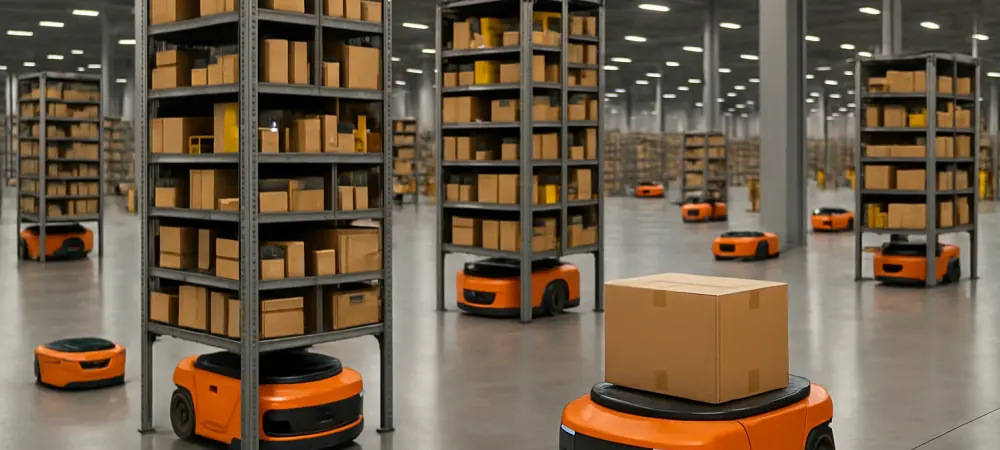
In an era where speed and efficiency define the success of e-commerce giants, Amazon stands at the forefront with a staggering ambition to transform its operations through robotics, reshaping the future of logistics. As the second-largest employer in the United States, boasting a workforce of nearly 1.2 million, the company processes millions of orders daily, pushing the boundaries of what automation can achieve in logistics. This review delves into the intricate web of technologies driving Amazon’s automation strategy, exploring how robotic systems are reshaping fulfillment centers and what this means for the future of work in a tech-driven world.
Core Components of Amazon’s Automation Technology
Cutting-Edge Robotic Systems
Amazon’s automation strategy hinges on an array of sophisticated robotic systems deployed across its vast network of warehouses and fulfillment centers. These machines, designed for speed and precision, handle tasks ranging from sorting packages to transporting goods across massive facilities. Their scalability allows the company to manage an unprecedented volume of products, ensuring rapid order fulfillment that keeps pace with consumer demand. A standout feature of these systems is their ability to deliver measurable cost savings, with internal data indicating a reduction of approximately 30 cents per item processed. This efficiency not only bolsters Amazon’s bottom line but also sets a benchmark for operational excellence in the logistics sector. The integration of such technology highlights a shift toward capital-intensive solutions that prioritize long-term gains over short-term labor costs.
Human-Robot Collaboration with Cobots
Beyond standalone robots, Amazon employs collaborative robots, often termed “cobots,” engineered to work alongside human employees. This approach reflects a deliberate effort to balance automation with human involvement, using language that softens the perception of full-scale mechanization. Cobots assist in repetitive tasks, reducing physical strain on workers while maintaining a human touch in complex decision-making processes.
The technical framework of these cobots emphasizes safety and adaptability, ensuring seamless interaction in dynamic environments like ultra-fast delivery hubs. Real-world applications include cobots aiding in package assembly and inventory management, where their precision complements human oversight. This hybrid model serves as a bridge between full automation and traditional labor, offering a glimpse into a potential middle ground.
Emerging Patterns in Amazon’s Automation Drive
Amazon’s push toward automation aligns with a broader industry trend focused on cost reduction and operational efficiency, positioning the company as a trailblazer in this space. The robotics team has set an ambitious target to automate 75% of operations within a defined timeline, signaling a profound shift in how goods are processed and delivered. This goal underscores a commitment to leveraging technology as a primary driver of growth. Recent innovations within the company point to a strategic vision of doubling product sales by 2033 without a proportional increase in human workforce. This approach, evident in internal planning documents, prioritizes robotic integration in facilities tailored for rapid delivery. Such a trajectory suggests that Amazon is not merely adapting to market demands but actively shaping the future of e-commerce logistics. A notable shift in corporate strategy reveals an intent to curb workforce expansion, with plans to avoid hiring an additional 160,000 workers by 2027. This move, while economically sound for the company, raises questions about the long-term implications for employment in the sector. The balance between technological advancement and workforce stability remains a critical point of observation.
Practical Deployment and Industry Influence
In fulfillment centers, Amazon’s robotics automation manifests most vividly in facilities designed for ultra-fast deliveries, where robots handle a majority of repetitive tasks. Processes such as picking, packing, and sorting—once reliant on human labor—are now increasingly managed by machines, slashing processing times and minimizing errors. These advancements ensure that customer expectations for same-day or next-day delivery are consistently met.
The ripple effect of this automation extends beyond Amazon, setting new operational benchmarks for competitors in the e-commerce arena. As robots take on more roles, from inventory tracking to last-mile logistics support, other companies may feel compelled to adopt similar technologies to remain competitive. This trend could redefine industry standards, pushing efficiency to unprecedented levels.
The broader impact on the sector includes a potential reshaping of supply chain dynamics, where automation becomes a prerequisite for market relevance. Amazon’s pioneering efforts might inspire a wave of innovation, but they also highlight the need for adaptive strategies among smaller players lacking the capital to invest at such a scale. The disparity in technological adoption could widen the gap between industry leaders and followers.
Hurdles and Constraints in the Automation Journey
Despite the promise of efficiency, Amazon’s automation push faces significant challenges, particularly in the realm of job displacement. Internal strategies indicate a deliberate reduction in hiring, with projections to sidestep the addition of 160,000 workers by 2027. This shift, while beneficial for cost management, poses a stark reality for labor markets already grappling with technological disruption. Societal concerns amplify these challenges, with experts like MIT professor Daron Acemoglu cautioning that Amazon risks becoming a “net job destroyer” if its automation agenda succeeds at scale. Such warnings underscore the tension between corporate innovation and economic equity, prompting debates about the role of large employers in safeguarding livelihoods. The potential for widespread job losses remains a pressing issue that cannot be overlooked.
Amazon attempts to mitigate public backlash by highlighting short-term hiring initiatives, such as onboarding 250,000 seasonal workers during peak periods. Yet, this tactic does little to address the long-term vision of a predominantly automated workforce. Striking a balance between technological progress and social responsibility emerges as a pivotal challenge for the company moving forward.
Future Prospects of Robotic Integration
Looking ahead, Amazon’s automation strategy appears poised for further evolution, with potential breakthroughs in robotic technologies promising even deeper integration into daily operations. Advancements in artificial intelligence and machine learning could enhance the capabilities of existing systems, enabling greater autonomy and efficiency. The trajectory suggests a future where human involvement in routine tasks diminishes significantly.
The long-term societal and economic impacts of this model could reshape labor markets, influencing workplace norms across various industries. As Amazon continues to pioneer automation, its practices may serve as a template for others, potentially accelerating the adoption of similar technologies. However, this also raises the specter of widening inequality if job creation fails to keep pace with technological displacement.
Speculation around mitigating solutions includes the possibility of retraining programs or policy interventions to support affected workers. Whether Amazon itself will spearhead such efforts or rely on external frameworks remains uncertain. The interplay between innovation and its human cost will likely define the narrative of automation in the coming years.
Final Thoughts on Amazon’s Automation Path
Reflecting on this technological journey, the strides Amazon has made in robotics automation stand as a testament to the power of innovation in reshaping logistics. The efficiency gains and cost reductions achieved through robotic systems mark a significant milestone, yet they come intertwined with profound challenges around job displacement. Balancing these dual realities proves to be the crux of the company’s automation narrative. Moving forward, a critical next step involves fostering dialogue between industry leaders, policymakers, and communities to address the labor implications of such rapid technological adoption. Exploring scalable retraining initiatives and advocating for adaptive economic policies could offer pathways to mitigate workforce disruptions. Amazon’s role in championing or supporting these efforts holds the potential to redefine its legacy beyond mere efficiency.
Ultimately, the focus should shift toward collaborative models that integrate human expertise with robotic precision, ensuring that progress does not come at the expense of societal stability. As the landscape of work continues to evolve, Amazon’s automation journey provides a compelling case study, urging stakeholders to prioritize sustainable innovation in the face of inevitable change.