

Indiana’s Ai Moment: Why a $15B Build Reshapes Power, Compute, and the Midwest Map
Indiana’s data center surge created a rare alignment of power markets, cloud demand, and public policy, and commentators across utilities, finance, and cloud architecture agreed that the timing was unusually favorable for a 2.4GW leap layered onto an already massive $11B campus in St. Joseph County. Energy analysts framed northern Indiana as an AI-first hub whose proximity to fiber, rail, and substations compresses costs and reduces latency for training and inference, while municipal leaders emphasized the brand effect: once the first hyperscaler scales, others follow. Policy voices underscored the stakes: AI-ready infrastructure and clustering tighten unit economics and harden resilience, yet require delicate grid choreography to avoid socializing costs. Industry leaders stressed that rate design and transparent agreements were not sideshows but the main act, shaping competitiveness and signaling whether the Midwest can stand up a durable cloud corridor.
Inside the Build: Capacity, Sites, and an Ai-first Playbook
From New Carlisle to Portage: Mapping the Footprint and What 2.4GW Really Means
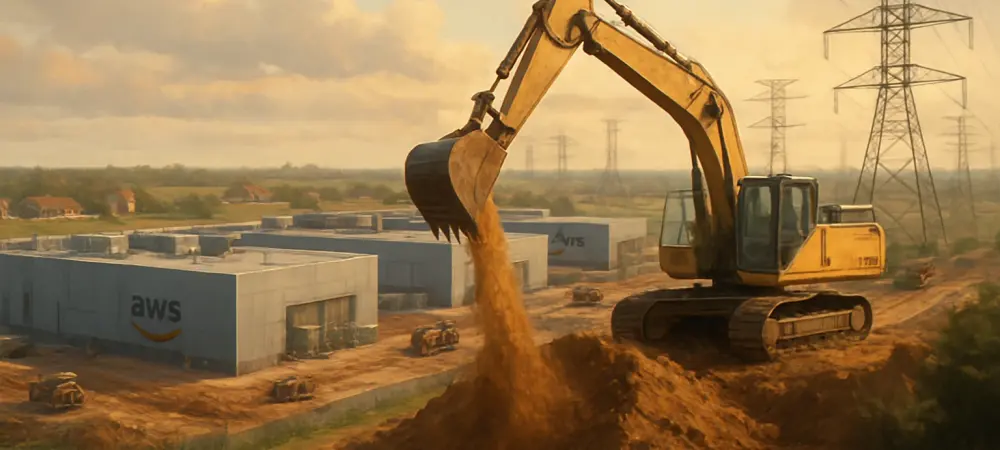
Data center engineers described the plan as a phased, density-first rollout: up to 22 buildings at New Carlisle, likely growth in Portage, and incremental expansion at existing sites to match GPU delivery waves. Several sources pointed to Project Rainier and work with Anthropic as cues that liquid-cooled, high-power racks and ultra-low-latency fabrics will anchor the design.
On siting, construction advisors flagged the scarce items: large transformers, switchgear, and skilled electrical labor arriving in lockstep with interconnection milestones. Local permitting was viewed as workable but dependent on fiber backhaul timing and substation upgrades that must thread through MISO’s crowded queue.
The NIPSCO Compact: Funding the Grid Without Raising Neighborhood Bills
Utility specialists praised the NIPSCO structure as a blueprint: the developer pays for new generation, transmission, and equipment while using existing lines without shifting costs to ratepayers. That alignment, they argued, encourages right-sized builds and curbs the hidden taxes that often creep into customer bills. Economists cited NIPSCO’s projection of enabling up to 3GW and roughly $1B in customer savings over 15 years as evidence that cross-subsidy can be avoided. Skeptics, however, warned that precedent-setting deals demand vigilant oversight, clarity on what happens if load profiles change, and fairness for smaller developers that cannot pre-finance grid assets at the same scale.
Powering Ai at Scale: Efficiency Targets, Renewables Strategy, and the Carbon Ledger
Sustainability practitioners described an AI-ready toolkit: direct-to-chip liquid cooling, waste-heat reuse opportunities, and participation in demand response and fast-frequency support. The view was pragmatic—optimize megawatts per model, then monetize flexibility as grid services.
Clean-energy strategists emphasized layered supply: PPAs and RECs as near-term hedges, with transmission upgrades to unlock 24/7 matching in a congested MISO footprint. They acknowledged trade-offs—bridging with market or gas-fired power while chasing long-duration storage and siting closer to generation—arguing that lifecycle accounting must follow actual hourly carbon.
Jobs, Vendors, and the Indiana Cloud Cluster
Workforce advocates highlighted the ripple: thousands of construction roles, steady operations jobs, and a pull-through effect for electricians, HVAC specialists, and network technicians. Community colleges and unions were seen as pivotal in building a pipeline for high-voltage, controls, and data center operations credentials.
Market watchers placed the move within a regional mosaic that includes Meta, Microsoft in Mishawaka, Google in Fort Wayne, and carriers like US Signal, DataBank, Netrality, and Digital Crossroads. Competitive advantage, they said, will hinge on tax certainty, dark fiber access, IXPs, and the ability to host latency-sensitive AI inference near users while pushing training to ultra-dense zones.
What It Means for Stakeholders: A Practical Roadmap
Roundup participants converged on a core lesson: utility-aligned builds can scale AI capacity while shielding ratepayers and reinforcing regional grids. The approach reframes “big load as burden” into “big load as anchor,” provided costs are ring-fenced and performance targets are tracked. For action, policy voices recommended standardizing cost-allocation rules, streamlining interconnections, and making utility agreements transparent by default. Utility planners urged joint capacity plans with hyperscalers, flexible tariffs that reward load shape, and accelerated grid-hardening. Communities prioritized training for data center ops, electrical, and networking roles alongside supplier development. Developers and partners favored co-location near power and fiber, modular design, and integrated 24/7 clean procurement.
Practitioners also pushed for replicable playbooks: performance-based sustainability metrics, public–private governance that audits outcomes, and pilots that turn data centers into grid assets via demand response, black start support, and ancillary services.
The Road Ahead: Indiana’s Bid to Anchor the Midwest’s Ai Backbone
Across insights, a consistent arc emerged: phased megaprojects, utility partnerships, and AI-centric designs are redefining where compute gets built and how grids evolve. Participants described a feedback loop—bigger campuses attract better vendors and talent, which shortens timelines and lowers risk.
Commentators stressed durability over splashy announcements, noting that long-horizon investments lower costs, boost resilience, and seed a stable cloud ecosystem. The closing recommendation was practical: treat compute, power, and fiber as a single system, synchronize planning, accelerate builds, and target AI capacity that scales efficiently, rides through shocks, and decarbonizes hour by hour.
This roundup concluded with clear next steps: codify utility–developer cost alignment, prioritize interconnection reforms, fund workforce pipelines matched to high-voltage and cooling skills, and integrate data centers into grid reliability plans while expanding 24/7 clean energy coverage.