

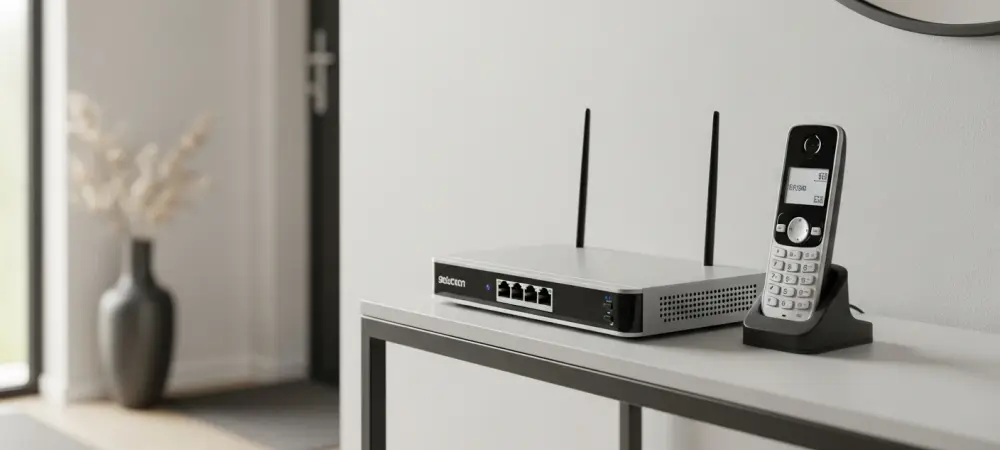
The rapid proliferation of smart devices and the escalating demand for high-speed connectivity have fundamentally reshaped the digital landscape of our homes and small businesses into a complex web of interconnected gadgets. This review delves into the evolution of a technology designed to tame this chaos: the all-in-one networking hub. By exploring its core features, performance metrics, and real-world impact, this analysis aims to provide a comprehensive understanding of this consolidating technology. The focus is to dissect its current capabilities, evaluate its practicality, and project its potential role in shaping the future of digital ecosystems. The central purpose is to determine if unifying disparate network functions into a single chassis is a revolutionary step forward or a compromise that serves only a niche audience.
Understanding the Consolidated Hub
An all-in-one networking hub is a paradigm shift away from the traditional setup of separate, single-function devices. It masterfully integrates the capabilities of a modem, a high-performance router, a complete telephone system, and a central smart home controller into a singular, cohesive unit. This review specifically examines the AVM Fritz!Box 5690 Pro, a device that stands as a prime exemplar of this trend. It is a technological confluence, merging the nascent power of Wi-Fi 7 with the practical flexibility of supporting both legacy DSL and modern fiber optic internet connections. This dual-pronged approach is not merely a convenience but a strategic design choice that speaks to a broad user base at different stages of their technological journey.
The relevance of such a device extends far beyond simple decluttering. In an era where the average household juggles dozens of connected devices, from laptops and smartphones to thermostats and security cameras, the complexity of network management has become a significant burden. The Fritz!Box 5690 Pro, and others in its class, propose a solution: a centralized command center that simplifies the intricate dance of data traffic. Its primary value proposition lies in its ability to streamline a complex home network, drastically reduce the physical and digital footprint of necessary hardware, and establish a “future-proof” foundation. This foundation is crucial, as it is built to accommodate the bandwidth-hungry applications and emerging technologies that will define the digital experience in the coming years.
Core Features and Technical Breakdown
Next-Generation Wireless: Wi-Fi 7 Integration
The centerpiece of the device’s technical prowess is its forward-looking implementation of tri-band Wi-Fi 7. Operating simultaneously across the 2.4GHz, 5GHz, and 6GHz frequency bands, this hub is engineered to deliver a new echelon of wireless performance. The most significant advancement it brings to the table is Multi-Link Operation (MLO), a cornerstone feature of the Wi-Fi 7 standard. MLO allows a single client device, such as a laptop or smartphone, to establish and maintain simultaneous connections across multiple bands. This capability fundamentally changes how wireless data is transmitted, enabling the hub to aggregate bandwidth for dramatically increased speeds and enhanced stability, effectively creating a more robust and resilient connection. With theoretical data rates soaring up to an astonishing 18,520 Mbps, the raw power of this technology is tailored for the most demanding digital tasks. The implications are profound for environments saturated with connected devices. High-resolution 8K video streaming, latency-sensitive competitive online gaming, large file transfers, and the ceaseless communication of an entire smart home ecosystem can all be handled concurrently without compromising performance. This level of throughput and efficiency is not just an incremental improvement; it represents a significant leap forward, positioning the hub to manage the escalating demands of modern digital life with ample capacity to spare. It addresses the bottlenecks of previous Wi–Fi generations and paves the way for a more fluid and uninterrupted connected experience.
Versatile Connectivity: Fiber, DSL, and LAN Ports
A key differentiator for this networking hub is its intrinsic versatility, embodied by a sophisticated dual-modem architecture. This design thoughtfully addresses the transitional state of internet infrastructure by offering native support for both legacy DSL connections and modern, high-speed fiber optics. The inclusion of a dedicated SFP (Small Form-factor Pluggable) slot for a fiber module is a critical feature, providing users with a direct and elegant upgrade path. An individual currently using a DSL service can invest in this hub with the confidence that it will seamlessly accommodate a future switch to a fiber-to-the-home connection without requiring any additional hardware. This foresight removes a significant barrier to adoption and underscores the device’s long-term value proposition.
The hub’s wired connectivity options are both robust and strategically configured to serve a variety of needs. It is equipped with a high-speed 2.5Gbps port that can be designated as either a WAN or a LAN connection, offering flexibility for users with multi-gigabit internet plans or high-performance internal network devices. This is supplemented by four additional Gigabit LAN ports, providing ample connections for desktop computers, network-attached storage (NAS) units, and other stationary equipment. However, a notable technical limitation in its design is the absence of 10Gbps LAN ports. While the current configuration is more than sufficient for the majority of home and small business users, this omission could present a performance bottleneck for power users and prosumers who operate high-speed internal networks or utilize enterprise-grade NAS systems, a point of consideration for those at the very cutting edge of networking.
Integrated Telephony and Smart Home Control
Beyond its core networking functions, the hub distinguishes itself by integrating a comprehensive communications and smart home control system. It operates as a full-featured DECT base station, capable of managing up to six cordless telephone handsets. This transforms the device into the central nervous system for a home or small office phone network, complete with features like call waiting, call forwarding, and an internal answering machine. Furthermore, the inclusion of a traditional analog port ensures that legacy telephone equipment can still be incorporated into this modern ecosystem, providing a bridge between old and new technologies. This telephony integration offers a streamlined solution that eliminates the need for a separate phone base and its associated clutter.
The device further solidifies its position as a central hub by incorporating both Zigbee and DECT ULE radios directly into its hardware. This dual-radio capability allows it to communicate with and control a wide array of smart home devices, such as smart light bulbs, thermostats, sensors, and automated blinds, without requiring separate, proprietary bridges or controllers for each brand. By centralizing smart home management, it simplifies device setup, reduces network congestion caused by multiple hubs, and creates a more unified and interoperable smart home environment. This feature transforms the router from a simple data conduit into an active and intelligent manager of the entire digital home, reflecting a holistic approach to modern connectivity.
Onboard Software: The FRITZ OS Ecosystem
The entire suite of powerful hardware is orchestrated by FRITZ!OS, a mature and feature-rich operating system accessed through a comprehensive web-based interface. This software is far more than a simple settings panel; it is a deep and powerful management tool that grants users granular control over every aspect of their network. It provides access to a host of advanced features that elevate the user experience, including robust parental controls for managing internet access on a per-device basis, the ability to create a secure and isolated guest Wi-Fi network, and the functionality to configure a media server using an external drive connected to the built-in USB 3.1 port. This USB port also enables NAS-like functionality, allowing for network-wide file sharing and storage.
This depth and breadth of features offer an unparalleled level of customization for those who wish to fine-tune their network’s performance and security. Users can delve into detailed network traffic logs, configure complex routing rules, and meticulously manage smart home device interactions. However, this extensive capability comes with a trade-off. The FRITZ!OS interface, while powerful, presents a significantly steeper learning curve than the simplified, app-based dashboards common to most consumer-grade routers. The sheer number of options and technical terminology can be intimidating for a novice user, meaning that unlocking the full potential of the hub requires a willingness to engage with its more complex settings and a foundational understanding of networking principles.
Performance in the Real World
In practical, real-world testing scenarios, the hub’s Wi-Fi 7 performance delivered on its promise of a superior wireless experience. When benchmarked against previous standards, it demonstrated a marked and consistent improvement in both data throughput and signal range. The connection proved to be exceptionally stable and reliable over an extended testing period, handling a demanding mix of high-resolution streaming, online gaming, and numerous smart home devices without any discernible lag or interruption. Remarkably, a single unit was able to provide more comprehensive and robust coverage than some multi-node mesh systems, underscoring the quality of its radio and antenna design. Despite its impressive technical performance, the overall user experience is heavily defined by the initial setup process, which stands as a significant hurdle for the average consumer. Unlike the plug-and-play simplicity of many modern routers, configuring this hub demands a degree of technical knowledge specific to one’s internet service. The user must be prepared to input details about their connection type—whether it is DSL or a specific standard of fiber—and potentially other provider-specific settings to achieve optimal performance. This requirement for user input, while necessary for the device’s flexibility, poses a considerable challenge for non-technical individuals and can be a source of initial frustration. The journey from unboxing to a fully operational and optimized network is therefore more involved than the mainstream market has come to expect.
The Hub in Action: Practical Applications
The primary deployment scenarios for this advanced technology are found within the environments of tech-savvy homes and forward-thinking small businesses. For a modern home office, its value proposition is exceptionally clear. It consolidates the essential functions of internet connectivity, a sophisticated multi-line phone system, and centralized network storage into a single, elegantly managed device. This integration not only reduces hardware clutter but also simplifies network administration, allowing for streamlined management of all digital resources from one interface. The ability to prioritize traffic for video conferencing while managing a robust phone system makes it an ideal backbone for professional remote work.
As the centerpiece of a smart home, the hub shines in its capacity to unify a potentially disparate collection of devices. It can seamlessly orchestrate the control of lighting systems, security sensors, smart thermostats, and other IoT gadgets, creating a cohesive and responsive automated environment. Its support for both current and future internet standards, like fiber and Wi-Fi 7, also positions it as a strategic long-term investment. Users looking to build a resilient and adaptable network that will not become obsolete as technology evolves will find its implementation particularly notable. It serves not just the needs of today but is engineered to be the reliable core of the digital home for years to come.
Challenges and Key Considerations
The most significant challenge this technology faces in achieving mainstream success is market adoption, which is directly hindered by its inherent complexity. The setup procedure and the configuration of its more advanced features, such as the smart home hub or telephony system, demand a level of technical expertise that surpasses that of the average consumer. This steep learning curve creates a substantial barrier to entry, relegating the device to a more niche audience of enthusiasts and professionals who possess the necessary knowledge to unlock its full capabilities. For widespread use to become a reality, this complexity must be addressed through more intuitive user interfaces and guided setup processes.
Another considerable obstacle is the device’s premium price point. When viewed purely as a standalone router, its cost is significantly higher than many high-performance competitors, making it a difficult purchase to justify for those who do not intend to use its full integrated feature set. While it offers exceptional value as a consolidated system that replaces multiple other devices, this value is only realized if those features are actively leveraged. From a technical standpoint, a key limitation is the absence of multi-gigabit LAN ports beyond the single 2.5Gbps connection. For power users with high-speed internal networks or advanced NAS systems, this can create a data bottleneck, preventing them from taking full advantage of their local network’s speed potential.
The Future of Integrated Networking
The trajectory for all-in-one networking hubs appears to be closely intertwined with two dominant trends: the relentless drive toward device consolidation and the ever-increasing complexity of the modern home network. As more and more devices in our daily lives become connected to the internet, the need for a powerful, centralized brain to manage them efficiently becomes more acute. Future developments in this product category will likely concentrate on sanding down the rough edges of the user experience, with a strong focus on simplifying the interface and automating complex configuration tasks to make the technology more accessible to a broader audience. Enhanced interoperability with a wider ecosystem of third-party smart home devices will also be critical for its evolution. As next-generation technologies like multi-gigabit fiber internet and the Wi-Fi 7 standard transition from the cutting edge to the mainstream, the demand for integrated solutions capable of managing this newfound bandwidth will intensify. A single, powerful hub that can intelligently distribute multi-gigabit speeds across data, voice, and smart home functions will become not just a convenience but a necessity. The long-term impact of this trend could be transformative, fundamentally altering how consumers build and manage their digital lives. The all-in-one hub may evolve into the default, essential utility at the heart of the connected home, as indispensable as the internet connection itself.
Final Verdict and Recommendation
The all-in-one networking hub, as exemplified by the Fritz!Box 5690 Pro, was found to be a formidable and exceptionally capable solution, but one that was clearly engineered for a specific type of user. The primary takeaway from this analysis was the immense and undeniable value it offered through the deep integration of multiple, distinct devices into a single, high-performance unit. This consolidation proved to be its greatest strength, creating a powerful, streamlined, and cohesive digital ecosystem. In its current state, the technology was best suited for the tech enthusiast, the prosumer, and the small business owner—users who possess the technical acumen to navigate its complexities and leverage its comprehensive feature set to its fullest extent.
While its intricate nature and the notable absence of multi-gigabit LAN ports were identified as significant drawbacks, its forward-looking design and potential for future-proofing a network made it a compelling product within the broader connectivity sector. The device successfully demonstrated that a single box could indeed replace a stack of hardware without significant compromise, offering a glimpse into a more integrated and efficient future for home networking. It stood as a powerful, albeit niche, testament to the benefits of consolidation, marking a significant step in the evolution of how we manage our increasingly complex digital lives.