

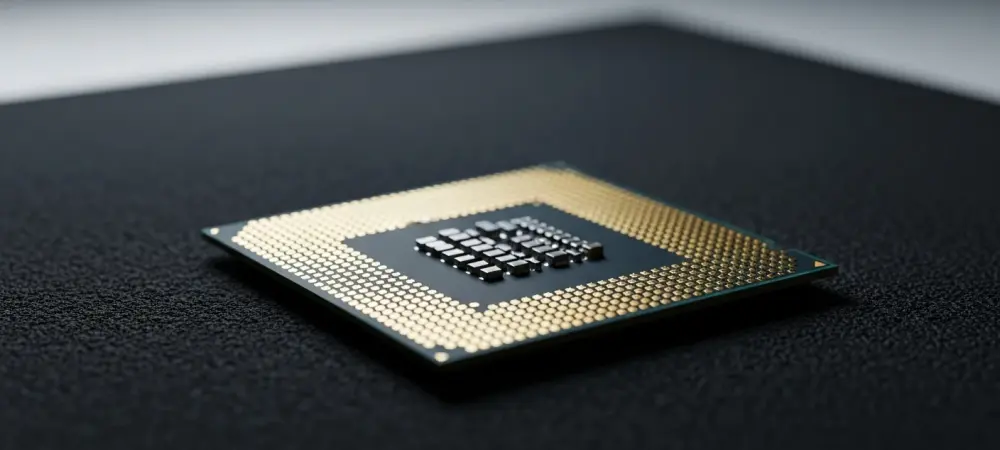
In the relentless pursuit of peak gaming performance, a new heavyweight contender has unexpectedly stepped into the ring, promising to shatter existing benchmarks through an audacious and unprecedented engineering feat. The AMD Ryzen 9 9950X3D2 arrives not just as an iteration but as a statement, a processor built on a philosophy where every possible frame per second is worth chasing, regardless of the cost in power or price. This review delves into whether its groundbreaking dual 3D V-Cache technology truly redefines the pinnacle of gaming hardware or if it’s a hyper-specialized component with limited appeal.
Introduction The Ultimate Gaming CPU or a Niche Novelty
The central question surrounding the Ryzen 9 9950X3D2 is one of value and purpose. AMD’s X3D technology has already proven its worth by dramatically boosting gaming performance, but doubling down on this concept introduces new complexities. This processor challenges the market to decide if a component designed almost exclusively for gaming supremacy can justify its position at the top of the consumer stack. Its success will hinge on its ability to deliver a tangible, game-changing advantage that the most discerning enthusiasts can both measure and feel.
For those whose computing needs are balanced between productivity and play, the 9950X3D2 presents a fascinating dilemma. While it aims to be the undisputed gaming king, the architectural trade-offs inherent in its design—namely, potentially lower clock speeds and higher power consumption—could make it a less practical choice than its non-X3D siblings for content creators and professionals. This review will assess whether its laser-focused design creates a new must-have category for elite gamers or confines it to a niche corner of the ultra-high-end market.
Unveiling the Accidental Flagship Core Architecture and Specifications
The existence of the Ryzen 9 9950X3D2 was confirmed not through a polished press release but via an accidental leak from an ASUS executive, a detail that only added to its mystique. Built on the advanced Zen 5 architecture, this processor retains the 16-core, 32-thread configuration of its predecessor, ensuring a formidable foundation for any task. However, its core identity is defined by a feature never before seen in a consumer CPU: the application of 3D V-Cache to both of its Core Complex Dies (CCDs).
This dual-cache implementation is the processor’s crown jewel. By equipping both chiplets with this extra layer of cache, AMD has pushed the total L3 cache to a staggering 192 MB. This massive reservoir is designed to feed the 16 cores with data at lightning speed, minimizing the costly delays of fetching information from system RAM. While the base clock is expected to hold at 4.3 GHz, the boost clock is rumored to see a slight reduction to 5.6 GHz, a necessary concession to manage the thermal and power demands of the stacked cache. Accompanying these core changes is a significant increase in the Thermal Design Power (TDP), which rises to 200W. This figure signals that the 9950X3D2 is a power-hungry chip that will demand robust cooling solutions to operate at its full potential. The processor also includes integrated RDNA 2 graphics, providing basic display output capabilities, though it is understood that anyone investing in a CPU of this caliber will pair it with a high-end discrete graphics card.
Performance Deep Dive Gaming Supremacy vs Real World Compromises
The primary mission of the 9950X3D2 is to dominate in gaming, and the expanded 192 MB L3 cache is the engine for this ambition. In CPU-bound scenarios, particularly at 1080p and 1440p resolutions where the processor is often the bottleneck, this massive cache is expected to deliver a significant uplift in frame rates. Games that are highly sensitive to memory latency should see the most dramatic improvements, allowing the processor to keep a top-tier GPU fully supplied with data and pushing performance ceilings higher than ever before.
In contrast, its prowess in multi-threaded productivity tasks may be more nuanced. While early benchmarks suggest a healthy improvement over previous generations, the slightly lower boost clock compared to the non-X3D Ryzen 9 9950X could make it marginally slower in applications that favor raw frequency over cache size. This creates a clear trade-off: users gain an edge in gaming but may sacrifice a small amount of performance in rendering, compiling, and other heavily threaded workloads.
The move to a 200W TDP is a critical consideration. This increased power draw translates directly into more heat, making high-performance cooling a non-negotiable requirement. To prevent thermal throttling and unlock the chip’s full potential, users will need to invest in either a premium air cooler or, more realistically, a multi-fan AIO liquid cooling solution. The effectiveness of this cooling will directly impact the processor’s ability to sustain its boost clocks during intense gaming sessions.
The Dual Cache Dilemma Key Advantages and Disadvantages
The processor’s most significant strength is its potential for undisputed gaming leadership. The sheer volume of L3 cache promises to smooth out frame times and elevate average frame rates in a way that no other consumer CPU can. This makes it an incredibly compelling option for competitive gamers and enthusiasts who demand the absolute best, where even a small percentage increase in performance provides a tangible advantage. Beyond gaming, certain specialized scientific and data-intensive applications may also benefit from the massive cache, making it a powerful tool for specific professional use cases.
However, this specialized design comes with clear disadvantages. The higher 200W TDP necessitates a more substantial investment in cooling and a power supply to match, adding to the total platform cost. Furthermore, the anticipated premium price point will place it out of reach for most builders, solidifying its status as an enthusiast-grade component. The slightly reduced boost frequency remains a compromise, potentially making it a less optimal choice for users whose workflow includes a mix of gaming and frequency-dependent productivity tasks.
Summary and Final Assessment
The Ryzen 9 9950X3D2 positions itself not as a jack-of-all-trades but as a master of one. Its design philosophy is an unapologetic pursuit of the highest possible gaming frame rates, leveraging an unprecedented dual 3D V-Cache configuration to achieve that goal. This focus makes it a highly specialized processor, engineered for an audience that prioritizes gaming performance above all other metrics, including power efficiency and all-around productivity speed.
Ultimately, this CPU is a testament to what is possible when engineering is aimed at a single, well-defined target. The recommendation is therefore straightforward: for the elite gamer or esports professional seeking to eliminate every conceivable CPU bottleneck, the 9950X3D2 stands as the presumptive king. For them, the higher cost and increased power draw are secondary concerns when measured against the prospect of achieving unparalleled in-game performance.
The Verdict Who Should Consider the 9950X3D2
The Ryzen 9 9950X3D2 was a halo product, a showcase of technological prowess intended for a very specific type of user. It was not a processor for the average gamer or the budget-conscious builder. Instead, it catered to the top tier of the market—the enthusiast who pairs their CPU with a flagship GPU and a high-refresh-rate monitor, and for whom compromise is not an option. Its value was measured not in price-to-performance ratios but in its ability to deliver the most fluid and responsive gaming experience possible.
Potential buyers were advised to approach this CPU as the centerpiece of a top-of-the-line system. Building around the 9950X3D2 required careful consideration of supporting components, including a high-quality motherboard with robust power delivery to handle the 200W TDP and an advanced cooling system to keep temperatures in check. For those willing to make that investment, the processor delivered on its promise, cementing its place as the definitive choice for ultimate gaming dominance.