

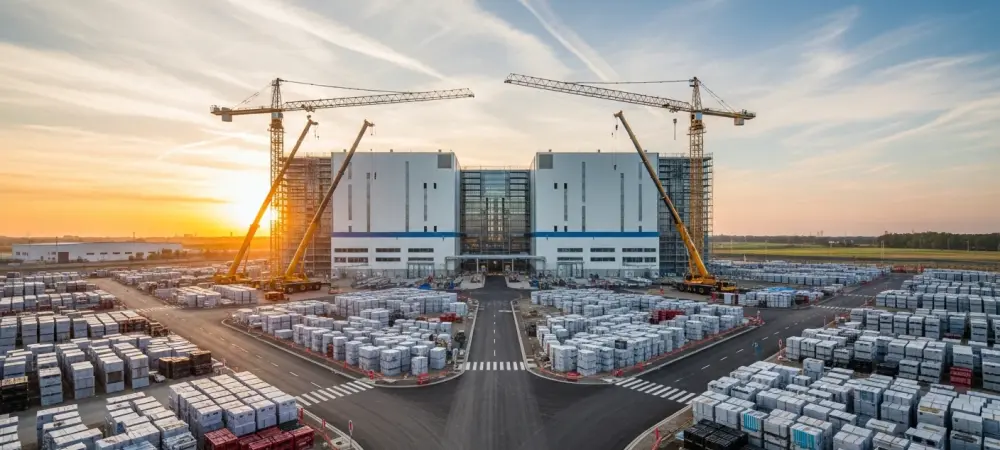
The rapid evolution of high-performance computing infrastructure has fundamentally reshaped regional economies, turning previously overlooked industrial zones into critical nodes for the global digital supply chain. This transformation reached a pivotal milestone recently as construction crews celebrated the topping out of the IAD-06 data center in Frederick, Maryland. Managed through a partnership between Aligned and Turner Construction, the project signifies the structural completion of a sophisticated two-story facility designed to provide 72MW of critical power capacity. Spanning approximately 450,000 square feet, the building represents the first major phase of a massive 75-acre campus situated within the Quantum Frederick industrial park. The speed of execution was particularly notable, as the structural phase concluded in just five months of active work. This rapid progression required the coordinated efforts of 345 onsite professionals and the logging of more than 80,000 man-hours to maintain a strict developmental timeline.
Evolution of the Maryland Tech Corridor: Regulatory Shifts
The successful advancement of this facility marks a significant turnaround for the local industrial landscape, which faced substantial uncertainty only a few years ago. Initially, the developer envisioned a sprawling 3.3 million-square-foot footprint for the site, but these plans were temporarily halted due to stringent state regulations governing the deployment of diesel backup generators. However, the revitalization of the project in 2024 became possible after state lawmakers amended environmental statutes to better accommodate the specialized infrastructure requirements of modern data centers. This legislative pivot has effectively converted the region into a highly competitive technology hub, attracting interest from other major industry players. Companies such as Rowan Digital Infrastructure and Amazon have subsequently sought to establish a presence within the same park, with the latter pursuing permits for its own extensive generator arrays. This influx of capital suggests that Maryland has successfully positioned itself as a viable alternative to more saturated markets.
Strategic Infrastructure Expansion: Future Implications
The completion of this structural phase was deeply intertwined with broader corporate transitions and large-scale capital investments that redefined the project’s trajectory. Following the departure of Quantum Loophole, TPG Real Estate emerged as the primary developer for the park, providing the necessary stability for Aligned to accelerate its regional strategy. This growth coincided with a massive $40 billion acquisition by a consortium led by the AI Infrastructure Partnership, MGX, and Global Infrastructure Partners. The integration of the Maryland facility into a national network including Texas and Arizona demonstrated a clear commitment to high-density computing needs. Stakeholders prioritized the alignment of local utility upgrades with the facility’s scaling requirements to ensure seamless operations upon final commissioning. Future developers observed that navigating complex regulatory hurdles required early engagement with state officials to secure long-term infrastructure viability. The project proved that legislative flexibility remained the primary catalyst for sustaining growth.