

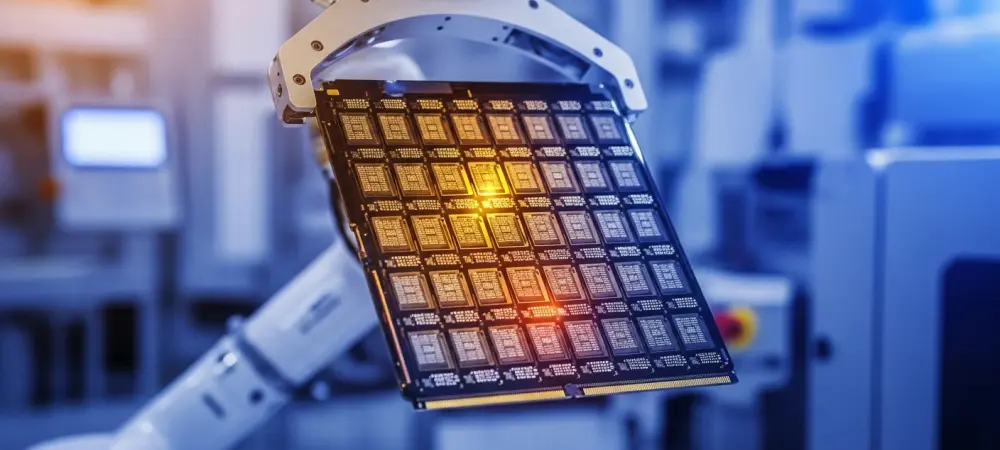
The global technological landscape is currently undergoing a radical transformation as the relentless hunger for computational power pushes the South Korean memory industry into an unprecedented era of economic dominance. South Korea has solidified its position as the critical backbone of global artificial intelligence infrastructure. Samsung and SK Hynix now dictate the pace of innovation, commanding the market for high-performance hardware that fuels generative models. This dominance is not merely a matter of prestige but a fundamental driver of national export revenue, as DRAM and NAND flash become the primary engines of the current tech valuation surge. Global data center expansion continues to act as a catalyst, funneling billions into the Korean economy as cloud providers race to secure necessary hardware.
The Resurgence of South Korean Semiconductors in the Global AI Economy
Beyond the immediate financial gains, the industry represents a strategic fortress for the global supply chain. Recent performance metrics indicate that the reliance on Korean-made memory has reached a point where any disruption could stall international AI development. This reliance stems from years of aggressive research and development that allowed domestic firms to master stacked memory architectures before their international peers. Consequently, the current economic climate favors those who control the physical storage and movement of data.
Moreover, the synergy between hardware and software in the AI sector has created a feedback loop that benefits Korean manufacturers. As software becomes more complex, it demands faster and more dense memory modules, which in turn leads to higher pricing power for producers. This cycle has elevated South Korean semiconductors from a cyclical commodity to a mission-critical strategic asset, insulating the sector from traditional market downturns.
Shifting Paradigms and Quantitative Growth in the Memory Sector
The Pivot Toward Enterprise AI Infrastructure and Specialized Storage
A significant transition is occurring as manufacturers pivot away from general-purpose consumer electronics toward specialized enterprise hardware. The explosive demand for High Bandwidth Memory and enterprise-grade Solid State Drives has fundamentally altered production priorities. While the market for personal computers remains relatively cool, the industrial storage segment is experiencing a state of overheating due to the specialized requirements of large-scale AI training clusters.
Technological evolution is also visible in the shift from traditional TLC-based drives to high-end MLC and SLC enterprise solutions. These advanced storage technologies offer the durability and speed required for the heavy read-write cycles of neural networks. This divergence in the market means that while consumer prices may fluctuate, the floor for high-performance components remains exceptionally high, driven by the specialized needs of corporate giants.
Evaluating Price Volatility and Revenue Projections for 2026
Recent customs data provides a stark illustration of this growth, revealing a staggering 500% year-over-year surge in DRAM pricing. NAND flash costs have followed a similar trajectory with a 351.6% jump over the same period, while High Bandwidth Memory prices have climbed steadily by 18.7% on a monthly basis. These figures underscore the sheer scale of the AI supercycle and the resulting price elasticity within the enterprise sector. Contract price forecasts remain bullish, with projections indicating another 75% surge in NAND pricing for the upcoming quarter. Export volume trends suggest that the broader semiconductor sector is not just recovering but expanding into a higher revenue bracket. These indicators suggest that the current pricing levels are becoming the new baseline for a market that shows no immediate signs of cooling.
Addressing Structural Obstacles and Supply Chain Bottlenecks
Despite the record revenues, the industry faces daunting physical limitations that prevent immediate supply relief. Fabrication plants require a minimum lead time of two to three years for significant capacity expansion, meaning the current shortage is baked into the market for the foreseeable future. This lack of agility forces Korean firms to prioritize high-margin AI components over consumer-grade inventory, which remains in surplus and complicates overall market strategy.
In response to these shortages, international competitors, particularly those in China, are attempting to scale domestic production capacity. However, the technological lead held by South Korean firms creates a barrier to entry that is difficult to overcome through volume alone. The focus remains on maintaining a technological monopoly through proprietary manufacturing processes that ensure superior yields and performance.
The Evolving Regulatory Environment and Global Trade Standards
International trade regulations are playing an increasingly central role in the export of advanced memory technologies. Compliance with global security standards has become a prerequisite for hardware used in enterprise-grade AI infrastructure, particularly as data privacy concerns mount. South Korean firms must navigate a complex web of restrictions that dictate where and how their most advanced chips can be sold, balancing economic gain with geopolitical stability. Domestically, the government has launched initiatives and subsidies aimed at protecting the semiconductor monopoly from external pressures. These measures include investments in green manufacturing to meet rising environmental and sustainability standards. As the world moves toward net-zero targets, the energy efficiency of the chips themselves and the factories that produce them has become a key competitive advantage in the global market.
Forecasting the Path Toward 2027: Innovation and Economic Resilience
Looking toward the horizon, emerging technologies like HBM4 and Compute Express Link are poised to redefine the limits of memory performance. These innovations will likely act as market disruptors, forcing a realignment of hardware valuations as older generations become obsolete. The integration of memory directly into processing units will further blur the lines between storage and computation, creating new revenue streams for integrated manufacturers.
Economic conditions and global interest rates will continue to influence how enterprises allocate capital for AI projects. However, the fundamental demand for edge computing and autonomous devices suggests that the need for high-density memory will persist through late 2027. The resilience of the memory sector is tied to its role as the foundational layer of the digital economy, ensuring that it remains a focal point for global investment regardless of broader market volatility.
Concluding Assessment: The Sustained Momentum of the Memory Supercycle
The analysis confirmed that the record-breaking price escalation in Korean memory was driven by a fundamental shift in the global tech economy. Stakeholders recognized that the AI supercycle moved memory from a peripheral component to a central pillar of industrial growth. Investors sought to capitalize on this volatility by prioritizing long-term supply contracts over spot market purchases. It became clear that navigating this landscape required a focus on technological differentiation and manufacturing agility.
Future growth areas were identified in the expansion of edge AI and localized data processing where hardware efficiency remained paramount. The industry moved toward a model where sustainability and high performance were no longer mutually exclusive. Decision-makers adjusted their strategies to account for the persistent supply crunch, ensuring that capital expenditure aligned with the next wave of memory innovation. Ultimately, the transformation of the semiconductor market established a new standard for hardware value in the age of intelligence.