

For centuries, the priceless frescoes of Pompeii have existed as an insurmountable jigsaw puzzle, their vibrant stories shattered into thousands of silent fragments by the catastrophic eruption of Mount Vesuvius in AD 79. This monumental task of reconstruction, compounded by further damage from Allied bombings during World War II and a building collapse in 2010, has long been considered a near-impossible challenge for human hands alone. The fragments are often damaged, incomplete, and intermingled with pieces from entirely different artworks, with no complete reference image to guide restorers. This complex historical problem, however, is now being met with a twenty-first-century solution. A groundbreaking collaborative European project has successfully deployed a sophisticated system combining artificial intelligence and robotics to begin piecing together these ancient masterpieces, marking a new era in the field of cultural heritage preservation. This innovative approach promises not only to resurrect art that was thought to be lost forever but also to redefine the relationship between technology and archaeology.
The Technological Breakthrough
A Symphony of Scanners and AI
The core of this revolutionary approach lies in a meticulously designed, three-part system that transforms the chaotic pile of fragments into a coherent restoration plan. The process begins with a custom-built 3D-scanning system that meticulously digitizes each individual piece of the shattered frescoes. This high-resolution scanning captures every detail of a fragment’s geometry, color, and texture, creating a precise digital twin. Once digitized, these virtual pieces are handed over to the system’s brain: a powerful AI model. This is where the true innovation unfolds. The AI is not simply matching edges like a conventional puzzle solver; it performs a deep analysis of the visual information, identifying potential connections based on subtle patterns in the brushstrokes, faint color gradients, and the unique curvature of the plaster. It effectively learns the artistic “handwriting” of the original creators to predict how disparate pieces once formed a whole. This process, a “stuff of dreams” for archaeologists, automates the most laborious and mentally exhausting part of the reconstruction, allowing the system to test millions of potential combinations in a fraction of the time it would take a human expert.
From Digital Puzzle to Physical Reality
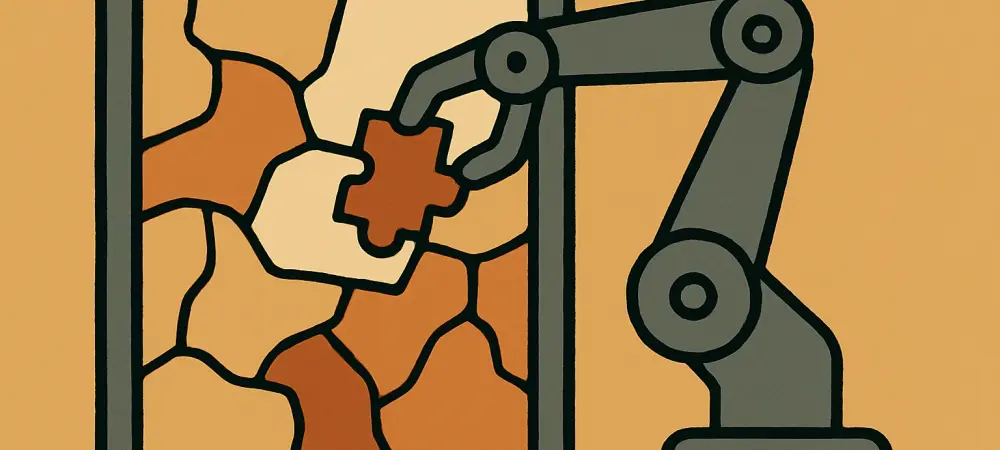
Once the AI has confidently mapped out the digital reconstruction of a fresco section, the project moves from the virtual realm to the physical. This delicate task is performed by a pair of precision-controlled robotic arms, engineered to handle the irreplaceable and fragile artifacts with superhuman steadiness. These arms, guided by the AI’s digital blueprint, carefully pick up the designated fragments and place them into their correct positions. The challenge here is immense, as the robots must account for the imperfect, eroded edges and the three-dimensional nature of each piece. They use advanced sensors and feedback mechanisms to ensure a gentle grip and precise placement, preventing any further damage to the ancient plaster. This seamless integration of AI-driven planning and robotic execution represents a monumental leap forward. The system effectively solves the complex challenge of reassembling priceless artworks that have been fragmented not only by a volcanic eruption but also by subsequent historical events, ensuring that the physical reassembly process mirrors the digital solution with unparalleled accuracy.
Resurrecting History’s Lost Art
A New Paradigm for Archaeology
The successful trial in Pompeii, conducted under the “Reconstructing the Past: Artificial Intelligence and Robotics Meet Cultural Heritage” (RePAIR) initiative, represented more than just a technological triumph; it heralded a fundamental shift in the practice of archaeology. The overarching goal of this broad EU project was to leverage the power of robotics and AI to manage the meticulous and often repetitive mechanical aspects of cultural reconstruction. By automating the sorting and reassembly of countless fragments, the system allowed human experts to transcend their traditional roles. Instead of spending years on painstaking manual labor, archaeologists and art historians were freed to focus on the higher-level interpretive tasks that require a uniquely human touch—tasks such as analyzing the iconography of the restored images, understanding the historical context of the art, and making informed decisions about filling in missing sections. This collaborative model, where technology performs the mechanical work and humans provide the intellectual and artistic oversight, proved to be a powerful and efficient paradigm.
A Future Forged from Fragments
The successful reassembly of Pompeii’s frescoes served as a major finding, offering definitive proof that even the most fragmented and complex historical artifacts could be restored through this innovative synergy of human intellect and machine precision. The project demonstrated the system’s profound potential to breathe new life into artworks that might otherwise have remained in storage boxes, their stories lost to time. With this proof of concept established, the team set its sights on a future where this technology could be applied to other significant works of art and architecture around the globe that have suffered similar fates. From shattered sculptures to fragmented architectural reliefs, the methods pioneered in the shadow of Vesuvius provided a replicable blueprint for cultural restoration projects worldwide. The effort in Pompeii ultimately became a cornerstone for a new approach to preserving the past, ensuring that future generations would have the opportunity to experience historical treasures that had once been considered irretrievably broken.