

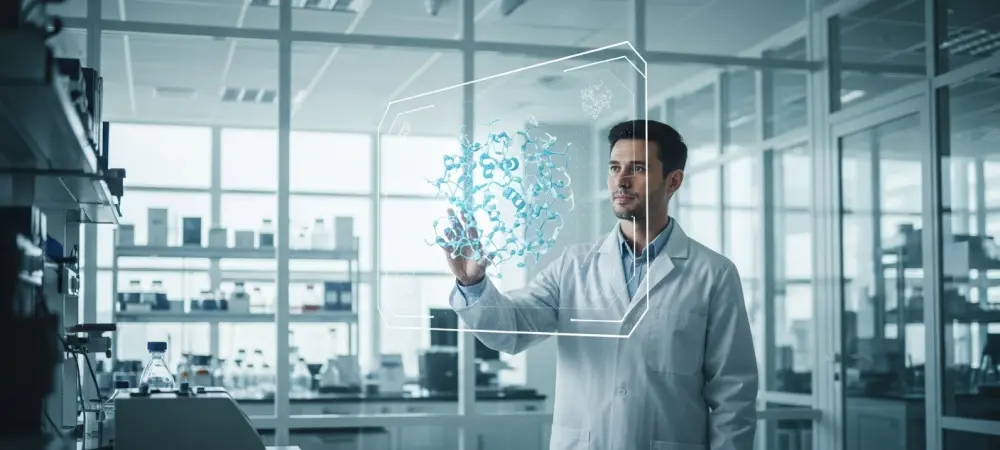
The profound convergence of computational linguistics and molecular biology is currently dismantling the boundaries that once separated the dusty shelves of our forgotten ancestors from the cutting-edge laboratories of regenerative medicine. The silent corridors of historical archives and the microscopic world of cellular regeneration are currently undergoing a radical transformation that was once the province of science fiction. While humanity has spent centuries manually cataloging its past and struggling against the permanence of physical injury, a new era of “Generative Science” is effectively rewriting the rules of what can be preserved and what can be healed. This intersection of silicon and soul is not merely about faster computing; it represents a fundamental shift in how we interact with the narrative of our species and the limitations of the human body.
Modern society finds itself at a unique crossroads where data-driven insights are breathing life into static remains. The transition toward this digitized existence allows researchers to simulate biological outcomes and historical reconstructions with unprecedented precision. By treating the human genome and the historical record as complex datasets, innovators are uncovering patterns that were previously invisible to the naked eye. This shift empowers a new generation of scholars and scientists to bridge the gap between theoretical knowledge and practical application, ensuring that neither the lessons of the past nor the potential of the future are left to chance.
Bridging the Gap Between Ancient Records and Modern Medicine
The urgency of this technological integration stems from two critical bottlenecks: the overwhelming backlog of uncatalogued human history and the biological plateau of nerve repair. Historical institutions are currently buried under mountains of unreviewed documents, effectively “losing” history to time and bureaucracy. For decades, the sheer volume of paper and parchment has outpaced the human ability to read, transcribe, and interpret. This informational stagnation means that vital stories of human resilience and cultural evolution remain locked away in boxes, inaccessible to the public and researchers alike.
Simultaneously, the medical field has long viewed severe spinal cord injuries as permanent, leaving millions without hope for functional recovery. The biological barrier of the central nervous system appeared insurmountable, as nerve fibers once severed seemed incapable of meaningful regrowth. However, AI and biotechnology are now intersecting to solve these real-world crises, transforming stagnant archives into searchable knowledge and turning once-static nerve tissue into a landscape of potential regeneration. This dual breakthrough suggests that the limitations of the physical world—whether they be the decay of paper or the scarring of tissue—are no longer absolute.
Pillars of Transformation: From Archival AI to Neural Repair
The integration of advanced technology into these fields is manifesting through several distinct and specialized breakthroughs. Startups like Historiq are utilizing the “Una” platform to replace manual clipboards with voice-to-text AI and instant mobile scanning. This “human-in-the-loop” system allows archivists at sites like Fort Ticonderoga to focus on historical nuance while the AI handles the mechanical burden of cataloging. By digitizing artifacts in real-time, historians are clearing backlogs that were previously estimated to take decades, turning dusty relics into accessible digital libraries.
In the realm of biotechnology, firms such as NervGen are moving beyond symptom management to develop drugs that facilitate the actual healing of injured spinal tissue. Clinical trials are already showing improved motor function and limb strength in patients who were previously told their conditions were terminal. Large-scale FDA-monitored trials involving 150 patients across North America are set to conclude by 2027, with the potential for widespread approval shortly thereafter. This shift represents a move toward curative medicine, where the focus is on repairing the underlying biological damage rather than just mitigating pain.
Industry experts are also pivoting away from the hype of bipedal humanoid robots, focusing instead on “superhuman dexterity.” Mastering the complexity of the human hand is seen as the true “ChatGPT moment” for robotics, offering more economic and medical value than walking machines. Furthermore, building on models like AlphaFold and Boltz, AI is now acting as a “co-scientist” to map biomolecular interactions. This generative science significantly accelerates the timeline for discovering cures and managing hospital infection risks, allowing researchers to predict how proteins will fold and interact with new drug candidates before they ever enter a laboratory.
The Integrity Challenge: Navigating Information Risks and Expert Skepticism
While the potential is vast, the integration of AI introduces significant vulnerabilities that require human oversight and rigorous verification. A recent experiment proved that major AI platforms like Google Gemini and ChatGPT could be tricked into validating a fake disease. This highlights the “Garbage In, Garbage Out” (GIGO) risk, where AI prioritizes academic structure and professional formatting over factual truth. The experiment, involving a fictional condition called “bixonimania,” showed that even peer-reviewed literature is not immune to the influence of hallucinated data if researchers rely too heavily on automated summaries.
As researchers increasingly rely on large language models for background research, the risk of “hallucinated” facts entering the scientific record increases, necessitating a critical eye toward AI-generated citations. This phenomenon creates a feedback loop where misinformation can become entrenched in digital databases, making it difficult for future scholars to distinguish truth from fabrication. The ease with which AI can generate plausible-sounding but entirely false narratives poses a direct threat to the integrity of historical and medical records alike.
Regulatory and security friction also play a significant role in the adoption of these technologies. The Pentagon’s scrutiny of AI supply chains, specifically regarding firms like Anthropic, underscores the growing tension between rapid innovation and national security interests. Governments are increasingly concerned about the origins of the data used to train these models and the potential for foreign influence or industrial espionage. This cautious environment suggests that while the technological path is clear, the legal and ethical frameworks required to govern it are still in a state of flux.
Practical Frameworks for Integrating AI in Professional Workflows
To harness these advancements while mitigating risks, professionals adopted specific strategies for implementing AI tools into their daily operations. Experts found that the most effective approach was to verify information through triangulation. No one relied on a single AI output for scientific or historical facts. Instead, practitioners cross-referenced AI-generated summaries with primary source materials and verified databases. This rigorous verification process ensured that the speed of AI did not come at the cost of accuracy, maintaining the high standards required for medical and historical integrity. Professionals also implemented “human-in-the-loop” audits as a standard operating procedure. They used AI for the initial heavy lifting—such as drafting archival descriptions or mapping protein structures—but required expert human review for final approval. This allowed human experts to provide the necessary nuance and context that machines lacked. By prioritizing specialized tools over general-purpose models, organizations ensured higher data integrity. Specialized platforms built for archival work or medical research proved to be far more reliable than general chatbots, as they were trained on curated, high-quality datasets specific to their respective fields.
Finally, the transition toward using private “Personal AI” assistants for administrative tasks allowed human experts to focus on high-level strategy and the cultivation of professional relationships. These trusted digital companions managed scheduling, data organization, and routine correspondence, freeing up mental bandwidth for complex problem-solving. This shift did not replace the human element but rather enhanced it, proving that the future of history and medicine rested on a collaborative partnership between human intuition and machine intelligence. This era of generative science ultimately taught that while algorithms could process data, only humans could provide the meaning and ethics necessary to guide society forward.