

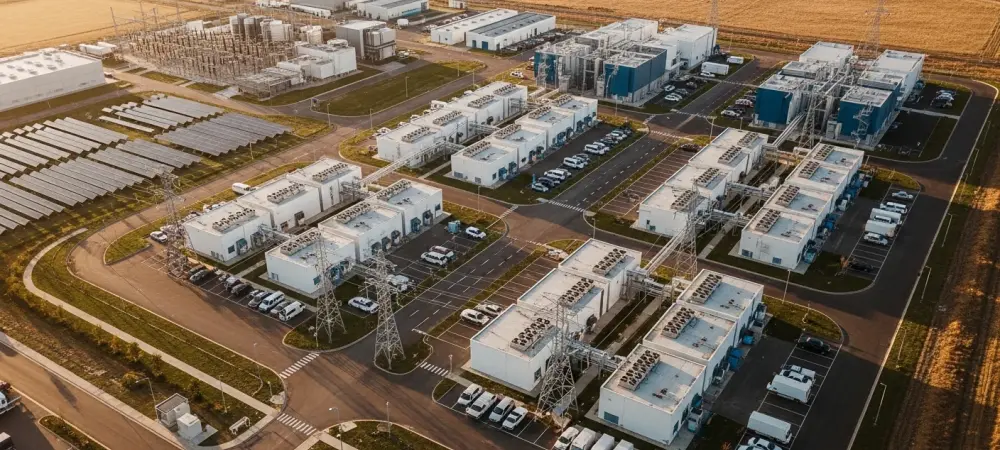
Boardrooms are no longer debating model benchmarks; they are reserving megawatts, silicon, land rights, and fiber backbones as the decisive moat that determines where growth can go and how fast margins scale. The market now prices leadership not by demos, but by who locks in compute, power, and placement before demand peaks. This analysis tracks that pivot, explains why infrastructure has become the first battlefield, and outlines how strategies will succeed or stall as AI moves from pilot to pervasive utility.
The thesis is straightforward: prebuilding capacity raises the ceiling on revenue and speeds product rollout, yet it amplifies utilization, technology, and energy risk. The most aggressive bets—such as Anthropic’s commitment to spend over $100 billion on AWS Trainium-based infrastructure, alongside Amazon’s immediate $5 billion and up to $20 billion in milestone-tied capital on top of roughly $8 billion since 2023—signal a durable shift in capital allocation. Similar moves, like Microsoft’s planned $18 billion for AI infrastructure in Australia, show that regional presence is now part of core product design, not an afterthought.
Demand Drivers and the Capital Shift
Early AI growth leaned on elastic cloud promises, but frontier training shattered that playbook. High-end accelerators, low-latency fabrics, and energy-dense campuses do not materialize on short notice; they require land banks, long-lead gear, and power purchase agreements negotiated years ahead. Scarcity in GPUs and networking lifted the premium on precommitments, while supercomputer-like clusters punished fragmentation with stalled training runs and stranded throughput.
The economic logic is clear. Firms that secure chips and power early compress launch timelines, negotiate better supply, and win on performance per dollar. The downside is just as real: if demand lags or architectures shift, idle accelerators and mismatched networks erode returns. Pricing volatility in energy and permitting delays add execution risk that CFOs must price into hurdle rates and financing structures.
Architecture Split: Training vs Inference
Data centers are being redesigned around the workload split. Training demands dense, tightly coupled GPU or custom-accelerator islands with extreme cooling, specialized schedulers, and loss-minimizing interconnects. Inference wants distributed, latency-tuned capacity, optimized for burstiness, resiliency, and cost per token, often stretched across regions for compliance and user proximity.
Microsoft and Google have emphasized workload placement and power planning as strategic levers: pin large training jobs to power-stable campuses while migrating inference closer to users. Operators are experimenting with grid partnerships, on-site generation, and demand shifting to de-risk power constraints. The failure mode is asymmetry—over-indexing on training produces great models but poor user experience; over-indexing on inference starves R&D and slows product iteration.
Regionalization and Market Signals
Regional capacity is rising to meet sovereignty, latency, and resilience. Microsoft’s Australia buildout reflects a broader design: country-level regions for regulated data, edge points for interactive apps, and backhaul engineered for steady model refresh and fine-tunes. Energy regimes and permitting differ widely, making siting choices as consequential as chip vendor selection.
Market signals reinforce maturation. Reports that SpaceX explored a potential $60 billion acquisition of AI coding startup Cursor underscored conviction in AI-assisted development. Model progress continued—GPT-5.5 improved coding yet still trailed Opus 4.7—showing steady but uneven gains. Physical operations entered the frame with a humanoid robot warehouse pilot, while Apple’s tighter hardware–software integration eased enterprise adoption. Vertical SaaS challengers reshaped workflows without ripping out core systems, forcing CIOs to juggle innovation, risk, and integration costs.
Forecast and Strategic Trajectories
Specialization deepens from here: domain-tuned accelerators, memory-rich inference chips, and optical interconnects to cut training bottlenecks. “Sovereign AI” footprints multiply, guided by reference architectures that shorten compliant deployments. Power becomes a first-class constraint, with long-term procurement, on-site generation, and orchestrated loads treated as product inputs, not facilities overhead.
Model roadmaps tilt toward efficiency: smaller, tool-using, and retrieval-augmented systems that slow training cadence while expanding inference footprints. Capital intensity stays elevated, but leasing, capacity marketplaces, and consortia reduce balance-sheet strain. Expect leaders to prebook multi-year compute and power, standardize multi-tenant inference fabrics, and blend centralized training with regional micro-train and fine-tune loops.
Strategic Implications and Next Moves
The analysis pointed to three imperatives. First, lock in the essentials—accelerators, network fabric, and power—while preserving optionality through interoperable designs and modular data halls. Second, separate stacks by workload with explicit SLOs, and raise utilization via schedulers, virtualization, and multi-tenancy. Third, regionalize with intent: map latency and compliance to tiered footprints, validate demand with pilot regions, and align release cadences with available megawatts.
Risk controls mattered: diversify silicon suppliers, prove new interconnects before large commitments, and embed observability, guardrails, and cost governance into the enterprise stack. Winners treated operational design as strategy, measured performance per dollar and watt, and planned capacity years ahead. In short, leadership accrued to those who built before the boom—and did so with discipline.