

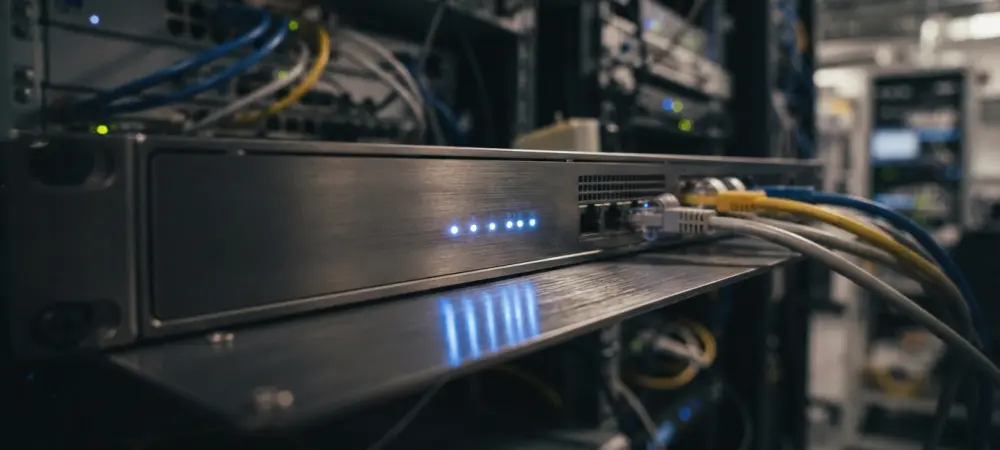
The long-standing reliance on static scripts and manual oversight has finally reached a breaking point as modern data demands outpace human cognitive limits, forcing a fundamental reimagining of how digital infrastructure functions. In the current landscape, the sheer volume of telemetry data generated by distributed clouds and edge computing makes it nearly impossible for traditional methods to keep up. AI-native networking addresses this by embedding intelligence into the very core of the network, transforming it from a passive pipe into a proactive, sentient utility. This evolution is not merely a software update but a structural change that allows networks to sense, think, and act without constant human instruction.
The Paradigm Shift in Network Management
This shift represents a move away from deterministic architectures where every action is pre-programmed based on fixed logic. In legacy environments, an engineer defines a specific threshold for congestion, and a script executes a change when that threshold is met; however, this approach is brittle because it cannot account for the vast variability of modern traffic patterns. Traditional systems often fail when faced with unique environmental variables because they lack the ability to understand context. Consequently, the industry has migrated toward a model where the network learns from its own history and environment to manage complexity. AI-native networking replaces rigid scripts with dynamic models that understand intent rather than just commands. Instead of managing individual devices, administrators now define high-level business intents, such as prioritizing medical data over general web traffic. The network then translates this intent into configuration changes across thousands of nodes simultaneously. This transition has become a necessity for organizations that cannot afford the latency or the risk of human error inherent in manual oversight, as it creates an infrastructure that is inherently more resilient and responsive.
Core Architectural Components and Mechanics
Probabilistic Learning and Inference Engines
At the heart of this technology are probabilistic learning engines that differ fundamentally from the rule-based logic of previous decades. Instead of a binary approach to network events, these engines analyze data through the lens of probability, determining the most likely cause of a fluctuation and the most effective response. This allows the network to distinguish between a genuine security threat and a benign surge in traffic caused by a scheduled update, significantly reducing the frequency of false positives that plague traditional security operations. By processing variables in real time, the inference engine allows the infrastructure to adapt to anomalies as they occur.
The significance of these engines lies in their ability to handle environmental nuance that deterministic systems ignore. For instance, an inference engine can correlate a drop in signal strength with weather patterns or physical obstructions that a static script would misinterpret as a hardware failure. This capability creates a dynamic infrastructure that evolves based on historical and real-time data, ensuring that the network becomes more efficient the longer it remains in operation. This learning cycle is what truly separates AI-native systems from standard automated tools.
Agentic Systems and Autonomous Execution
Beyond mere analysis, the integration of agentic systems introduces a level of autonomous execution that moves beyond simple recommendations to implement complex workflows. These systems are capable of independent planning, meaning they do not just alert a technician to a problem but actively formulate and execute a multi-step strategy to resolve it. This autonomy is validated through closed-loop verification, where the system monitors the result of its own intervention to ensure the desired state was achieved. If the initial fix fails to meet performance metrics, the agent can automatically roll back the change and attempt an alternative solution. The performance of agentic systems is measured by their ability to close the loop on network issues—from identifying a bottleneck to verifying the success of a resolution—without human intervention. In a self-healing environment, these agents manage routine maintenance, security patching, and traffic rerouting, allowing human engineers to focus on high-level strategy. This level of execution is essential for maintaining the uptime required by modern digital services, where even a minute of downtime can result in significant financial loss.
Innovations in AIOps and Network Intelligence
The rise of Artificial Intelligence for IT Operations (AIOps) serves as a critical diagnostic layer designed to mitigate the operational fatigue caused by the noise of thousands of daily alerts. By using correlation algorithms, AIOps platforms pinpoint the single root cause underlying dozens of symptoms, allowing IT teams to focus on resolution rather than investigation. Emerging trends show a shift toward sophisticated noise reduction, where the AI filters out irrelevant data points to present only actionable insights. This innovation has drastically reduced the time to resolution for major network incidents across large-scale enterprises.
Moreover, recent developments have prioritized the explainability of AI decisions, addressing the industry need to understand the logic behind autonomous actions. This ensures that when an AI makes a routing change or blocks a suspicious port, it provides a transparent trail of logic that engineers can audit. Building this trust is essential for the long-term adoption of AI-native networking, as it allows administrators to maintain control over the system while benefiting from its speed. As the logic becomes more transparent, the collaboration between human intelligence and machine execution becomes more effective.
Real-World Applications and Sector Deployment
Real-world deployments demonstrate that the value of AI-native networking is most visible in high-stakes environments like healthcare and decentralized finance. In these sectors, even minor latency can have catastrophic consequences, making the predictive maintenance capabilities of AI indispensable. By anticipating equipment failure or link degradation before it happens, these networks maintain near-perfect uptime. In the finance sector, the technology is used for rapid threat detection, identifying micro-patterns that suggest a security breach long before traditional firewalls would trigger an alarm.
A unique and widely adopted use case involves campus networking, where AI-native systems automatically optimize Wi-Fi signal distribution and bandwidth allocation. As users move through a large facility, the density of connections shifts, often creating localized congestion. AI-native systems recognize these patterns and reconfigure access point power levels and channel assignments in real time to compensate. This automatic optimization ensures consistent user experiences without requiring manual site surveys or constant configuration adjustments, which was previously a labor-intensive task for IT staff.
Operational Challenges and Market Obstacles
However, the adoption of such a transformative technology is not without significant friction, particularly regarding the black box phenomenon of AI decision-making. There is a persistent fear among senior IT leaders that an autonomous system might make an illogical decision that results in a widespread outage, which has led many to limit AI to advisory roles. This cautious approach slows the transition to fully self-healing networks, as human-led change-approval processes remain the standard in many mission-critical environments.
Furthermore, the brittleness of legacy infrastructure creates significant integration hurdles when attempting to deploy AI-native solutions. Older hardware often lacks the telemetry capabilities required to feed a modern AI engine, necessitating expensive upgrades to realize the benefits of the transition. Integrating these new platforms into a heterogenous environment where old and new systems must coexist creates a risk of conflicting commands. Until hardware standards become more unified, the full potential of AI-native networking will likely be limited to modernized data centers and greenfield deployments.
Future Trajectory and Long-Term Impact
Looking ahead from 2026 to 2028, the trajectory of this field points toward the emergence of generative networking, where natural language interfaces simplify the management of global infrastructures. Administrators will likely shift their focus from manual coding toward high-level orchestration, defining desired outcomes while the AI architects the technical solution. This transition will ultimately turn the network into a strategic asset that self-optimizes in alignment with corporate goals, rather than a cost center that requires constant troubleshooting and manual maintenance.
Long-term, this technology will redefine the role of the network administrator, moving it away from the command-line interface and toward strategic governance. The ability of the network to manage itself at the packet level will free human resources to work on innovation and security architecture. As generative models become more grounded in networking logic, the gap between business intent and technical reality will continue to shrink, leading to a landscape where the infrastructure is as fluid and adaptable as the data it carries.
Comprehensive Assessment of AI-Native Networking
The comprehensive evaluation of AI-native networking revealed that the technology was no longer a luxury but a prerequisite for managing the complexity of modern digital environments. It was observed that organizations that moved away from deterministic scripts toward probabilistic architectures achieved higher resiliency and significantly lower operational overhead. The review demonstrated that while the fear of autonomous logic remained a hurdle, the efficiency gains in noise reduction and predictive maintenance provided a clear competitive advantage.
To capitalize on these developments, stakeholders were encouraged to prioritize telemetry normalization across their entire stack to ensure that AI engines received high-quality data. It was found that success depended on investing in explainable AI frameworks to bridge the trust gap between human operators and machine-led execution. As the market matured, the integration of agentic systems proved to be the final piece of the puzzle, allowing for a truly self-healing infrastructure that managed its own growth and security. Future investments were redirected toward these outcome-based models to ensure long-term scalability.