

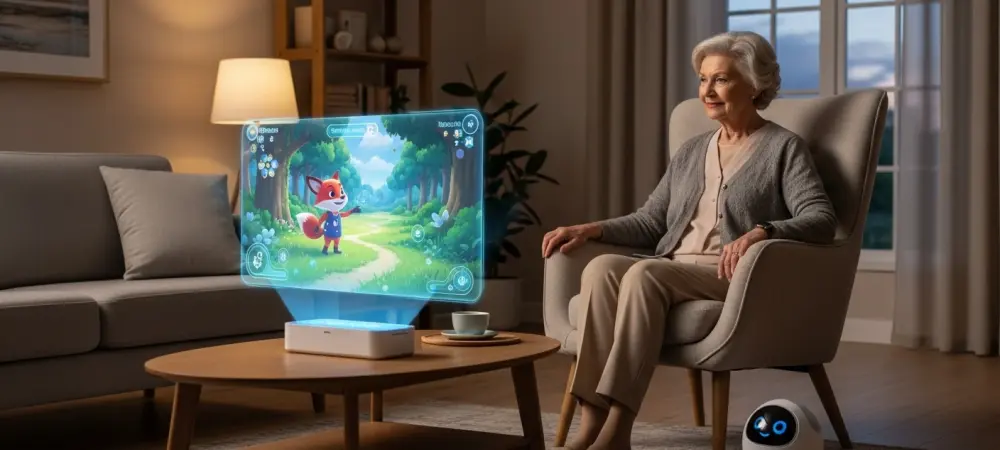
The paradox of the modern age lies in our hyper-connectivity: while we are more digitally tethered than ever, the subjective experience of social isolation has reached the proportions of a global health crisis. As traditional community structures struggle to adapt to a remote-first, screen-mediated world, the technology sector has pivoted toward a provocative solution—software that simulates the emotional warmth and consistent presence of a human companion. This review examines the current state of AI loneliness mitigation, moving beyond the superficial headlines to analyze how these systems function, where they succeed, and the significant technical hurdles that remain as we attempt to code empathy into the silicon heart of the digital infrastructure.
Evolution of AI Companionship and Psychological Support
The trajectory of synthetic companionship has moved with startling speed from the primitive “scripts” of early chatbots to the fluid, high-fidelity interactions of modern generative agents. Initially, digital support was limited to decision-tree logic, where a user would select from a predefined list of responses, often resulting in a cold and mechanical experience. However, the emergence of transformer-based architectures changed the fundamental physics of the interaction. We are no longer dealing with a machine that follows a map; we are engaging with a system that has learned the statistical patterns of human sentiment, allowing it to provide responses that feel intuitively aligned with the user’s emotional state.
This evolution is not merely a technical achievement but a direct response to a massive supply-and-demand imbalance in mental health services. Human-led therapy is expensive, time-constrained, and frequently inaccessible to those in rural or socio-economically disadvantaged regions. AI companionship has emerged as a “low-barrier” alternative, offering immediate, 24/7 engagement without the stigma or the waiting list associated with clinical interventions. This context is vital because it explains why millions of users have migrated toward these platforms; the technology is filling a void that traditional social and medical systems have left wide open.
Core Technological Components and Features
Generative Large Language Models (LLMs)
At the center of this movement are Large Language Models like GPT-4o and Claude, which serve as the cognitive engines for conversational empathy. Unlike their predecessors, these models utilize massive datasets to predict the most appropriate “next token” in a sequence, which translates into a conversation that can pivot from humor to deep philosophical inquiry in a single exchange. Their ability to maintain a persistent “persona” through system prompting allows users to feel as though they are building a relationship with a consistent entity rather than a rotating series of algorithms. This simulation of memory and personality is what differentiates a simple tool from a digital companion.
The performance of these models in a social context is primarily measured by their ability to exhibit “artificial empathy.” This involves more than just being polite; it requires the model to identify subtle emotional cues in user text and mirror them back with validating language. While a human might struggle to remain perfectly empathetic during a 3:00 AM crisis, an LLM maintains a constant baseline of supportive rhetoric. This reliability creates a unique psychological safety net for the user, although it is important to note that this “empathy” is a high-fidelity performance based on linguistic patterns rather than a felt internal state.
Specialized Mental Health Architectures
While general-purpose LLMs are impressive, the industry has seen a shift toward specialized applications like “Therabot” and “PATH” that integrate clinical frameworks directly into their code. These systems do not just chat; they are designed to perform real-time diagnostic screening using standardized psychological assessments such as the GAD-7 for anxiety and the PHQ-9 for depression. By embedding these metrics into the conversation flow, the AI can monitor a user’s mental health trends over weeks or months, providing a data-driven layer of support that a casual chat with a general-purpose model cannot offer.
This technical integration is unique because it attempts to bridge the gap between “companionship” and “treatment.” The architecture often includes a layer of clinical grounding, where the model’s responses are filtered through a set of ethical guidelines and evidence-based psychological protocols, such as Cognitive Behavioral Therapy (CBT) techniques. This makes the interaction more than just a social exchange; it turns the AI into a structured coach that helps the user deconstruct negative thought patterns. By narrowing the scope of the LLM’s output to these proven methodologies, developers aim to reduce the risks associated with the open-ended nature of general-purpose AI.
Current Trends and Research Paradigms
A pivotal trend in the field is the rigorous push toward using Randomized Control Trials (RCTs) to validate the efficacy of AI interventions. For years, the industry relied on anecdotal evidence or internal metrics like “time spent in app,” which can be misleading indicators of actual mental health improvement. Now, researchers are employing the same “gold standard” used in pharmaceutical testing, comparing AI-using groups against control groups to see if the technology actually reduces scores on loneliness scales. This shift toward empirical accountability is a necessary maturation for a sector that has often been criticized for over-promising and under-delivering.
Simultaneously, we are seeing a mass behavioral shift toward “artificial empathy” as a legitimate social supplement. Millions of users are now seeking out AI models not for information retrieval, but for the specific purpose of feeling “seen” or “heard.” This trend is fueled by the zero-latency nature of the technology; a user can send a message at any moment and receive an immediate, validating response. This creates a feedback loop that reinforces the AI’s role as a primary social contact, especially for demographics that feel alienated by the fast-paced or judgmental nature of modern human-to-human digital platforms like social media.
Real-World Applications and Sector Deployment
The deployment of AI companionship has found a particularly receptive environment in higher education. University freshmen, who are often navigating the difficult transition to independence, have been given access to AI mentors that provide a mix of academic advice and emotional support. These applications serve as a first-line defense against the “freshman blues,” offering a private space for students to voice their insecurities without the fear of social repercussion from their new peers. It is a strategic use of the technology to capture a demographic at a high-risk point for developing chronic loneliness.
Moreover, the industry is moving toward “context-grounded” AI that integrates local environmental data to foster real-world belonging. Instead of offering generic advice like “try to meet new people,” these advanced models are fed data about specific local events, campus organizations, or community centers. By suggesting a specific club meeting or a local park event, the AI moves from being a digital end-point to a bridge that directs the user back into their physical community. This shift from “replacement” to “supplement” is crucial, as it addresses the criticism that AI might further isolate individuals from the real world.
Technical Challenges and Ethical Limitations
Despite the progress, the technology faces a persistent “hallucination” problem where the AI may invent facts or provide psychologically unsound advice. In a mental health context, a hallucination is not just a technical glitch; it is a clinical risk. Because these models are statistical rather than logical, they can inadvertently encourage a user’s negative delusions or provide harmful suggestions if the prompt engineering is not sufficiently robust. The lack of real-time clinical oversight means that if a conversation takes a dangerous turn, the AI may not always be equipped to intervene with the same urgency or nuance as a human professional.
There is also a significant “context gap” that the current generation of AI struggles to close. A human friend knows your history, your family dynamics, and your non-verbal quirks through years of shared experience; an AI, even one with a long-term memory window, only knows the text you have provided. This limitation often results in a “flatness” to the interaction that can eventually lead to user burnout. Furthermore, current empirical studies are often limited by narrow demographics—predominantly younger, tech-literate, or Western-based cohorts—leaving a massive data gap regarding how these tools perform for the elderly or those in non-Western cultural contexts where the concepts of “loneliness” and “empathy” might differ significantly.
Future Trajectory and Social Impact
Looking ahead, the development of these systems will likely focus on deeper integration into the physical environment through the Internet of Things (IoT) and wearable technology. Instead of a text box on a screen, the AI of the future could be a voice in a smart home or an augmented reality presence that interacts with the user as they move through their day. This would allow the AI to collect physiological data, such as heart rate or sleep patterns, providing a more holistic view of the user’s well-being and allowing for proactive emotional support before a crisis even begins.
The long-term social impact hinges on whether AI is treated as a crutch or a ladder. If the technology is used to replace human social structures entirely, it risks creating a “synthetic sociality” that lacks the accountability and depth of real-world relationships. However, if used as a tool to rebuild social confidence and provide a safety net for those in isolation, it could serve as a powerful public health instrument. The focus will likely shift from building more “human-like” AI to building “human-assisting” AI that helps users navigate the complexities of their actual lives rather than offering a digital escape from them.
Summary and Final Assessment
The evaluation of AI as a tool for mitigating loneliness revealed a complex landscape where technical brilliance meets profound psychological limitations. The technology succeeded in providing high levels of perceived empathy and consistent availability, which are critical for those in acute social distress. However, the reliance on general-purpose models without sufficient local grounding often left a gap that only human interaction—with its shared physical context and deep history—could bridge. The effectiveness of these tools appeared heavily dependent on the environment in which they were deployed, suggesting that they are most powerful when acting as a gateway to human connection rather than a final destination.
Moving forward, the industry must prioritize the “grounding” of AI agents in the specific realities of the user’s community to move beyond generic companionship. Developers should focus on creating systems that actively encourage real-world social navigation, utilizing the AI’s empathetic interface to coach users through the anxieties of human-to-human interaction. Future research must also expand into more diverse age groups and cultural settings to ensure these tools do not inadvertently widen the digital divide. Ultimately, the verdict on AI loneliness mitigation was that it serves as an excellent emotional stabilizer, but its true value will be measured by its ability to eventually make its own presence unnecessary by reintegrating the user into the human fold.