

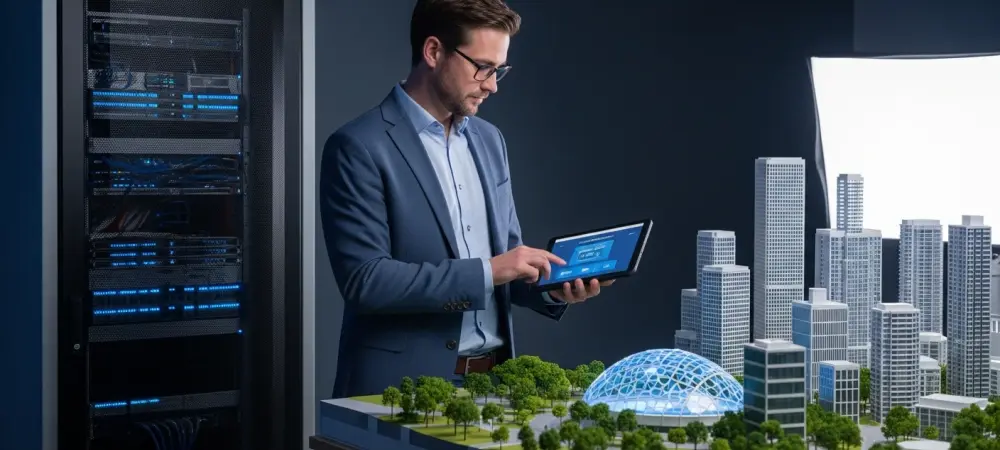
The silent transformation of the global office environment has accelerated to a point where the once-sturdy distinction between human intellect and machine processing has almost entirely vanished. As we navigate the complexities of 2026, the white-collar sector is no longer merely evolving; it is hurtling toward a transformative crisis that demands a fundamental reevaluation of what it means to be a professional. This roundup explores the convergence of technological forecasting and philosophical inquiry, highlighting the shift from mere task completion to the pursuit of authentic human purpose.
The Impending Metamorphosis of the Professional Landscape
The white-collar sector is moving toward a transformative crisis where technological forecasting meets a fundamental reevaluation of professional identity. For decades, the value of the desk worker was rooted in the ability to process information, organize data, and execute complex reasoning tasks. However, as artificial intelligence approaches human-level proficiency in these specialized areas, the traditional foundations of office labor are facing an existential threat that cannot be ignored.
Current industry observations suggest that the aggressive timeline for automation is no longer a distant concern but a present reality. The economic pivot is noticeably shifting away from pure digital manipulation and back toward physical infrastructure and strategic oversight. This necessitates a transition in how we define work, moving away from a series of mechanical outputs and toward a more profound understanding of labor as a reflection of human intent and moral direction.
Navigating this transition requires a deep dive into the 18-month window that remains before certain core functions are largely handed over to algorithms. To remain relevant, professionals must look beyond the screen and consider the broader impact of their contributions. The goal is to move from being a cog in a digital machine to becoming an architect of outcomes, ensuring that the work produced by machines serves a human-centric vision.
Decoupling Human Identity From Algorithmic Output
As the capabilities of generative systems expand, the professional world is being forced to decouple human identity from algorithmic output. In an era where a machine can mirror the style and logic of a seasoned executive, the definition of “the professional” must find a new anchor. This section synthesizes perspectives on how we can differentiate our contributions in a marketplace saturated with automated reasoning. The challenge is to identify the unique attributes that a machine cannot simulate, such as the weight of personal history and the nuance of social context. By recognizing that high-fidelity simulations are not the same as authentic experience, individuals can begin to carve out new roles. These roles emphasize the “why” of a project rather than the “how,” placing the human back at the center of the strategic decision-making process.
The 2027 Threshold: Navigating the 18-Month Countdown to Total Task Automation
Industry forecasts, such as those provided by Mustafa Suleyman, suggest that by August 2027, core functions in legal services, marketing, and project management will be predominantly automated. This 18-month countdown serves as a critical window for workers to adapt their skill sets. We are already seeing disruptions in search engine optimization and accounting, which act as early indicators that established workflows are more volatile now than at any point in the recent past.
The primary challenge lies in the vulnerability of what experts call discrete units of work. These are the specific, isolated tasks that machines can now simulate with high fidelity, rendering the traditional task-master redundant in a modern office. When an algorithm can draft a contract or balance a ledger with greater speed and accuracy than a human, the justification for human intervention must change. This shift does not necessarily imply the total disappearance of employment, but it does signal the end of the “task-based” career. Professionals who once spent their days managing spreadsheets or drafting routine reports must now find ways to add value that transcends simple data processing. The focus is shifting toward the integration of these automated outputs into a coherent, purpose-driven strategy.
Reclaiming Agency Through the Architecture of Purpose and Physical Reality
Prominent figures like Jensen Huang suggest that we are entering a new industrial era where value is shifting from digital manipulation back to the physical world. This is evidenced by the massive investments currently flowing into data center infrastructure and energy systems. While AI manages the technical “how” of a job, humans must evolve into architects of purpose, focusing on strategic goals and the human impact of labor.
Opportunities are emerging for professionals who can bridge the gap between digital intelligence and the skilled trades required to sustain the AI ecosystem. There is a growing recognition that the digital world cannot exist without a robust physical foundation. Consequently, those who understand the physical constraints and requirements of modern technology are finding new avenues for career growth and stability. By reclaiming agency, workers can position themselves as the directors of technological tools rather than their servants. This involves a shift in mindset where the professional is responsible for setting the direction and ensuring that the automated systems align with broader societal values. The focus moves from the screen to the real-world consequences of technological deployment.
Beyond Rationality: Why Lived Experience Is the Final Frontier of Professional Value
The historical shift from the Turing Test to modern verification methods indicates that humans can no longer claim rationality or reasoning as their unique defining characteristics. If a machine can pass for human in a text-based conversation, we must look elsewhere for our distinctive value. Modern professional differentiation relies on qualities that exist beyond pure calculation, such as empathy and moral judgment.
A professional’s value is increasingly tied to their history of failure, their intuition, and the irreducibly personal perspective that an algorithm cannot replicate. Machines lack the lived experience that informs the gut feelings of a seasoned veteran. This intuition, honed through years of real-world interaction and trial and error, remains a critical asset in navigating complex social and political landscapes. The final frontier of value is found in the ability to care about an outcome. While a machine can optimize a process for efficiency, it does not possess the capacity to understand the emotional or ethical stakes involved. Humans provide the moral compass that ensures technological progress does not come at the expense of human dignity or social cohesion.
The Accountability Premium: Transitioning From Data Processors to Moral Stewards
In an automated world, the human difference is found in the weight of consequence and the moral ownership of an outcome. Comparative analysis shows that while AI can draft a superior strategy memo, the human version carries more weight because it is backed by a person who understands real-world stakes. This accountability premium is becoming a primary driver of value in high-level consulting and leadership. Future career longevity depends on moving away from being a facilitator of tasks toward becoming a provider of authentic perspective and moral clarity. Clients and stakeholders are looking for partners who can stand behind their recommendations and take responsibility for the results. This is something an algorithm, regardless of its sophistication, simply cannot do. As data processors are replaced by moral stewards, the nature of professional relationships is changing. Trust is no longer built on the accuracy of data—which is now a commodity—but on the integrity of the person interpreting that data. The ability to provide moral stewardship in a landscape of mechanized reason is the most sustainable path forward for the modern professional.
Strategic Reorientation for the New Industrial Era
Professionals must accept that by 2027, their technical output will likely be matched or exceeded by AI, necessitating a shift in focus. This realization should not lead to despair but to a strategic reorientation of one’s career path. Actionable recommendations include leaning into roles that require human presence, high-level management of AI’s purpose, and the cultivation of unique, experience-backed insights.
Industry strategies should prioritize outcome ownership over task completion to maintain relevance in an increasingly automated economy. Organizations that empower their employees to act as strategic overseers rather than manual laborers will be better positioned to thrive. This involves redesigning workflows to leverage the speed of AI while maintaining human control over the final product.
Furthermore, professionals should seek to develop a deep understanding of the intersection between technology and human needs. By becoming experts in the “human-in-the-loop” model, individuals can ensure they remain an indispensable part of the value chain. The goal is to cultivate a unique professional voice that resonates with authenticity and authority in a digital world.
Defining the Human Difference in an Age of Mechanized Reason
The shift from tasks to purpose marked a pivotal moment where humans rediscovered the “why” behind their professional contributions. As the “how” of work became a commodity, the depth of one’s experience and the authenticity of human judgment became the most valuable assets in the marketplace. This transition forced a departure from the mechanical routines that had defined white-collar labor for nearly a century. Professionals were challenged to stop acting like robots and start leading with the moral weight and intuition that only a lived human life could provide. By embracing the accountability premium, individuals secured their place in an economy that prized perspective over processing power. The most successful workers were those who leaned into their humanity, using their unique histories to guide the machines toward meaningful goals. Ultimately, the new era of work established a hierarchy where technology served as the engine and human purpose served as the navigator. The professional landscape was no longer defined by the volume of tasks completed but by the clarity of the vision pursued. This redefinition allowed the workforce to transcend the limitations of algorithmic reasoning and focus on the enduring value of human connection and ethical leadership.