

The once-futuristic concept of an artificial intelligence collaborator has rapidly moved from the realm of speculative fiction into the executive suite, fundamentally altering the very fabric of high-level professional work. The integration of advanced AI represents a significant advancement in the executive and professional sector. This review will explore the evolution of this technology, its key features, performance metrics, and the impact it has had on various high-level applications. The purpose of this review is to provide a thorough understanding of AI’s current capabilities within the executive workflow, its challenges, and its potential for future development.
The Dawn of the AI Executive Partner
The journey of AI in the professional world has been marked by a profound transformation. Early iterations of digital assistants were primarily reactive, limited to executing simple, explicit commands like setting reminders or performing basic web searches. They were useful but peripheral, tools to be commanded rather than partners to be consulted. The current generation of AI, exemplified by sophisticated models like Google’s Gemini, represents a fundamental paradigm shift. These systems are designed for persistent, context-aware collaboration, retaining information across interactions to build a deeper understanding of user needs and project goals. This evolution from a command-based tool to a collaborative partner is redefining the core tenets of productivity and strategic thought. The AI is no longer just a digital fact-checker or scheduler; it has become an active participant in the creative and analytical process. This shift marks the dawn of a new era where the synergy between human intellect and artificial intelligence is not merely an advantage but a foundational component of how high-level work is accomplished, driving innovation and efficiency in unprecedented ways.
Deconstructing Core AI Capabilities
From Simple Queries to Iterative Collaboration
The most significant functional evolution in modern AI is the transition from a one-off query model to a continuous, conversational dialogue. Professionals no longer treat the AI as a search engine that provides a single answer but as a persistent collaborator for refining complex tasks. This is powerfully illustrated in the process of drafting executive communications. A user can initiate a request to compose an email, then engage in an iterative loop of refinement, asking the AI to adjust the tone to be more assertive, shorten the message for conciseness, or generate a series of compelling subject lines.
This dynamic, back-and-forth process transforms a task that might have taken several minutes of focused effort into a rapid, AI-assisted workflow. This collaborative loop does more than just save time; it conserves the executive’s cognitive energy, freeing up mental bandwidth that can be redirected from mundane operational tasks toward higher-value strategic thinking and problem-solving. This shift allows leaders to remain focused on the bigger picture while the AI handles the granular details of execution.
Task Automation Evolved into Strategic Partnership
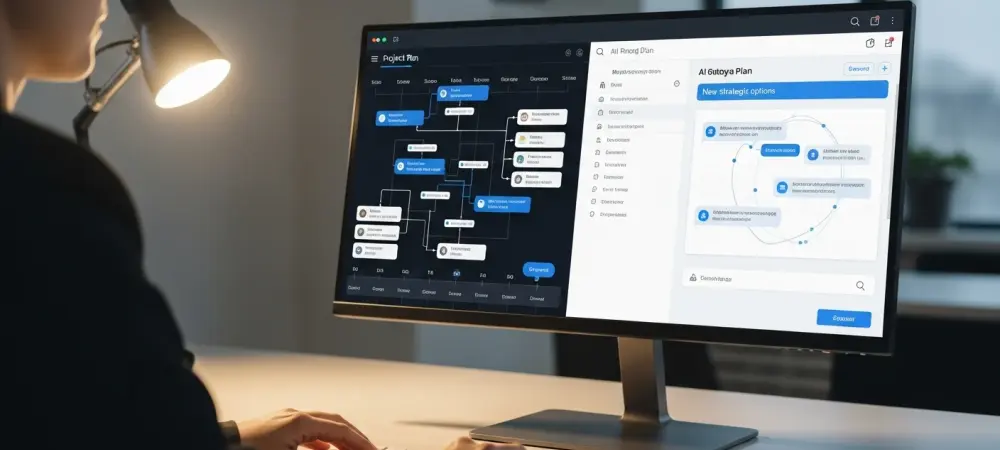
The role of AI has expanded far beyond simple task automation, maturing into that of a strategic partner for brainstorming and complex problem-solving. One of its most impactful applications is its ability to mitigate “blank page syndrome,” a common obstacle for strategists, marketers, and leaders. By providing a simple prompt, a professional can instantly generate a structured outline for a project, a list of potential marketing angles, or a set of talking points for a presentation, effectively creating a solid foundation for deeper human exploration.
This partnership extends into more complex strategic functions. AI can be leveraged to outline comprehensive project plans, generate foundational code for technical teams, or even script entire presentations. This capability allows the AI to perform the initial heavy lifting, enabling human experts to focus their efforts on nuance, strategic alignment, and final execution. The AI acts as a springboard, launching ideas and frameworks that are then refined and elevated by human insight and experience.
Advanced Information Synthesis and Consumption
In an environment saturated with information, the ability to rapidly distill vast quantities of data into actionable intelligence is a critical competitive advantage. Advanced AI models demonstrate a powerful capability for information synthesis, enabling executives to process dense and lengthy materials with remarkable speed. Users can input links to academic research, paste lengthy market analysis reports, or upload entire transcripts and receive concise, structured summaries of the key findings and critical takeaways in moments.
This function accelerates the speed of comprehension, allowing decision-makers to stay abreast of industry trends, competitor movements, and internal developments without getting bogged down in superfluous detail. By transforming raw data into synthesized knowledge, AI empowers leaders to make faster, more informed decisions. This accelerated learning cycle is becoming indispensable for maintaining agility in a rapidly changing business landscape.
Driving Forces Behind AI Integration
The rapid adoption of AI in the executive workflow is fueled by a confluence of technological breakthroughs and strategic corporate initiatives. At the core of this trend is the development of natively multi-modal models, which can seamlessly process and integrate information from text, images, and computer code. This versatility unlocks more sophisticated applications, such as generating custom visuals for a presentation deck or analyzing and debugging software directly within the conversational interface. This technical superiority is a key driver, making the AI more adaptable and powerful than its predecessors.
Simultaneously, major technology players are pursuing aggressive integration strategies. By embedding AI directly into widely used productivity suites, such as Google Workspace, companies are removing the friction associated with adopting a new tool. When AI assistance is natively available within Gmail, Docs, and Sheets, it ceases to be a separate application and becomes an organic extension of the existing workflow. This strategic push, combined with a unified branding effort, signals a clear corporate commitment to making AI an indispensable and ubiquitous component of modern professional life.
Real-World Applications in the C-Suite
Accelerating High-Stakes Decision-Making
For top-level executives, the ability to quickly synthesize complex information is paramount. AI is proving to be a transformative tool in this regard, capable of analyzing vast datasets from disparate sources—including market trend reports, internal performance metrics, and financial statements—and distilling them into concise summaries and key insights. This allows the C-suite to grasp the nuances of a complex situation rapidly, whether evaluating a potential acquisition or responding to a sudden market shift.
This accelerated comprehension directly translates into more agile and confident strategic decision-making. Instead of spending critical hours sifting through raw data, leaders can focus their attention on the strategic implications of the AI-generated insights. This streamlined process not only saves time but also reduces the risk of oversight, ensuring that critical decisions are based on a comprehensive and timely understanding of all available information.
Enhancing Strategic Communication
Effective communication is a cornerstone of leadership, and AI is emerging as a powerful ally in crafting and refining executive messaging. Leaders are utilizing these tools to draft everything from board updates and keynote speeches to sensitive internal emails and public statements. The AI serves as a sophisticated writing partner, helping to ensure that all communications are clear, impactful, and consistent with the organization’s tone and strategic objectives.
Beyond initial drafting, AI is used to refine and personalize communications at scale. It can help tailor a message for different audiences, suggest improvements for clarity and persuasiveness, and even check for tonal consistency across various platforms. This enables executives to maintain a strong and coherent voice, strengthening their influence and ensuring that key messages resonate effectively throughout the organization and with external stakeholders.
Navigating the Challenges of AI Collaboration
The Human Skill of Prompt Engineering
Despite its advanced capabilities, the effectiveness of an AI partner is highly contingent on the quality of user input. This has given rise to a new, critical skill: prompt engineering. The ability to craft clear, precise, and context-rich prompts is essential for eliciting the desired output from the AI. A vague or poorly structured request is likely to yield generic or irrelevant results, whereas a well-formulated prompt can unlock sophisticated and highly tailored responses.
This dependency on user skill presents a significant hurdle for widespread adoption and consistent performance. Organizations must now consider how to train their teams to interact effectively with these new tools. Mastering the art of the prompt is becoming as fundamental as learning to use a spreadsheet or a presentation software. The human element of guiding the AI remains the decisive factor in transforming its potential into tangible value.
Ensuring Factual Accuracy and Oversight
A persistent technical limitation of current AI models is their potential to produce factual inaccuracies or “hallucinations”—confidently stated falsehoods. While models are continually improving, this issue necessitates a constant layer of human verification and critical oversight. Executives and their teams cannot afford to accept AI-generated information at face value, particularly when it pertains to data-driven decisions or public-facing communications.
This reality positions the AI not as an infallible oracle but as a powerful yet fallible junior partner. Its outputs should be treated as a well-researched first draft that requires a final review by a human expert. Acknowledging this limitation is crucial for mitigating risks and fostering a healthy, productive partnership. The true power of AI is unlocked when it is coupled with human judgment, expertise, and a commitment to factual accuracy.
The Future of the Human-AI Executive Partnership
Beyond Automation to Cognitive Augmentation
The long-term potential of AI in the executive workflow extends far beyond the automation of existing tasks. The true frontier lies in cognitive augmentation, where AI acts as a catalyst for enhancing human creativity and strategic thought. The future vision is one of a symbiotic relationship where the AI does not just provide answers but helps professionals formulate better, more insightful questions. This partnership has the potential to push the boundaries of critical and innovative thinking.
This evolution will see AI assisting in identifying unseen patterns in complex data, simulating the potential outcomes of strategic decisions, and challenging underlying assumptions. By serving as a cognitive sparring partner, the AI can help leaders explore problems from new angles and develop more robust and creative solutions. This shift from a tool for execution to a partner in ideation represents the most profound potential impact of this technology.
The Rise of the Proactive AI Collaborator
The next evolutionary step for the AI partner is the transition from a reactive tool to a proactive collaborator. Current systems primarily respond to explicit user commands, but future iterations will likely anticipate needs, identify emerging opportunities, and offer unsolicited insights based on an ongoing understanding of projects and broader business context. Imagine an AI that automatically summarizes relevant news ahead of a board meeting or flags a potential supply chain disruption based on real-time data analysis.
This move toward proactivity will make the AI an even more deeply integrated and indispensable member of the executive team. By actively scanning the horizon and connecting disparate pieces of information, a proactive AI could serve as an early warning system and an opportunity engine. This evolution promises to transform the human-AI partnership into a truly dynamic and forward-looking collaboration, where both human and machine work in concert to navigate an increasingly complex world.
Final Assessment and Concluding Thoughts
The review of AI’s role in the executive workflow revealed a definitive and accelerating shift from a hyped curiosity to an indispensable professional tool. The evidence confirmed that the technology has moved past simple digital assistance, establishing a new paradigm of deep, collaborative partnership that is fundamentally reshaping productivity, strategic planning, and creative execution at the highest levels of business.
While significant challenges related to user skill in prompt engineering and the critical need for human oversight to ensure factual accuracy were identified, they did not diminish the technology’s transformative impact. The trajectory of development pointed clearly toward a future where the symbiotic relationship between human intellect and artificial intelligence becomes the new, undeniable standard for effective leadership and sustained innovation.