

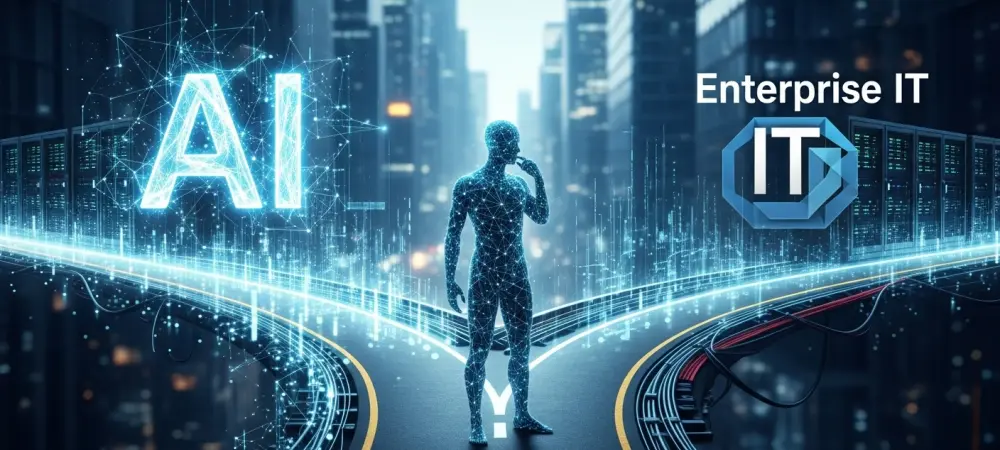
The recent consolidation of SpaceX and xAI represents far more than a corporate restructuring; it signals a tectonic shift in technology strategy, challenging the foundational principles that have guided enterprise IT for the last two decades. For years, the prevailing wisdom has championed a “best-of-breed” philosophy, assembling flexible systems from a diverse marketplace of specialized vendors. However, the voracious and unique demands of artificial intelligence are forcing a radical re-evaluation of this modular approach. This presents a critical crossroads for Chief Information Officers, who must now weigh the allure of simplified, unified systems against the long-term risks of vendor dependency. This analysis will dissect the drivers behind this resurgence of vertical integration, examine high-stakes corporate examples, weigh expert opinions on the trade-offs, and project the future trajectory of AI infrastructure.
The Drivers and Data Fueling AI Verticalization
The movement toward integrated technology stacks is not born from a desire for simplicity alone but is a direct response to the uncompromising physics and economics of artificial intelligence at scale. The very nature of AI workloads strains the seams of traditional, loosely coupled IT architectures, creating a compelling case for a more unified approach.
AI’s Unique Demands Why Modular Systems Are Strained
Modern AI applications impose a set of uniquely punishing requirements on infrastructure that traditional enterprise software simply does not. The performance of these systems is measured in milliseconds, where ultra-low latency and massive data throughput are not just performance metrics but prerequisites for functionality. Furthermore, the immense power consumption required to train and operate large models has elevated energy cost and availability to a primary strategic concern. Achieving a low cost per inference—the key to economic viability for AI services—demands a level of systemic harmony that is exceptionally difficult to orchestrate across a multi-vendor environment.
Industry experts emphasize that peak AI performance is a product of deep co-optimization, where the hardware, networking fabric, and software models are engineered to work together seamlessly. A best-of-breed model, by its very design, introduces friction and potential inefficiencies at the interfaces between components from different suppliers. This can lead to performance bottlenecks, increased management complexity, and a higher total cost of ownership, making it an ill-suited paradigm for organizations seeking to extract maximum value and efficiency from their AI investments.
The Trend in Action High-Stakes Corporate Examples
The SpaceX–xAI merger serves as a powerful, macro-level illustration of this principle in action. The decision to collapse distinct technological layers—satellite launch capabilities, global connectivity, and AI development—is a strategic maneuver to eliminate friction and maximize performance under extreme physical and economic constraints. By controlling the entire stack from the launchpad to the data center, the consolidated entity can achieve a level of integration and efficiency that would be impossible with disparate partners, creating a formidable competitive advantage.
This trend is not limited to ambitious aerospace ventures; it is already firmly entrenched among the world’s largest technology players. The major cloud hyperscalers—Amazon Web Services, Google, and Microsoft—have been quietly pursuing vertical integration for years by developing their own custom silicon. Chips like Google’s TPUs, AWS’s Trainium, and Microsoft’s Maia are not merely alternatives to third-party processors; they are foundational components of tightly integrated hardware and software stacks designed to deliver superior performance and cost-efficiency for AI workloads. This deep investment signals a clear industry recognition that mastering AI requires controlling the entire technology ecosystem.
Expert Analysis Weighing Control Against Constraint
The strategic pivot toward vertical integration presents CIOs with a classic trade-off: gaining operational control in exchange for accepting architectural constraints. This debate forces technology leaders to look beyond immediate performance gains and consider the long-term implications for risk, innovation, and financial leverage.
From one perspective, a unified stack offers a compelling solution to the complexities of modern IT. It provides CIOs with greater architectural control, simplifies vendor management, and centralizes accountability, creating a clear line of sight for troubleshooting and support. Technology advisor Niel Nickolaisen notes that this approach can also serve as a powerful risk mitigation strategy. In a volatile market, relying on a fragile, multi-vendor supply chain introduces numerous points of failure. A single provider’s price hike, technology pivot, or business failure can create a ripple effect across the entire system. Vertical integration consolidates these dependencies into a single, more predictable relationship, an attractive proposition for high-stakes AI initiatives.
However, industry analysts like David Linthicum offer a stern warning against the hidden dangers of this perceived simplicity. Consolidating with a single vendor concentrates risk, creating what he terms “correlated outage risk”—a scenario where a failure at the provider level can bring down all dependent systems simultaneously. Moreover, this consolidation cedes significant pricing power to the vendor. Once an enterprise is deeply embedded in a proprietary stack, the cost and complexity of switching become prohibitive, leaving the organization vulnerable to future price increases and unfavorable terms. This vendor lock-in can also stifle innovation, tethering an organization’s technological progress to the research and development roadmap of a single company, potentially cutting it off from more advanced solutions emerging in the broader market.
The Future of Enterprise IT A Hybrid and Regulated Horizon
The consensus among industry observers is that the future is not a binary choice between pure vertical integration and complete modularity. Instead, a hybrid model is emerging, where strategic decisions about architecture will be dictated by the specific context of the workload and the risk tolerance of the organization.
Vertical stacks are expected to become the dominant model in specific domains characterized by stringent requirements. These include highly regulated industries like finance and healthcare, mission-critical applications where system reliability is non-negotiable, and performance-sensitive environments with extreme physical or economic constraints. In parallel, modular, best-of-breed ecosystems will continue to flourish in areas that prioritize flexibility, rapid experimentation, and the ability to quickly adopt best-in-class solutions from a competitive marketplace.
This architectural shift is also intersecting with a rapidly evolving regulatory landscape. The rise of new compliance frameworks, such as the EU AI Act, introduces significant governance challenges. An integrated stack can, on one hand, simplify the process of implementing verifiable controls for issues like data residency and auditability. On the other hand, the opaque nature of a vendor’s global infrastructure can create subtle compliance risks. Centralized telemetry or traffic routing systems might inadvertently process data outside of its mandated geographic region, creating a liability that is difficult for the customer to detect or control.
Ultimately, the evolution of this trend will likely produce both positive and negative outcomes. The potential benefits include enhanced system reliability, stronger security postures, and more predictable performance for critical AI applications. The primary risks, however, are significant: a reduction in market competition, the erosion of customer leverage, and the potential for irreversible vendor lock-in that could limit an organization’s strategic agility for years to come.
Conclusion A New Strategic Playbook for CIOs
The resurgence of vertical integration, catalyzed by the transformative demands of AI, had marked a pivotal moment for enterprise technology leadership. The debate had shifted architectural decisions from the purely technical realm into the strategic C-suite, forcing organizations to make binding, long-term commitments with profound financial and competitive consequences. The allure of short-term efficiency and operational control offered by a unified stack had to be carefully weighed against the long-term costs of ceding strategic freedom.
Navigating this new landscape demanded a proactive and deliberate approach to architecture. The most critical imperative for technology leaders was to prioritize “designing for replaceability.” Even when adopting an integrated stack appeared to be the most rational choice, it was essential to build in architectural escape hatches. This meant investing in abstraction layers to decouple applications from proprietary infrastructure, enforcing the use of standardized data formats to ensure portability, and maintaining automated deployment pipelines that could be redirected to a new platform if necessary. By continuously measuring and controlling switching costs, CIOs could preserve their organization’s leverage, ensuring they retained the agility to adapt to the next inevitable shift in the technology landscape.