

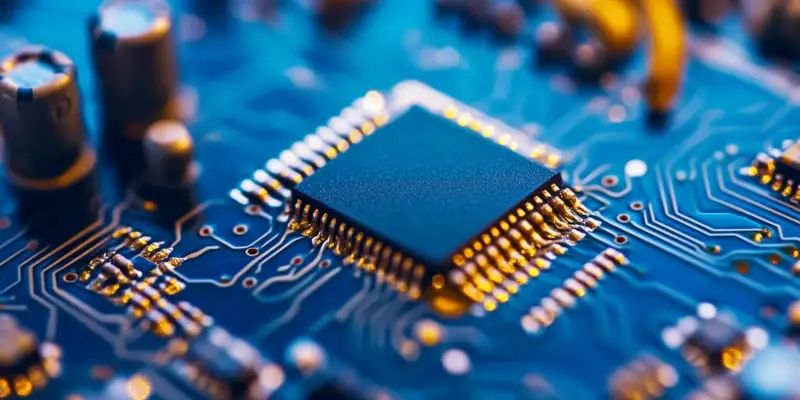
Artificial Intelligence (AI) has transitioned from a futuristic concept to a present-day reality, influencing various industries and everyday applications. At the heart of this transformation are AI chips, specialized processors designed to handle the extensive data and complex calculations inherent to AI tasks. These chips are crucial for the efficiency and advancement of AI technologies, enabling systems to perform tasks such as voice recognition, autonomous driving, and more.
The Role of AI Chips in Modern Technology
Specialized Processors for AI Tasks
AI chips are microprocessors specifically engineered to accelerate AI operations. Unlike general-purpose processors, AI chips are optimized for the sophisticated mathematical calculations required by machine learning (ML) and deep learning (DL) models. These chips enhance the efficiency of processing large datasets, enabling AI systems to recognize patterns, make decisions, and continuously improve without human intervention.
Parallel Processing Capabilities
Central to the function of AI chips is the concept of parallel processing, which allows these processors to execute multiple operations concurrently. This capability is vital for AI applications that process vast amounts of data, such as image recognition, speech processing, and natural language understanding. Parallel processing capabilities enable AI systems to perform complex tasks quickly and efficiently, which is essential for applications requiring real-time processing and decision-making.
Types of AI Chips
Graphics Processing Units (GPUs)
Graphics Processing Units (GPUs) are specialized hardware devices designed to accelerate the rendering of images and video, as well as complex computations in various applications. Their ability to handle multiple tasks simultaneously makes them a critical component in modern computing environments. Initially created for rendering graphics, GPUs are well-suited for AI due to their parallel processing abilities.
Tensor Processing Units (TPUs)
Developed by Google, TPUs are designed specifically for machine learning models. These processors are highly efficient for deep learning tasks and are frequently used in cloud-based AI applications. Google designs TPUs aimed at optimizing the performance of its cloud-based AI services and data centers.
Field-Programmable Gate Arrays (FPGAs)
FPGAs are reprogrammable processors that can be customized to meet specific AI needs, offering versatility for different machine learning tasks. These chips provide a flexible solution for various AI applications, allowing for tailored performance enhancements.
Leading Manufacturers of AI Chips
Nvidia
Nvidia is a dominant player in the AI chip market, known for its powerful GPUs. These GPUs are extensively used for training and inference in AI systems, making Nvidia a key contributor to the advancement of AI technology.
Google has made significant strides in AI chip development with its TPUs. These processors are optimized for deep learning and are integral to Google’s cloud-based AI services, enhancing the efficiency and speed of machine learning tasks.
Intel and AMD
Intel, following acquisitions like Nervana Systems, is advancing its development of AI-supportive chips. AMD competes with Nvidia by producing high-performance GPUs, contributing to the competitive landscape of AI chip manufacturing.
Apple
Apple has entered the AI chip market with its A-series and M-series chips, incorporating AI-optimized processing cores in devices like iPhones, iPads, and Macs. These chips feature dedicated cores like the Neural Engine for accelerating AI operations on Apple devices.
Applications of AI Chips
Autonomous Vehicles
AI chips process sensor data (e.g., cameras, LiDAR) to facilitate real-time driving decisions. These chips are essential for the development and operation of self-driving cars, enabling them to navigate and respond to their environment effectively.
Healthcare
AI is revolutionizing healthcare by analyzing medical images, predicting patient outcomes, and aiding drug discovery. AI chips enhance the speed and accuracy of these processes, contributing to improved patient care and medical research.
Smart Devices
Powering voice assistants and smart cameras, AI chips enable devices to recognize speech, interpret images, and predict user behavior. By incorporating AI chips, smart devices can offer more personalized experiences, adapting to individual user preferences and needs.
Robotics
AI chips are vital for enabling robots to perform complex tasks, including object manipulation, navigation, and human interaction. These processors provide the computational power necessary for advanced robotic functions, driving innovation in the field of robotics.