

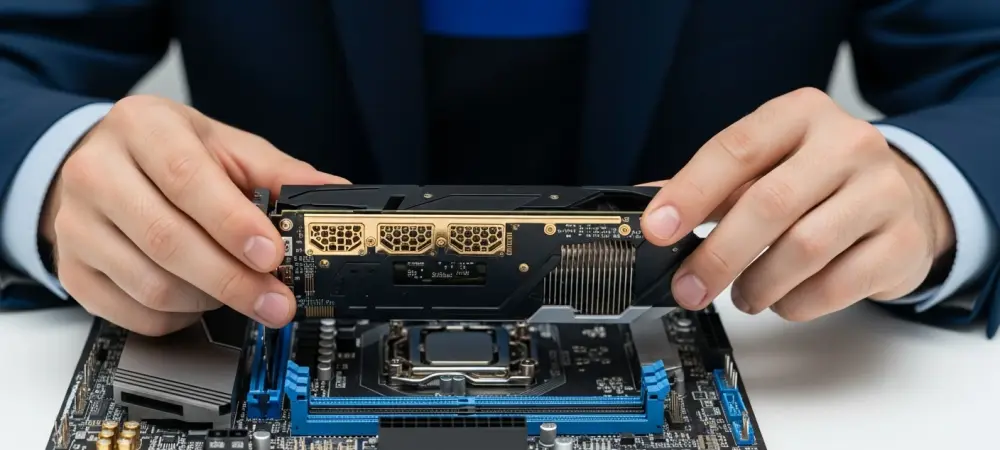
The convergence of unprecedented computational breakthroughs and a volatile global supply chain has transformed the process of selecting a graphics card into a complex exercise in financial and technical navigation. While the raw power of current silicon has reached levels that were previously confined to high-end server farms, the average consumer now faces a marketplace where entry-level performance carries a premium price tag once reserved for enthusiast-grade hardware. A significant driver of this shift is the ongoing “RAMageddon” crisis, a period marked by severe shortages and skyrocketing costs for Video Random Access Memory that has ripple effects throughout the entire electronics industry. This memory scarcity has forced manufacturers to rethink their board designs, often resulting in higher MSRPs that challenge the traditional hierarchy of the PC gaming market. Consequently, the value proposition of a modern GPU is no longer measured solely by its clock speed or core count, but by how effectively it manages limited resources and how much of its performance is derived from sophisticated machine learning algorithms. Building a gaming PC in this environment requires a strategic approach, where every component must be justified not just by its peak output, but by its long-term viability in a landscape where software optimization is rapidly outpacing hardware expansion.
The Evolution: Intelligent Upscaling and Neural Rendering
The shift toward software-driven performance has become the defining characteristic of the current hardware generation as manufacturers struggle with the physical limits of traditional silicon scaling. Because the cost of producing massive, complex GPU dies has become nearly prohibitive for mainstream consumer products, the industry has pivoted toward AI-assisted rendering techniques like DLSS 4.5, FSR 4.1, and XeSS 3. These technologies have evolved far beyond simple upscaling; they now utilize advanced frame reconstruction and temporal analysis to generate entire frames of animation with minimal input from the primary rendering pipeline. This transition means that a graphics card’s real-world capability is inextricably linked to its dedicated AI hardware, such as Nvidia’s Tensor cores or AMD’s AI accelerators. By offloading the most taxing visual calculations to these specialized units, modern cards can deliver 4K resolutions and path-traced lighting at high frame rates that would be physically impossible through raw rasterization alone. This reliance on software innovation has effectively saved the market from total stagnation, providing a path forward for high-fidelity gaming even as the price of physical components remains stubbornly high.
Current performance benchmarks reflect this reality, with industry standards like 3DMark prioritizing a card’s ability to handle complex machine learning workloads alongside traditional geometric rendering. The hierarchy of 2026 is divided into distinct tiers that are no longer defined strictly by resolution but by the sophistication of the neural features they support. To achieve an “ultra-performance” rating in modern cinematic titles, a GPU must demonstrate high efficiency in AI-generated ray reconstruction, which has become the baseline for photorealistic lighting in the current generation of game engines. Users targeting 1080p and 1440p gaming now look for cards that offer the most stable implementation of these upscaling suites to ensure their hardware remains relevant as game developers increasingly design their titles around these AI technologies. The competition at the top of the charts between the Nvidia RTX 5070 Ti and the AMD RX 9070 XT showcases a fierce battle for dominance in this new software-centric era, where the winner is often decided by the quality of the driver-level optimizations rather than the brute force of the hardware itself.
Navigating the Value Segment: Emerging Market Leaders
In a surprising turn for the current hardware landscape, the entry-level and budget-conscious markets have seen a significant shake-up due to Intel’s aggressive pursuit of the sub-$300 price bracket. While traditional market leaders have moved their primary focus toward high-margin enthusiast products, the Intel Arc B580 has emerged as a critical lifeline for users who need reliable 1080p and 1440p performance without the premium cost associated with higher-tier brands. Intel’s XeSS upscaling technology has matured significantly, offering a level of visual fidelity that rivals the more established DLSS suite, which has made the Arc series a genuine contender for mainstream adoption. By prioritizing software stability and competitive pricing, Intel has effectively captured a demographic that felt increasingly alienated by the rising costs of Nvidia and AMD hardware. This shift has forced the larger manufacturers to reconsider their entry-level strategies, though Intel’s early commitment to the value segment has given them a substantial head start in winning over a new generation of budget-conscious builders. For those operating in the mid-range space with a focus on 1440p gaming, the AMD Radeon RX 9070 GRE has established itself as one of the most efficient and cost-effective choices of the year. Often referred to as the “Golden Rabbit” of the lineup, this card balances a high core count with a more manageable power draw, making it compatible with existing power supplies and smaller case designs. Despite the “RAMageddon” memory crisis, AMD has managed to keep the pricing of the RX 9070 GRE relatively stable, providing a strong alternative to the increasingly expensive offerings from their main competitor. This card excels in titles that utilize traditional rasterization while still offering robust support for FSR 4.1, ensuring that users can enjoy the latest visual effects without exceeding a $600 budget. The success of this model underscores a broader market trend where “good enough” performance at a fair price is becoming more attractive to consumers than the pursuit of absolute power at any cost.
Power and Precision: The High-End Performance Standard
The enthusiast segment of the market continues to push the boundaries of what is possible in consumer-grade hardware, with the Nvidia GeForce RTX 5070 Ti standing as the definitive benchmark for 2026. This card represents the pinnacle of current-generation engineering, blending a massive number of specialized cores with the fastest memory configurations available to the public. While its retail price frequently fluctuates above the official MSRP due to high demand and memory scarcity, its dominance in 4K gaming and high-fidelity ray tracing is currently unmatched in its class. Beyond its gaming prowess, the RTX 5070 Ti has become a favorite among the growing “prosumer” demographic, which requires a card that can transition seamlessly between high-end entertainment and professional AI research. Its ability to execute local large language models and complex 3D rendering tasks with minimal latency makes it an essential tool for creators who demand a versatile and powerful workstation component that can double as a top-tier gaming powerhouse.
While Nvidia leads in specialized AI features, the AMD Radeon RX 9070 XT offers a compelling alternative for high-end users who prioritize pure performance per dollar and hardware simplicity. One of the most significant advantages of this card is its reliance on traditional power connectors, avoiding some of the installation complexities and cable management issues associated with the newer power standards adopted by other brands. The RX 9070 XT provides exceptional 4K performance, particularly in titles that favor AMD’s architectural strengths, and its generous memory bandwidth helps mitigate the impact of the ongoing VRAM shortage. For enthusiasts who prefer a straightforward hardware setup without sacrificing the ability to play modern blockbusters at maximum settings, this card has become a formidable choice. The competition between these two high-end giants has resulted in a market where users must choose between the specialized, feature-rich ecosystem of Nvidia and the efficient, high-performance tradition of AMD, with both paths offering a world-class computing experience.
Memory Constraints: The Impact of Hardware Longevity
The current year has solidified the fact that video memory is the single most critical bottleneck in modern hardware design, rendering the once-standard 8GB of VRAM obsolete for high-end gaming. As game engines become more sophisticated and textures reach higher levels of detail, the demand for memory has outpaced the industry’s ability to supply it at affordable prices. This has led to a major transition where 12GB and 16GB of VRAM have become the new baseline for any mid-range card intended to last more than a single hardware cycle. The RTX 5060 Ti, specifically in its 16GB configuration, has become a case study in this trend; while the lower-memory versions of previous generations struggled with stuttering and texture pop-in, the modern 16GB variant provides the overhead necessary for a smooth experience in open-world titles. Consumers have become increasingly wary of “planned obsolescence” caused by insufficient memory, leading to a shift in purchasing habits where memory capacity is often prioritized over marginal increases in core clock speeds.
This focus on VRAM is not merely a gaming concern but a direct response to the integration of AI assets into the very fabric of modern software. High-resolution textures, complex geometry, and the data buffers required for AI-driven frame generation all compete for space on the GPU’s memory bus. In the landscape of 2026, a card with insufficient memory will experience a sharp decline in performance as the system is forced to swap data between the fast VRAM and the much slower system RAM. This technical reality has reshaped how manufacturers market their products, with long-term viability and “future-proofing” becoming central themes in their advertising campaigns. The move toward higher memory capacities across the board is a necessary adjustment to ensure that modern hardware can handle the increasingly large data sets required by contemporary game engines and professional creative suites, effectively setting a new standard for what defines a “capable” graphics card in the current era.
Professional Utility: Beyond the Gaming Perspective
The role of the graphics card has expanded far beyond the realm of entertainment, as the rise of local AI processing and professional content creation has turned the GPU into a multipurpose workstation tool. In 2026, a significant portion of the consumer base evaluates hardware based on its ability to handle generative AI tasks, such as high-speed image generation and the training of localized neural networks. Nvidia’s specialized Tensor cores provide a distinct advantage in this area, as they are optimized for the mathematical operations that underpin modern creative suites and large language models. This has created a new category of users who are willing to pay a premium for hardware that accelerates their professional workflows, effectively blurring the lines between consumer gaming cards and professional-grade workstation GPUs. For these individuals, a graphics card is an investment in productivity, where the time saved on rendering or data processing translates directly into economic value.
Furthermore, the demand for high-resolution video editing and real-time 3D animation has reached a fever pitch, driven by the expansion of digital media and the metaverse-style environments that have become common in corporate and creative sectors. Modern graphics cards are now expected to support multi-stream 8K video encoding and decoding with minimal impact on system performance, a task that requires dedicated hardware encoders and significant memory bandwidth. The ability to work in complex, path-traced environments in real-time has transformed the creative process, allowing designers and editors to see the final results of their work instantly rather than waiting hours for a render to complete. This shift toward “prosumer” hardware has forced manufacturers to improve their driver support for professional applications, ensuring that gaming cards remain stable and efficient when used for serious work. The result is a more versatile hardware market where a single purchase can satisfy the needs of both a competitive gamer and a professional digital artist.
Standardized Benchmarking: The Science of Comparison
To provide consumers with accurate and reliable data in such a complex market, modern hardware testing has adopted a highly standardized and multifaceted approach. In 2026, all graphics card evaluations are conducted on a controlled testing rig that features the latest Ryzen 9000 and 10000 series processors to ensure that there are no CPU-side bottlenecks that could skew the results. High-speed DDR5 or DDR6 memory and PCIe 5.0 storage are used to create an environment where the GPU’s performance can be isolated and measured with precision. This methodology allows for a fair comparison across different architectures, showing how a card from Nvidia handles the same cinematic blockbuster or competitive multiplayer environment as a card from AMD or Intel. By maintaining a consistent hardware baseline, testers can provide a clear picture of how each card performs under ideal conditions, giving potential buyers a reliable metric for their decision-making process. Performance is no longer measured solely by the traditional “frames per second” metric, as the quality of those frames has become just as important as the quantity. Modern benchmarks now include detailed analysis of frame pacing, latency, and the visual artifacts introduced by different upscaling and frame generation technologies. A card that produces 100 FPS with significant visual shimmering or input lag may be rated lower than a card that produces a rock-solid 80 FPS with pristine image quality. Additionally, productivity metrics such as 3D animation rendering times and AI image generation speeds have become standard parts of the review process. This comprehensive approach reflects the reality that most users expect their hardware to perform a variety of tasks, and a card’s true value is found in its ability to deliver a high-quality experience across both gaming and professional workloads. By looking at the complete performance profile, consumers can better understand which card best fits their specific needs and budget.
Strategic Investment: Final Market Synthesis
The graphics card market of 2026 necessitated a fundamental change in how enthusiasts and professionals alike approached the acquisition of hardware, moving away from impulsive upgrades toward long-term strategic investments. The economic pressures of the “RAMageddon” crisis and the rising complexity of AI-driven software meant that a single purchase often had to serve multiple roles while remaining viable for several years. Buyers successfully navigated this environment by identifying their specific performance requirements—whether that was the budget-conscious efficiency of the Intel Arc B580 or the uncompromising power of the RTX 5070 Ti—and weighing those against the realities of a market defined by high manufacturing costs. The era of pure hardware dominance was largely surpassed by a more nuanced landscape where the synergy between silicon and software became the primary driver of the user experience, rewarding those who prioritized architectural longevity and memory capacity over temporary marketing hype.
Final considerations for anyone entering this market involved a deep look at the specialized features that would define the next wave of technological innovation. The commitment to backward compatibility shown by AMD and the continued evolution of Nvidia’s DLSS suite provided a framework for users to maintain their systems without constant hardware turnovers. As neural rendering became the standard for photorealistic visuals, the decision to invest in a card with robust AI hardware was proven to be the most effective way to ensure a high-quality computing experience. Ultimately, the lessons learned during this period of transition emphasized the importance of a well-balanced system, where the graphics card acted as the centerpiece of a versatile and productive digital environment. The market of 2026 successfully bridged the gap between the traditional focus on raw power and a future defined by intelligent, software-augmented performance, providing a clear and sustainable path forward for the entire PC hardware industry.