

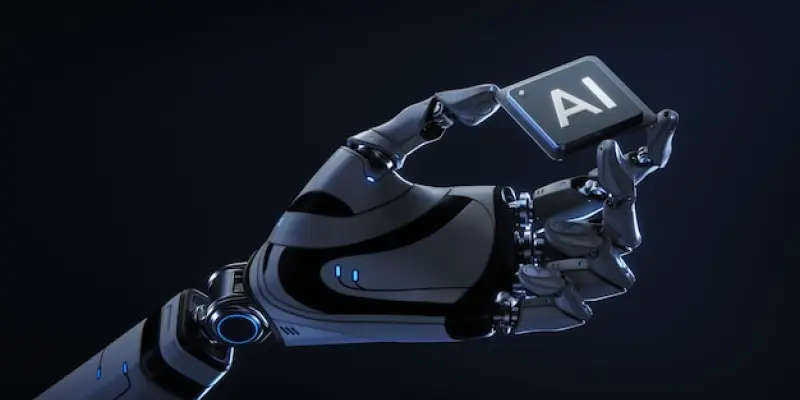
The world is witnessing a tech revolution driven by artificial intelligence (AI), with AI agents playing a crucial role. Distinguished by their sophistication and autonomy, AI agents are revolutionizing business operations and customer interactions.
AI Agents: A New Technological Era
AI agents possess capabilities that extend beyond general generative AI tools, thanks to an additional “magical layer.” This enhanced feature allows AI agents to produce significant business value through their task management abilities. Unlike standard generative AI, which generates content and responses based on pre-existing data, AI agents come with built-in context and personality, enabling them to understand and execute tasks effectively. This autonomy is crucial in business environments where timely decision-making and efficient execution can significantly impact operations and profitability. The potential business value derived from these AI agents is considerable, offering companies a chance to reimagine their workflows and customer engagement strategies in ways previously thought impossible. These advancements hint at a future where AI will play a central role in organizational structures, driving growth and innovation.
Salesforce CEO Marc Benioff envisions AI agents achieving the sophistication of movie AIs like Iron Man’s Jarvis. Although current AI technology is still developing, it is gradually moving toward the capacity for complex autonomous actions and personalized customer interactions. Benioff, inspired by futuristic concepts portrayed in science fiction, foresees AI agents evolving to a point where they can perform intricate tasks independently and engage customers with a level of personalization that rivals human interaction.
Salesforce’s Strategic AI Implementation
Salesforce has integrated AI into its operations through the “Einstein 1 Platform,” featuring intelligent assistants like “Einstein GPT” and “Einstein Copilot.” These tools enhance productivity by leveraging existing data for task automation. The Einstein GPT, for instance, can draft emails, summarize case histories, and autofill CRM records, significantly reducing manual effort and increasing efficiency.
The seamless integration of these intelligent assistants into existing workflows means that companies can quickly and effectively harness the power of AI without extensive retraining or overhaul of current systems. This streamlined approach to AI adoption helps businesses maximize their ROI and stay competitive in an increasingly AI-driven market. Salesforce’s “Agentforce” allows businesses to implement AI agents for various functions such as sales, service, marketing, and commerce. This hybrid model improves service quality and efficiency, exemplified by implementations at companies like Singapore Airlines. These AI agents, embedded with comprehensive corporate data, can perform complex actions like booking flights based on a customer’s calendar and loyalty information, thereby enhancing service delivery while reducing the burden on human staff. By offloading routine tasks to AI agents, human employees can focus on higher-value interactions, improving overall service quality. This integration also allows businesses to scale customer support operations more effectively, accommodating fluctuating demand without compromising service standards.
Real-World Applications and Benefits
Salesforce clients like Lennar Corp., Pandora Jewelry, and Disney utilize AI agents to boost customer service and cut costs. These applications showcase the practical benefits of AI in enhancing real-time customer interactions. Similarly, Pandora Jewelry leverages AI agents for product recommendations based on customer purchase history. This real-time personalization ensures that customers receive tailored suggestions, driving higher engagement and satisfaction.
By understanding individual customer preferences and behaviors, AI agents can anticipate needs and deliver solutions proactively. This level of personalization, once a hallmark of high-end bespoke services, is now accessible to businesses of all sizes, thanks to advancements in AI technology.
Navigating Challenges
AI agents face significant hurdles such as trust and data security. As AI becomes more integrated into business processes, ensuring robust security measures and data-sharing protocols is crucial to safeguard sensitive information. Benioff emphasized that Salesforce’s integrated generative AI tools are designed to understand both the data and the metadata, ensuring operations are secure and compliant.
Salesforce’s AI tools currently achieve around an 85% accuracy rate. Future AI models are expected to enhance this accuracy by incorporating multisensory inputs, thus improving contextual and experiential understanding. This progression is expected to bridge existing gaps and elevate the trustworthiness and reliability of AI agents.
Workforce Implications and Reskilling
The rise of AI necessitates workforce transformation, prompting concerns about job displacement. Businesses must invest in reskilling and education to equip the future workforce with the skills needed to thrive in an AI-driven landscape. The impact of AI on employment is a complex issue, with some roles seeing a decrease in demand while new opportunities arise in areas related to AI development, maintenance, and oversight. Benioff cites a Morgan Stanley report that indicates substantial cost savings from AI implementation due to reduced headcounts, office space, and overheads. Addressing these realities head-on, he advocates for significant investment in reskilling initiatives. Salesforce exemplifies corporate responsibility by supporting education and reskilling initiatives. Over the past two decades, Salesforce has demonstrated a commitment to reskilling efforts, emphasizing the importance of corporate responsibility in supporting public education and training programs. Benioff stresses that corporate entities must engage meaningfully in educational initiatives to foster a workforce that is well-educated and adaptable to emerging technologies.
Conclusion: Striving Towards a Seamless AI Integration
The world is experiencing a major technological revolution driven by artificial intelligence (AI). At the heart of this revolution are AI agents, which stand out due to their advanced capabilities and ability to operate independently. AI agents are transforming how businesses function and how they interact with customers. They offer immense potential to streamline processes, enhance efficiency, and provide personalized experiences. Overcoming these obstacles is essential for fully harnessing the transformative power of AI. Despite these hurdles, the potential benefits of AI agents make them a key component of modern technology strategy.