

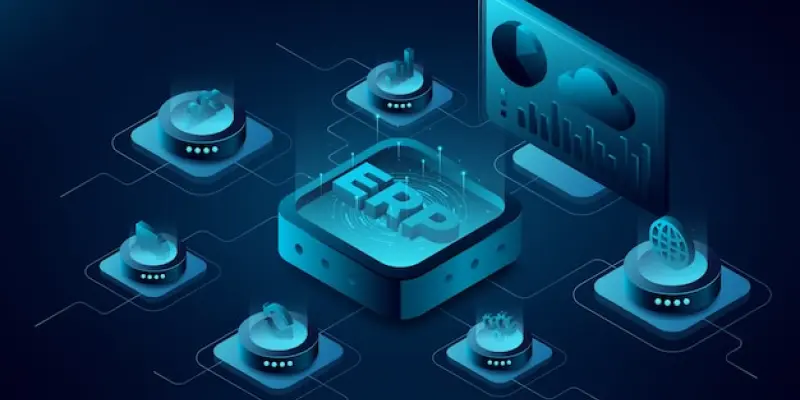
In the rapidly evolving landscape of enterprise technology, artificial intelligence (AI) has emerged as a transformative force, significantly influencing traditional systems. Microsoft has positioned itself at the forefront of this revolution by integrating AI within its enterprise resource planning (ERP) systems, particularly through platforms like Dynamics 365 Finance & Supply Chain Management (D365 F&SCM). This initiative is redefining how businesses manage their operations, enhancing both efficiency and strategic decision-making. By embedding AI agents and the innovative Copilot feature, Microsoft aims to streamline processes that once demanded extensive human intervention, thus allowing companies to focus on their core objectives. The convergence of AI with enterprise technology marks a new epoch where automation not only replaces repetitive tasks but enhances decision-making abilities through data-driven insights. The seamless collaboration between AI agents and users within Microsoft’s ERP ecosystem heralds a new chapter in enterprise tech, promising advancements in operational precision and business agility.
AI Agents and Proactive Enterprise Operations
Microsoft’s strategy around integrating AI agents into its ERP systems emphasizes providing proactive assistance in enterprise operations. AI agents autonomously manage complex logical tasks in the background, interacting seamlessly with users via interfaces like Copilot. This collaboration means AI agents can carry out day-to-day tasks without requiring constant manual intervention, allowing for automatic suggestions and valuable insights where attention is needed most. By reducing the burden on human decision-makers, AI agents free up valuable resources and time, enabling personnel to focus on strategic undertakings rather than routine operations. Through such advancements, enterprises experience improved efficiency across various operations, making their workflow dynamic and responsive to real-time data inputs and business changes. This adaptation ability is crucial for enterprises looking to maintain competitive advantages in increasingly complex global markets. The synergy between AI agents and human operators catalyzes innovation, ushering in an era where human resources concentrate on higher-order, strategic roles, aligning with organizational goals more effectively.
Enhancing Supply Chain Operations with AI
A pivotal aspect of AI’s integration within Microsoft’s ERP systems is the transformation of supply chain operations. By harnessing AI capabilities, Microsoft introduces intelligent agents that streamline end-to-end processes across supply chain departments. These agents enhance supplier collaboration through automation of procurement tasks, reducing manual interventions, and consequently boosting decision-making efficiency with prompt, actionable insights. For instance, Microsoft’s supplier collaboration AI agent is designed to tackle supply chain inefficiencies by offering quick proposals to address potential challenges. It acts as an intermediary, delivering real-time solutions to prevent delays and suggesting corrective actions when direct intervention is necessary. Additionally, by accelerating routine processes and fostering smooth collaboration, AI helps organizations increase their resilience against disruptions. The impact is particularly significant in sectors prone to volatility, where predictive analytics and timely responses can avert substantial losses. This technology-driven approach not only refines the supply chain but also promotes an efficient and agile operational environment, pivotal for sustainable business growth.
Preparing for an AI-Driven Future
The transition toward AI-readiness in enterprise technology necessitates an emphasis on the quality of the underlying data. Accurate, structured, and well-managed data is the backbone of effective AI implementation. Without it, even the most advanced AI systems would struggle, emphasizing the adage “Garbage in, garbage out.” Companies must ensure their data is robust and clean to fully leverage AI’s potential. This data maturity involves integrating structured data management processes, ensuring security and seamless integration. STAEDEAN, aligning with Microsoft’s vision, provides embedded solutions that promote AI-readiness for Microsoft Dynamics 365. By focusing on efficient data integration and robust management, STAEDEAN assists businesses in overcoming inefficiencies caused by poor-quality data. They enable enterprises to unlock AI’s capabilities, enhancing operational precision and strategic outcomes. Such advancements significantly foster innovation and competitive edge, enabling enterprises to operate with higher accuracy and efficiency. The ability to harness clean and structured data empowers organizations to maximize their AI investments, ensuring long-term success and adaptability.
Future Directions and Strategic Partnerships
Strategic alliances have proven to be catalysts in expanding the reach and efficacy of AI in enterprise applications. Microsoft’s collaboration with STAEDEAN exemplifies how partnerships can lead to industry-specific solutions tailored to address unique challenges across various sectors. By utilizing AI tools like Copilot and leveraging platforms such as Azure, STAEDEAN crafts innovative solutions that cater to industries including Equipment Rental, Life Sciences, and Manufacturing. These solutions aim to increase efficiency, with some processes seeing acceleration rates of as much as 85%. Additionally, such partnerships facilitate enhanced customer satisfaction by delivering solutions that meet industry-specific requirements. This collaborative approach not only optimizes operations but also broadens the scope of technological impact. Businesses involved in these strategic alliances benefit from cutting-edge AI advancements and industry expertise, accelerating their growth and maintaining competitive advantage. The synergy from these collaborations underlines the potential of AI to redefine traditional industry boundaries and drive transformation across business landscapes.
The Autonomous ERP Vision
At the heart of Microsoft’s AI strategy lies the ambition to develop a fully autonomous AI-powered ERP system. This vision involves an integrated platform where disparate functions blend seamlessly, promoting process efficiencies that extend across the entire organizational infrastructure. This holistic framework enables functionalities such as processing expenses directly within collaborative apps like Microsoft Teams, thus reducing reliance on multiple independent systems. As this autonomous vision unfolds, enterprises can expect to see a reduction in administrative burdens, leading to substantial cost savings and improved resource allocation. The merger of integral Microsoft systems within an AI-driven ERP framework signifies a transformative leap in enterprise operations. The transition towards such autonomy anticipates a future where businesses operate with unparalleled agility, precision, and foresight. Firms prepared for this shift will find themselves better equipped to harness growth opportunities, deploy resources strategically, and enhance their competitive edge in constantly evolving marketplaces.
Concluding Insights on AI-Driven Innovation
In today’s fast-paced world of enterprise technology, artificial intelligence (AI) has become a game-changer, significantly reshaping traditional systems. Microsoft has strategically placed itself at the helm of this technological shift by incorporating AI within its enterprise resource planning (ERP) systems such as Dynamics 365 Finance & Supply Chain Management (D365 F&SCM). This move is revolutionizing business operations by improving both efficiency and strategic decision-making processes. By embedding AI agents alongside the cutting-edge Copilot feature, Microsoft is on a mission to simplify processes previously requiring heavy human involvement, thereby enabling businesses to focus more on their core goals. The combination of AI with enterprise technology heralds a new era where automation not only takes over routine tasks but also enriches decision-making through insightful data analysis. This seamless cooperation between AI agents and users within Microsoft’s ERP system signals a groundbreaking phase in enterprise technology, offering advancements in operational accuracy and business flexibility.