

The shift from isolated chatbots to autonomous AI agents marks a definitive transition in enterprise automation, where software now possesses the agency to execute complex, multi-step workflows across vast cloud ecosystems. Recent industry data suggests that over 80% of organizations are currently testing or deploying these agents to manage critical operations, yet this autonomy creates a sprawling attack surface that traditional security measures are ill-equipped to handle. The current landscape requires a fundamental rethinking of how we secure systems that no longer just provide information but actively make decisions and manipulate infrastructure. This review explores the technical evolution of AI orchestration and the emerging security frameworks, such as the Wiz AI-Application Protection Platform (AI-APP), designed to govern these digital workers.
The Evolution of AI Agent Orchestration
The technological journey toward autonomous orchestration began with simple, rule-based systems that operated within strict, narrow boundaries. However, the emergence of large language models transformed these static tools into agents capable of interpreting intent and selecting their own tools to achieve a goal. This evolution signifies a move toward decentralized decision-making, where the “orchestrator” acts as a conductor for various sub-processes, shifting the focus from individual code execution to a broader, more fluid behavioral logic.
In the contemporary technological landscape, these agents have become the connective tissue between disparate data repositories and external APIs. This shift matters because it removes the human-in-the-loop requirement for routine but complex tasks, significantly increasing operational velocity. However, this same independence means that the context of an action—why an agent is accessing a specific database—is now more important than the action itself. Modern security must therefore evolve from simple perimeter defense to a deep understanding of agent intent and cross-platform relationships.
Core Components and Security Architecture
Graph-Based Relationship Mapping and Visibility
The backbone of modern AI security is the transition from tabular lists of assets to a graph-based understanding of the environment. The Wiz Security Graph exemplifies this by visualizing the intricate web of connections between AI agents, human identities, and cloud resources. This approach is unique because it identifies “toxic combinations” where a seemingly minor misconfiguration in one area provides a direct path for an agent to escalate its own privileges. By mapping these dependencies, security teams can see how an agent might inadvertently bridge two secure environments, creating a new, unintended vulnerability.
Understanding these relationships is vital because AI agents often exist at the intersection of development, operations, and data science. A traditional security tool might flag an over-privileged service account, but a graph-based system interprets that account’s role in the context of an AI workflow. This visibility allows for the identification of complex attack paths that would otherwise remain hidden in the noise of individual alerts. It provides the necessary context to determine if an agent’s access to a sensitive data store is a legitimate operational requirement or a high-risk architectural flaw.
Posture Management and the AI Bill of Materials (AI-BOM)
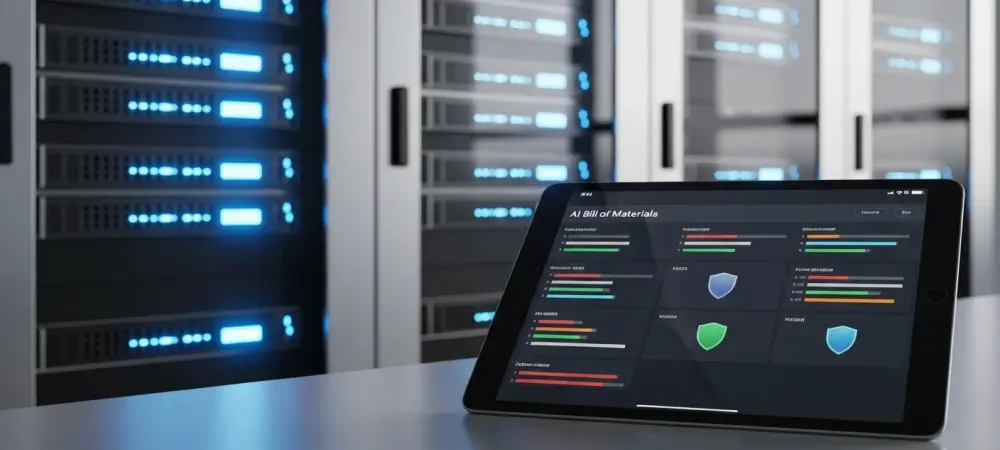
Technical governance now centers on AI Security Posture Management (AI-SPM), a discipline that moves beyond simple inventory toward active architectural integrity. A critical component of this is the AI Bill of Materials (AI-BOM), which inventories every model, framework, and third-party dependency within an agent’s ecosystem. This implementation is unique in its ability to track the provenance of the models themselves, ensuring that only vetted, compliant versions are utilized. It acts as a continuous audit of the AI stack, highlighting where outdated or insecure frameworks might be lurking in the shadows of the development cycle.
This level of inventory management matters because the supply chain for AI is notoriously opaque. When an organization deploys an agent, it is often unknowingly pulling in dozens of sub-libraries and external APIs. AI-SPM provides the “X-ray vision” needed to ensure that the entire stack adheres to organizational standards. Moreover, it allows for the enforcement of security policies at the architectural level, preventing the deployment of agents that lack necessary guardrails or that bypass established data protection protocols.
Shift-Left Security for Agent Codebases
Integrating security during the development phase, often called “shift-left,” is essential for preventing structural weaknesses from reaching production. This involves automated scanning of agent codebases to identify hardcoded secrets, such as API keys or database credentials, which agents might use to communicate with other services. By catching these issues early, organizations reduce the cost and complexity of remediation. This proactive stance ensures that the “instructions” given to an AI agent are inherently secure and that its configuration follows the principle of least privilege from the very first line of code.
Current Trends in Autonomous Security
The industry is currently witnessing a rapid shift toward unified visibility, driven by the adoption of the Model Context Protocol (MCP). This protocol standardizes how agents interact with data sources, making it easier to monitor their behavior across different platforms. Furthermore, there is a growing reliance on real-time behavioral monitoring to counter the threat of prompt injection, where malicious inputs manipulate an agent’s logic. Instead of just looking for “bad” keywords, modern security systems use AI to detect subtle deviations from an agent’s established behavioral baseline.
Real-World Applications and Deployment
In the finance sector, AI agents are now tasked with managing complex data repositories and executing trades via external APIs, where a single security lapse could result in massive financial loss. Similarly, tech companies use orchestrators to automate customer service workflows that span multiple platforms, from CRM systems to payment gateways. These applications demonstrate the power of orchestration but also highlight the high stakes involved. When an agent is granted the power to process a refund or access a client’s private history, the security of its orchestration layer becomes the primary defense against systemic fraud.
Technical Challenges and Market Obstacles
Despite its potential, the technology faces significant hurdles, most notably the trend of “over-permissioning.” Developers frequently grant agents broad access to ensure functionality, unintentionally creating a master key for attackers. Additionally, the complexity of securing third-party plugin supply chains remains a daunting task. While runtime protection and automated threat containment are evolving to mitigate these risks, the sheer speed at which AI agents operate makes human-led intervention nearly impossible. The challenge lies in creating security systems that are as fast and autonomous as the agents they are meant to protect.
The Future of AI Agent Governance
Looking ahead, the industry must move toward more granular control over agent autonomy through self-healing security architectures. These future systems will likely include automated policy generation, where the security layer learns the necessary permissions for an agent and dynamically restricts access in real time. The long-term impact on cloud infrastructure will be a move toward “intent-based” governance, where the environment itself interprets the safety of an agent’s request before execution. This shift will require a total integration of AI logic with traditional cloud security protocols to create a unified, self-protecting ecosystem.
Summary and Assessment
The review of AI agent orchestration security indicated that the traditional focus on model-level safety was insufficient for protecting modern enterprise environments. Insights from the analysis showed that the real risk lay in the interconnectedness of agents with cloud infrastructure, where autonomous decision-making could be weaponized through over-privileged accounts and complex attack paths. The transition toward graph-based visibility and comprehensive AI-BOM inventories was identified as a critical step in regaining control over these decentralized systems. Furthermore, the development of runtime monitoring proved essential for detecting behavioral drift that static code analysis could never catch. Ultimately, the verdict for organizations was clear: the adoption of AI agents required a shift from securing the model to governing the entire operational environment. It was determined that the most successful security postures would be those that integrated “shift-left” code scanning with dynamic, real-time protection. Future governance will likely necessitate the deployment of “security agents”—autonomous systems designed specifically to monitor and bound the actions of operational AI agents. For the modern enterprise, the path forward involved embracing the efficiency of AI while simultaneously building a security architecture that was as intelligent and adaptive as the technology it sought to manage.