

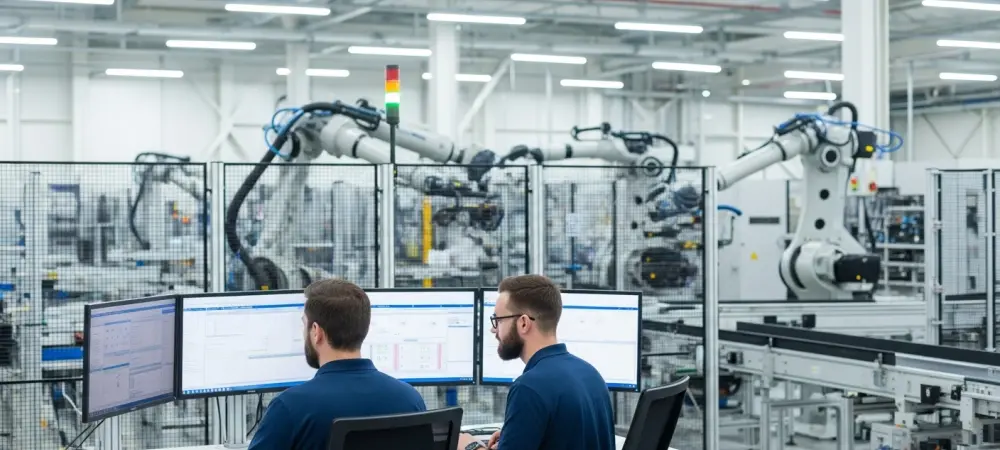
The relentless hum of machinery across factory floors and processing plants now harmonizes with a new, invisible force—the computational power of artificial intelligence, promising a future of autonomous operations that was once the domain of science fiction. This convergence is not merely an upgrade but a fundamental re-imagining of industrial efficiency, resilience, and decision-making. However, integrating sophisticated algorithms into environments where a single millisecond of downtime can trigger millions in losses and pose significant safety risks requires more than just technological prowess; it demands a strategic, meticulously planned blueprint for transformation. This is the central challenge facing industrial leaders today: how to harness the revolutionary potential of AI without disrupting the mission-critical reality of their operations.
When the AI Revolution Meets Mission-Critical Reality
The promise of artificial intelligence in the consumer and enterprise worlds, characterized by rapid iteration and agile development, collides with the unforgiving physics of the industrial sector. In settings like chemical plants, power grids, or manufacturing lines, operations are measured in decades, and the core principles are safety, reliability, and continuous uptime. The fail-fast mentality that fuels innovation in Silicon Valley is a non-starter where failure can have catastrophic consequences.
This fundamental tension creates a unique paradox. While industrial companies face immense pressure to adopt AI for predictive maintenance, process optimization, and enhanced resilience, they are constrained by systems designed for stability, not change. The digital transformation conversation must therefore shift from one of speed and disruption to one of precision, control, and calculated evolution. The question is not whether to adopt AI, but how to integrate its intelligence into a world that cannot afford to stop.
The Industrial Dilemma Navigating High-Stakes Transformation
Industrial enterprises are under constant pressure to boost operational efficiency and bolster resilience against supply chain disruptions and market volatility. AI presents a compelling solution, offering the ability to unlock new levels of productivity from existing assets. Yet, this ambition clashes with the deeply embedded reality of legacy operational technology (OT). These decades-old control systems, while reliable, were never designed for the data-rich, interconnected world of modern IT infrastructure. This conflict makes the standard “rip and replace” strategy for digital transformation entirely unfeasible. Shutting down a refinery or a power plant for a complete technological overhaul is not only prohibitively expensive but also operationally dangerous. The industrial sector requires a path to modernization that respects its deep investments in existing infrastructure and its unwavering commitment to safety. The challenge, therefore, is to build a bridge to the future without dismantling the foundations of the present.
The Three Pillars of Nondisruptive Industrial AI
The solution to this dilemma lies in a strategy of nondisruptive modernization, built upon three core pillars. The first is to modernize through evolution, not revolution. This involves layering modern software and AI capabilities on top of existing OT systems. Instead of replacing reliable but isolated machinery, companies can deploy an OT-ready automation platform that acts as an intelligent overlay. For instance, such a platform could enable predictive maintenance on established equipment by analyzing its data streams, augmenting legacy systems with advanced analytical power without requiring a single moment of unplanned downtime.
The second pillar is to forge a unified front by converging IT and OT. Historically, these departments have operated in separate worlds with different priorities and vocabularies. Success in Industrial AI requires breaking down these organizational silos. IT brings crucial expertise in cloud computing, enterprise data management, and cybersecurity, while OT provides indispensable domain knowledge of plant processes, equipment behavior, and safety protocols. When these two teams collaborate, the result is a solution that is not only technologically advanced but also operationally relevant, practical, and trusted by the people on the plant floor.
Finally, the third pillar is to build a resilient foundation with a unified data strategy. AI is fueled by data, and without a robust system to manage it, any initiative is destined to fail. The most effective approach is to implement an “industrial data fabric,” a unifying software layer that can collect, contextualize, and securely deliver data from disparate sources, from legacy control systems to modern IoT sensors. This architecture moves beyond insecure and brittle point-to-point connections, creating a scalable and secure data infrastructure that can power a multitude of AI applications and serve as the single source of truth for both operational and enterprise needs.
An Expert’s Mandate Insights from the Industrial Frontline
This evolutionary approach is championed by experts who have witnessed the pitfalls of overly ambitious transformation projects firsthand. Claudio Fayad, Chief Technology Officer of Aspen Technology, argues that a carefully orchestrated, step-by-step strategy is the only viable path to success in this domain. He characterizes the vision of a radical, all-at-once overhaul as a “recipe for risk,” especially in facilities where continuous operation is non-negotiable.
The central finding from the industrial frontline is that true transformation is a product of synthesis. Fayad identifies the fusion of IT’s ability to scale technology and manage data with OT’s deep operational knowledge as the essential “catalyst” for meaningful results. This partnership ensures that AI-driven solutions are not just theoretical exercises but are grounded in the practical realities of the industrial environment, addressing real-world challenges with technically sound and operationally safe solutions.
Your Action Plan Activating the Transformation Blueprint
Activating this blueprint begins with a clear, sequential action plan. The first step is to prioritize nondisruptive modernization. Organizations should begin by mapping their existing automation systems and identifying opportunities to layer software-defined solutions onto this installed base. This allows for quick wins and demonstrates the value of an evolutionary approach without introducing unnecessary risk.
Next, leadership must mandate and structure IT-OT collaboration. This goes beyond simply encouraging communication; it means creating joint teams and initiating shared projects. An ideal starting point is the co-design of a data management strategy that serves both enterprise analytics and operational reliability needs, forcing both teams to align their objectives and build a common language.
The final, foundational step is to architect an industrial data fabric. This requires an investment in a central platform to act as the unifying layer for all operational data. This fabric becomes the backbone of the entire Industrial AI strategy, providing the system for collecting, contextualizing, and securely delivering OT data to any application that needs it. This infrastructure is what enables the organization to scale its AI initiatives from a single use case to an enterprise-wide capability.
The strategic framework outlined here offered a pragmatic and proven path for industrial companies to integrate artificial intelligence. By prioritizing an evolutionary approach over a revolutionary one, these organizations successfully modernized without disrupting their core operations. The mandated convergence of IT and OT teams broke down long-standing silos, fostering a collaborative culture that produced solutions that were both technologically advanced and operationally sound. Ultimately, the development of a unified industrial data fabric provided the resilient foundation needed to scale AI initiatives, transforming raw data into actionable insights that drove efficiency, enhanced safety, and built a sustainable competitive advantage for the years that followed.