

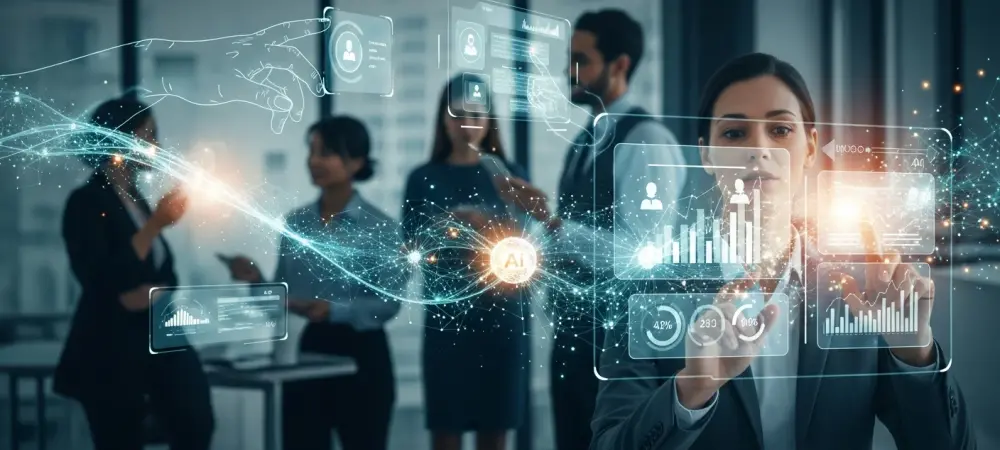
While the public imagination often pictures artificial intelligence revolutionizing customer-facing products and services, a quieter and more profound transformation is taking root within the internal machinery of the modern enterprise. A growing consensus among corporate strategists suggests that the most logical and effective starting point for enterprise AI is not the sales floor or the marketing department, but the often-overlooked corridors of Human Resources. This trend represents a pragmatic, low-risk approach to achieving measurable returns and building critical internal AI competency before tackling more volatile, external applications. The telecommunications group e& stands as a powerful example of this shift, pioneering an AI-first HR model that is rapidly becoming a blueprint for large-scale corporate innovation.
The Strategic Starting Point for Corporate AI
The decision to anchor an organization’s AI journey in Human Resources stems from a calculated strategy to master the technology in a controlled environment. Unlike customer-facing systems where a single algorithmic error can trigger immediate public backlash and revenue loss, internal systems offer a valuable buffer. This approach allows companies to build, test, and refine AI models while managing governance and user acceptance away from the public eye.
This internal-first strategy is gaining momentum as organizations move from scattered AI experiments to full-scale production deployments. Industry analysis, such as Deloitte’s 2026 State of AI in the Enterprise report, confirms a definitive shift toward leveraging AI for operational productivity and workflow automation as the primary drivers of early investment returns. By focusing on optimizing internal processes first, enterprises like e& are building a solid foundation of expertise and proven results, positioning themselves for broader, more ambitious AI integrations in the future.
The Inherent Suitability of HR for Automation
The HR function is uniquely primed for AI integration due to its fundamental structure. For decades, HR departments have operated on a bedrock of structured data, from employee records and payroll information to performance metrics and training histories. This clean, organized data is the lifeblood of effective machine learning models, making it far easier to automate HR workflows than functions built on ambiguous, unstructured information.
Moreover, the core responsibilities of HR are characterized by routine, repeatable processes. Tasks such as screening candidate resumes, coordinating interview schedules, managing employee onboarding, and processing leave requests follow predictable patterns that are ideal for automation. These consistent workflows provide a clear and measurable baseline, allowing organizations to quantify the efficiency gains and ROI delivered by AI-powered tools, thereby justifying further investment and expansion.
The e& Case Study a Blueprint for AI-First HR Transformation
The telecommunications group e& offers a definitive case study in this enterprise trend with its strategic initiative to create an AI-first HR ecosystem for its 10,000 employees. Rather than simply bolting on a few AI features, the organization has undertaken a fundamental restructuring of its human capital management. This transformation is powered by the Oracle Fusion Cloud HCM platform, which serves as the technological backbone for automating and enhancing HR processes on a global scale.
Standardizing for Efficiency and Scale
A primary objective of the e& initiative is to create uniform and highly efficient HR processes across all its regional operations. By leveraging AI, the company is automating time-consuming tasks that were previously handled manually. For instance, AI-driven tools now manage initial recruitment screening, matching candidate profiles to job requirements with greater speed and precision. The system also coordinates complex interview schedules and generates personalized learning and development plans for employees, ensuring that career growth is aligned with both individual aspirations and organizational needs.
Empowering Managers with Data-Driven Insights
Beyond process automation, the AI-first model at e& aims to empower leadership with actionable intelligence. The new system provides managers with faster, more direct access to critical workforce analytics, transforming raw data into strategic insights. Leaders can now make more informed decisions regarding talent management, succession planning, and resource allocation. This shift moves HR from a reactive administrative function to a proactive strategic partner, enabling the organization to anticipate workforce trends and respond with greater agility.
Building on a Secure and Compliant Foundation
Recognizing the sensitivity of employee data, e& made the critical decision to implement its new system within a dedicated Oracle Cloud Infrastructure region. This approach ensures robust data security, sovereignty, and compliance with a complex web of international regulations, including the General Data Protection Regulation (GDPR). By running its AI tools in a secure, isolated cloud environment, e& mitigates the risks associated with data privacy and demonstrates a mature approach to governance, a crucial component of any successful enterprise AI strategy.
A Controlled Environment for Innovation and Risk Mitigation
One of the most compelling advantages of an HR-first AI strategy is the contained, low-risk environment it provides for experimentation and learning. This internal focus stands in stark contrast to the high-stakes world of customer-facing AI, where system failures can result in immediate reputational damage and operational chaos. Internal HR platforms allow an organization to methodically develop and audit its AI models, ensuring they are reliable, fair, and effective before they are considered for wider deployment.
This controlled setting is also ideal for managing the human side of technological change. Introducing AI tools to an internal workforce allows for structured training, feedback collection, and gradual user adoption. It provides a space to establish clear governance protocols, define escalation paths for when AI-generated outputs are questioned, and build trust in the technology. The lessons learned in managing these internal dynamics are invaluable for planning future AI rollouts in other business units.
The Evolving Role of HR and the Future of Work
The integration of AI is fundamentally reshaping the HR profession and the nature of employee interactions with corporate systems. As automation handles routine administrative duties, HR professionals are being liberated to focus on higher-value, strategic activities. Their roles are evolving from administrative coordinators to trusted advisors who handle complex policy interpretation, develop nuanced employee engagement strategies, and manage the exceptions that automated systems cannot resolve.
This evolution is supported by the rise of AI-powered digital assistants. At e&, for example, plans are underway to introduce conversational agents that can handle frequent employee queries about company policies, benefits, and training opportunities. These assistants will also support candidate engagement during the recruitment process, providing a seamless and responsive experience. The success of such tools depends on their accuracy and their thoughtful integration into existing workflows, always with human oversight available to ensure quality and address complex issues.
Reflection and Broader Impacts
Reflecting on the broader implications of using HR as an AI launchpad reveals a model with significant strengths and notable challenges that offer lessons for the entire enterprise.
Reflection
The primary strengths of this approach were its capacity to deliver measurable ROI through efficiency gains and its role in building foundational AI skills within the organization. However, this journey was not without its hurdles. Enterprises discovered the critical importance of ensuring high-quality data, as biased or incomplete datasets could lead to flawed algorithmic outputs. Mitigating algorithmic bias and navigating the complexities of organizational change management emerged as essential competencies for any company pursuing large-scale AI integration.
Broader Impact
The experiences in the HR department created a scalable blueprint for deploying AI across other core business functions. The rigorous processes developed for data governance, privacy, and compliance in managing sensitive employee information became the standard for similar initiatives in finance, procurement, and supply chain management. The lessons learned in HR provided a clear and tested pathway for expanding AI’s footprint responsibly and effectively throughout the enterprise.
A Replicable Model for Enterprise-Wide AI Integration
In retrospect, the strategic, internally-focused approach pioneered in HR proved to be the dominant model for achieving scalable and sustainable AI transformation. Human Resources offered the ideal combination of structured data, repeatable processes, and measurable outcomes, which created the perfect conditions for early and demonstrable AI success. The lessons learned by early adopters like e& in workforce management ultimately established a replicable blueprint, showing how other internal functions could progressively and successfully integrate artificial intelligence into their own core operations.