

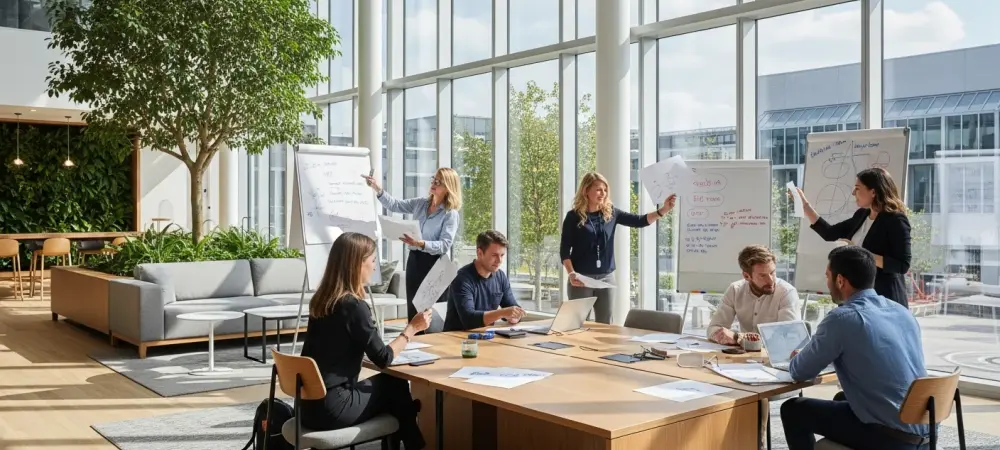
The profound disconnect between executive mandates and employee reality has transformed the morning commute from a routine habit into a contentious tax on human potential. For many professionals, the journey to a physical office feels less like a strategic move and more like a regression into outdated modes of surveillance and control. This guide serves as a diagnostic tool for leadership, offering a pathway to reclaim organizational credibility by transforming the workplace from a mandatory destination into a high-performance asset. By reading further, decision-makers will learn how to audit their current physical environments, eliminate the friction of purposeless hybrid schedules, and build a “destination office” that employees actually want to visit.
Beyond the Mandate: Why Presence Is No Longer a Proxy for Performance
The friction between remote flexibility and the return-to-office mandate has reached a boiling point, yet the conversation remains stuck in a cycle of productivity metrics and attendance tracking. This narrow focus fails to account for the qualitative experience of the modern professional who has proven they can deliver results without a designated cubicle. When leaders rely solely on the threat of discipline or the enforcement of rigid badges-in data, they signal a lack of trust that erodes the psychological contract between the company and its talent. The office must now earn the commute of the employee through superior utility rather than through the sheer exercise of corporate authority.
Leadership’s failure to evolve the physical workspace is the primary driver of workforce resistance in this new landscape. Modern workers are not inherently opposed to collaboration or community; they are opposed to the inefficiency of a poorly designed day. This article explores why the modern commute has become an unjustifiable tax on employees and how to pivot toward a model that prioritizes cognitive performance. Readers will gain an understanding of the structural flaws in current hybrid models, the psychological impact of uninspired office design, and the strategic shifts necessary to transform the office into a destination rather than a requirement.
The Pre-Pandemic Legacy of Control-First Architecture
The current office crisis is not a byproduct of recent global shifts; it is the exposure of a pre-existing condition rooted in decades of poor design. For years, corporate environments prioritized hierarchy, density, and administrative control over cognitive performance and creative health. Large floor plates filled with identical desks were designed for ease of maintenance and oversight rather than the complex, varied needs of deep concentration or collaborative brainstorming. This architectural philosophy treated humans as interchangeable components of a machine, ignoring the basic biological requirements for natural light, acoustic privacy, and air quality.
Open-plan layouts and harsh lighting sent a clear message that visibility was more important than actual output. In these environments, “looking busy” became the dominant survival strategy, often at the expense of high-value work that requires quiet reflection. When technology finally broke the physical constraints of the desk, employees did not just leave their offices—they escaped a subpar product that had long failed to support high-level thinking. To move forward, leaders must acknowledge that the traditional office was already broken before the world changed, and attempting to restore it is a recipe for strategic failure.
Strategic Steps to Redefining the Workplace Value Proposition
1. Auditing the Utility of the Physical Environment
Before demanding a return to the status quo, leaders must evaluate whether their workspace actually facilitates work that cannot be done at a kitchen table. If an office offers the same digital distractions as a home environment but with more noise and less comfort, its utility is effectively zero. A rigorous audit should look at the ratio of quiet zones to social spaces and the quality of the technical infrastructure provided.
Recognize the Mental Cost of Sterile Environments
Offices filled with gray carpet and hot desks act as cognitive drains rather than catalysts, making the commute feel like a net loss for the employee’s mental energy. These environments lack the sensory richness needed to spark creativity and often lead to sensory overload or boredom. Leadership must realize that the aesthetics of a space are not just about “vibes” but are deeply connected to the neurological ability of a person to focus and innovate.
Prioritizing Architecture and Natural Light Over Amenities
Ping-pong tables and beer fridges are superficial fixes that fail to address the core problem of a lackluster environment. True value is found in high-quality architecture and environments that raise the quality of thought in the room through biophilic design and adequate ventilation. Investing in the physical health of the space—such as floor-to-ceiling windows and modular furniture—demonstrates a commitment to the employee’s actual work experience rather than just their entertainment.
2. Eliminating the Absurdity of the Digital-First Office
One of the greatest leadership failures is requiring a commute only for employees to spend the day on video conferencing platforms. This “digital-first” behavior inside a physical office creates a profound sense of resentment because the primary reason for being there—face-to-face interaction—is ignored. It signals that the company values the optics of a full room over the efficiency of its operations.
Aligning Physical Presence With Collaborative Outcomes
If the work day consists entirely of digital meetings, the office provides no proximity dividend, rendering the cost of travel entirely illogical. To justify the office, leaders must curate days where the schedule is intentionally cleared of video calls in favor of workshops, critiques, and whiteboarding sessions. This alignment ensures that the physical journey has a tangible reward in the form of accelerated problem-solving and deeper professional connections.
Moving Away From Rigid Hybrid Schedules
Treating hybrid work as a fixed calendar requirement rather than a strategic tool prevents spontaneous interaction and makes mandates feel like arbitrary exercises in authority. Forcing everyone into the building on Tuesdays and Thursdays regardless of their actual workload creates artificial peaks in noise and stress. A more sophisticated approach involves allowing teams to dictate their rhythm based on the specific project phase they are in, ensuring that the office is used when it is most effective.
3. Bridging the Generational Knowledge Gap
Younger professionals often lack the reference point for why physical presence matters because they have never experienced a high-performing office culture. For those who started their careers in isolation, the office can appear as a hurdle to overcome rather than a resource to utilize. Closing this gap requires more than a speech; it requires the active demonstration of the benefits of proximity through mentorship and cultural immersion.
Mentorship as a Dynamic Product of Proximity
Leaders must demonstrate that the work in the margins—the hallway conversations and post-meeting huddles—is where career-defining learning occurs. These unplanned moments provide a “passive education” that is impossible to replicate via scheduled Zoom calls or instant messages. By making these interactions visible and valuable, senior staff can show junior employees that the office is a place where their professional growth is accelerated through osmosis.
Creating Lived Experiences Rather Than Enforcing Rules
Instead of quoting old cultural standards, leaders must curate environments where the benefits of being together are self-evident through collaboration and community. This means hosting internal “knowledge shares” or cross-departmental mixers that actually generate new ideas. When employees walk away from a day in the office feeling more capable and connected than they did at home, the mandate becomes unnecessary because the value proposition is clear.
4. Transitioning From Real Estate Liabilities to Performance Assets
The traditional model of long-term leases and fixed fit-outs is becoming a liability in a fast-moving economy that demands agility. Companies are realizing that massive, underutilized headquarters are draining capital that could be better spent on talent or technology. The shift is now toward spaces that can breathe with the organization, expanding and contracting based on the actual need for presence.
Upgrading the Experience While Shedding Fixed Costs
Modern businesses are increasingly moving toward flexible, high-performance shared spaces that prioritize employee experience over square footage. By partnering with specialist workspace providers, organizations can access premium design and hospitality services without the overhead of a traditional 10-year lease. This allows a company to offer a luxury-tier office environment that would be cost-prohibitive to build and manage on their own.
The Strategic Shift Toward Destination Offices
A destination office is one that employees choose to visit because the quality of the space and the surrounding community far exceeds the isolated home-office experience. These hubs are often located in vibrant neighborhoods with access to culture, food, and transportation, making the visit part of a larger, positive lifestyle choice. When the office acts as a gateway to inspiration and social life, the friction of the commute is mitigated by the quality of the destination.
A Concise Roadmap for Reclaiming Corporate Credibility
To effectively lead in this environment, executives should start by acknowledging the design failure and admitting that generic offices have failed to meet modern cognitive needs. The focus must then shift toward eliminating the commute tax by ensuring that office days are strictly reserved for high-value collaboration that justifies the travel time. Leadership should invest heavily in environmental quality—focusing on light, movement, and community rather than superficial perks like snacks or games. Furthermore, it is essential to bridge the gap between generations by using the office as a strategic tool for mentorship and cultural transmission. Finally, embracing flexibility by moving toward performant spaces that drive business success rather than just housing employees will distinguish the leaders from the laggards in the coming years.
The Disappearing Middle Market and the Future of Work
The commercial real estate landscape is witnessing a sharp divide where the middle market of functional but uninspired offices is collapsing. While general office demand may fluctuate, prime rents for high-quality, design-led spaces are rising, signaling a flight to quality across all major metropolitan areas. Organizations that continue to offer mediocre environments will find themselves unable to compete for top talent, as the office becomes a strategic differentiator rather than a baseline requirement. The future belongs to destination workspaces that act as hubs for innovation rather than sites of surveillance, where the environment is specifically engineered to foster the “serendipity” that drives modern economic value.
The Leadership Challenge: Build Excellence or Abandon the Mandate
The era of the standard office is over, and leadership had to choose between two distinct paths. If an organization was only willing to provide a sterile, uninspired workspace, it should have abandoned return-to-office mandates and embraced a fully remote future to preserve its talent pool. However, for those who believed in the power of physical proximity, the challenge was to build something truly excellent that respected the employee’s time. The most successful companies moved toward a model where the office served as a strategic engine for creativity and resilience rather than a place of control. They realized that by treating the workplace as a product that must be sold to employees, they could foster a more loyal, innovative, and high-performing workforce. Moving forward, the focus will likely remain on creating high-fidelity physical hubs that act as the cultural heart of the organization while allowing for total digital flexibility.