

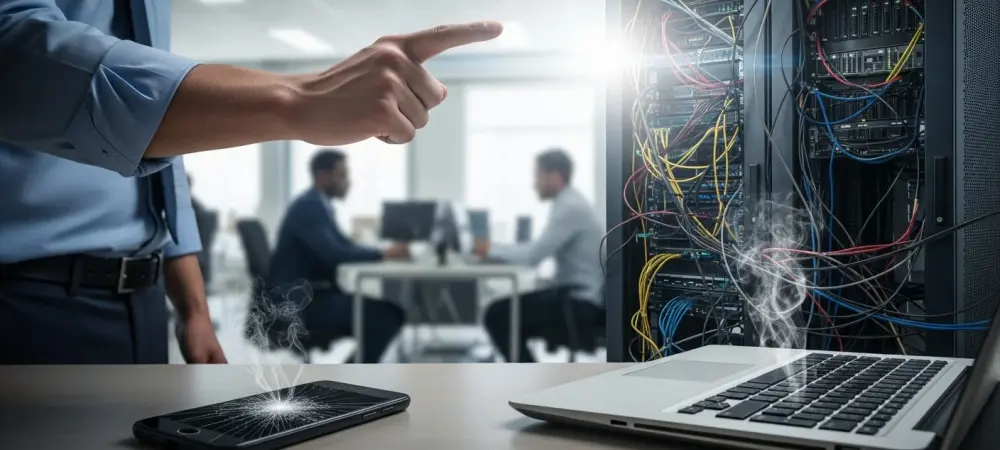
When an office worker experiences a sudden lag during a high-stakes video conference or a freezing spreadsheet, they almost instinctively declare that the corporate system is down again. This widespread misperception stems from the fact that for most employees, the “system” is an invisible conglomerate of every digital touchpoint they encounter throughout their workday. They lack the technical diagnostic tools to distinguish between a saturated central processor on an aging laptop and a legitimate server outage at the software provider’s data center. Consequently, the frustration that should be directed at outdated hardware or poor device management is instead leveled at the digital workspace as a whole. This creates a significant trust gap between the workforce and the IT department, leading to an influx of support tickets that describe vague performance issues while the true culprits—underpowered endpoints—continue to degrade the overall employee experience and drain daily productivity.
1. Defining the Scope of End User Computing
End User Computing, commonly referred to as EUC, encompasses the entire spectrum of technologies that individual staff members use to perform their specific business functions. It is not merely a collection of physical gadgets like laptops and smartphones, but rather a complex delivery mechanism for every collaboration tool and core business platform within an organization. When the physical endpoint is neglected, the software running atop it appears fundamentally flawed regardless of how optimized the code might be in a cloud environment. If a device lacks sufficient memory to handle modern browser-based applications alongside background security agents, the resulting sluggishness is perceived by the user as a systemic failure of the application itself. This misattribution often leads management to invest in unnecessary software upgrades or cloud migrations when the actual bottleneck is sitting right on the employee’s desk, waiting for a hardware refresh that could resolve the friction instantly.
The impact of an underpowered device extends far beyond mere annoyance, as it directly compromises the stability of virtual meetings and cross-departmental communication. In 2026, where high-definition video and real-time AI processing are standard components of the digital workflow, the hardware must be capable of sustaining intense local processing demands. When a processor throttles due to heat or outdated drivers, the resulting audio glitches and video frame drops are rarely blamed on the machine’s internal components. Instead, employees often resort to inefficient workarounds, such as using personal devices or unauthorized shadow IT applications, which bypass established security protocols and corporate governance. These makeshift solutions might solve the immediate problem for the individual, but they create a fragmented and dangerous IT environment that is nearly impossible to monitor or protect effectively. Fixing the device layer is therefore the first step in reclaiming control over the entire organizational digital infrastructure.
2. Establishing a Performance Baseline for Hardware
Moving beyond simple inventory tracking is essential for any modern IT department looking to address the root causes of employee dissatisfaction with workplace technology. Establishing a performance baseline requires the implementation of advanced analytics tools that provide deep visibility into the daily realities of device operation across the entire company. By monitoring metrics such as average boot-up times, kernel panic frequency, and application-specific crash logs, administrators can move away from reactive troubleshooting and toward a data-driven strategy. These analytics often reveal that specific hardware batches or older models are responsible for a disproportionate number of helpdesk queries, even if those devices were originally considered top-tier. Identifying these performance outliers allows IT teams to address localized issues before they evolve into widespread rumors about a broken corporate network, ensuring that the hardware fleet remains a reliable foundation for all other business activities.
This analytical approach also uncovers the “invisible” friction that employees often tolerate without ever filing a formal complaint, such as slow wake-from-sleep times or intermittent battery drain. While a single ten-second delay might seem trivial, when multiplied across hundreds of employees and dozens of daily interactions, the cumulative loss in productivity becomes staggering for the enterprise. By quantifying these micro-delays, IT leaders can justify hardware investments based on actual performance data rather than arbitrary lifecycle schedules that may no longer align with current software demands. This proactive visibility ensures that the most critical assets—the people—are supported by endpoints that can keep pace with their creative and operational output. Transitioning to this model of continuous monitoring shifts the focus from managing physical objects to managing the actual human experience of technology, which is the only way to effectively silence the common complaint that “the system” is failing the workforce.
3. Creating Job-Specific Hardware Standards
A common mistake in corporate procurement is the adoption of a one-size-fits-all approach to hardware, which frequently results in under-provisioned staff members struggling with inadequate tools. Creating job-specific hardware standards requires a deep understanding of the unique workflows present in different departments, from high-intensity media production to administrative data entry. For instance, a staff member who spends the majority of their day participating in encrypted video conferences while simultaneously running data-heavy spreadsheets requires a significantly different hardware profile than an employee who primarily utilizes web-based email. By defining what “good enough” looks like for various professional roles, organizations can ensure that budget is allocated where it will have the most significant impact on daily efficiency. This targeted standardization prevents the situation where high-value employees are throttled by hardware limitations that were originally designed for much lighter workloads.
Implementing these tiered standards also simplifies the support process, as IT technicians can become experts in a limited number of hardware configurations tailored to specific business needs. When an entire department uses a uniform device profile, troubleshooting hardware-software conflicts becomes much more predictable, as variables are limited across the user base. Furthermore, this approach aids in more accurate financial planning, as the organization can forecast exactly when specific groups will need upgrades based on the typical software evolution in their respective fields. When employees receive devices that are explicitly matched to the demands of their job, their confidence in the IT department grows, and the likelihood of them blaming the “system” for localized hardware bottlenecks decreases significantly. It transforms the workstation from a potential point of failure into a specialized tool that empowers the worker to perform at their highest potential without technical distractions.
4. Minimizing Peripheral Variety to Ensure Stability
The ecosystem of peripherals, ranging from docking stations and webcams to Bluetooth headsets, often introduces more instability into the workspace than the primary computing devices themselves. A single unreliable model of a USB-C dock or a flaky wireless audio driver can create the convincing illusion of a widespread software outage, as users experience dropped connections and hardware failures. By limiting the variety of approved accessories and peripherals, IT departments can drastically reduce the number of edge-case bugs that plague hybrid work environments. Consistency in these secondary tools ensures that firmware updates can be tested and deployed uniformly, preventing the fragmented user experience that occurs when dozens of different third-party brands are allowed into the ecosystem. This controlled approach minimizes the frustration of “plug-and-play” devices that fail to perform when needed, reinforcing the reliability of the entire computing environment for every staff member.
Standardizing peripherals also streamlines the onboarding process and the transition between different office locations or home setups, as the hardware behavior remains constant. When an employee knows exactly how their headset will interact with the communication platform and their docking station, the cognitive load associated with technical setup is eliminated. Moreover, reducing the diversity of peripheral devices allows the IT team to maintain a more efficient inventory of spare parts and replacement units, ensuring that any actual hardware failure results in minimal downtime. The goal is to create a seamless interface where the physical components disappear into the background, allowing the user to focus entirely on their work rather than on managing a complex web of adapters and cables. By treating peripherals with the same rigor as the primary laptop or desktop, organizations can eliminate a massive source of “system” complaints that are actually rooted in minor accessory incompatibilities.
5. Implementing Automated Maintenance and Monitoring
Modern endpoint management programs have shifted their focus toward proactive remediation, utilizing automation to find and fix performance issues before an employee even realizes a problem exists. Instead of waiting for a helpdesk ticket to arrive, automated scripts can identify memory leaks, clear cluttered cache directories, or update outdated drivers in the background without user intervention. This shift from a reactive to a proactive posture is essential in 2026, as the complexity of the software stack continues to increase, placing more strain on local hardware resources. Automation allows a small IT team to manage thousands of endpoints with the same level of care that was previously reserved for critical servers, ensuring that every workstation remains in an optimal state. By eliminating the manual labor associated with routine maintenance, IT professionals can focus on higher-value strategic initiatives that drive business growth rather than constantly putting out fires caused by neglected hardware.
The success of these automated systems relies on their ability to learn from the fleet’s data and predict potential failures, such as an SSD reaching the end of its lifespan or a battery showing signs of swelling. These predictive insights allow for scheduled hardware replacements that occur during planned downtime, completely bypassing the emergency scenarios that typically lead to employee frustration. When maintenance is invisible and effective, the narrative of a “broken system” begins to dissolve, replaced by a sense of reliability and technical competence. This approach also improves the overall security posture of the company, as automated patching ensures that no device is left vulnerable due to a missed manual update. Ultimately, the integration of automation into device management creates a self-healing environment where hardware performance is consistently maintained at its peak. This stability ensures that the software layer can perform exactly as intended, providing a smooth and uninterrupted experience for the entire workforce regardless of their location.
6. Tracking Performance as a Primary Success Metric
For any organization that lists employee experience as a core strategic goal, the health and speed of individual devices must be treated as a primary measurement of organizational success. Traditional IT metrics, such as ticket resolution time or server uptime, often fail to capture the actual daily frustration of a user who is struggling with a sluggish workstation that technically meets all uptime criteria. By elevating device performance to a Key Performance Indicator (KPI), leadership can hold technical teams accountable for the quality of the digital environment they provide to the staff. This shift in measurement forces a closer look at the actual return on investment for hardware expenditures, as the link between device speed and employee output becomes quantifiable. When performance is tracked at the endpoint level, it becomes clear that investing in high-quality hardware is not a luxury expense but a necessary foundation for achieving any significant digital transformation goals in a modern enterprise.
Establishing these metrics also allows for a more transparent dialogue between the IT department and the rest of the company, as everyone can see the data supporting hardware refresh cycles. Instead of a contentious negotiation over budget, the discussion becomes focused on maintaining the established standards of performance required for the business to operate efficiently. This data-driven culture discourages the common habit of blaming the “system” for every minor delay, as the actual health of the network and the individual devices is clearly visible to those who need the information. Furthermore, these performance metrics provide valuable feedback to vendors and manufacturers, allowing the organization to choose hardware partners that consistently deliver the best real-world results. In the end, treating device health as a strategic priority ensures that the technology remains an enabler of success rather than a barrier to productivity, fostering a work environment where the tools are as reliable and as capable as the people who use them every day.
Enhancing the Hardware Strategy for Long-Term Growth
The realization that many digital frustrations originated from the physical workstation rather than the overarching software infrastructure prompted a significant shift in corporate strategy. Leaders who recognized this pattern moved quickly to stabilize their endpoint fleets, ensuring that every employee was equipped with hardware capable of supporting modern workloads. This transition involved moving away from generic procurement and toward a highly managed, data-driven approach that prioritized the actual user experience over simple cost-cutting measures. By addressing the root causes of performance lag and peripheral instability, organizations successfully restored trust in their digital systems and reduced the burden on their IT support teams. The focus shifted toward proactive maintenance and role-based hardware standards, which eliminated the common workarounds that had previously compromised corporate security and governance protocols across the entire organization.
Ultimately, the move toward comprehensive device management provided a clear path forward for companies seeking to optimize their hybrid work environments and digital transformation efforts. IT departments that implemented sophisticated performance analytics were able to demonstrate the direct correlation between hardware health and overall business productivity. This evidence convinced executive leadership to treat technology as a critical asset rather than a depreciating expense, leading to more consistent and effective refresh cycles. As the narrative of the “broken system” faded, it was replaced by a culture of technical reliability where employees could focus entirely on their core responsibilities without being hindered by their tools. The successful integration of automated monitoring and standardized peripherals created a resilient foundation that supported future growth and innovation. By fixing the endpoint, organizations did not just solve a technical problem; they improved the fundamental relationship between the workforce and the technology that powered their daily lives.