

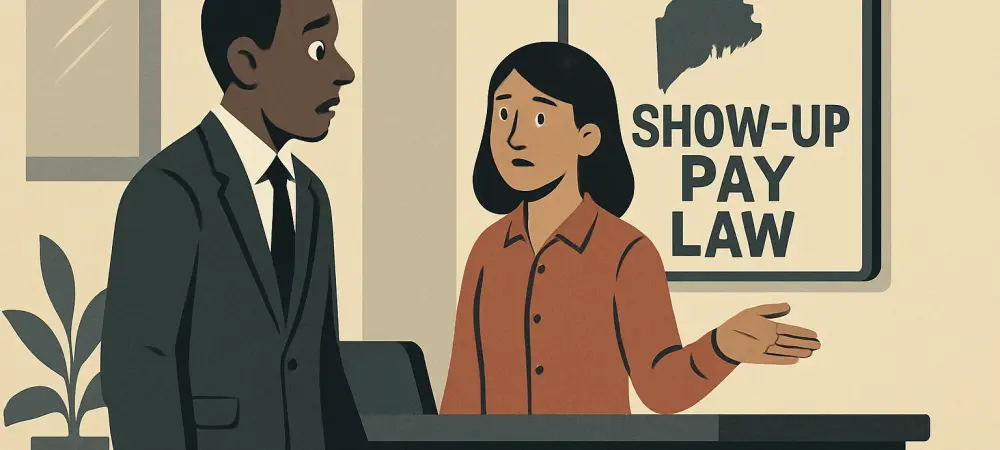
Introduction to Maine’s Show-Up Pay Law
Imagine a worker in Maine arriving at their scheduled shift, only to be told that the day’s work has been canceled with no prior notice, leaving them without pay for the time and effort spent getting there. This scenario is exactly what a groundbreaking piece of legislation, signed by Gov. Janet Mills and effective as of September 24, aims to address. The new show-up pay law mandates compensation for employees who report to work but face canceled or reduced shifts, marking a significant step toward protecting workers’ rights in the state.
This legislation positions Maine alongside other progressive states like California and New York, which have long implemented similar reporting time pay requirements. Such alignment underscores a growing national trend to ensure fair treatment for employees facing unpredictable scheduling practices. The focus here is to provide employers with a comprehensive understanding of this law’s intricacies, compliance obligations, and broader implications for business operations.
The discussion ahead will break down the key provisions, potential challenges, compliance strategies, and future trends related to this mandate. By exploring these facets, the aim is to equip employers with the knowledge needed to navigate this new legal landscape effectively and maintain operational harmony.
Key Provisions of the Show-Up Pay Law
Who Is Covered Under the Law?
The scope of Maine’s show-up pay law, formally known as LD 598, targets employers with a specific workforce size. It applies to businesses employing 10 or more individuals for over 120 days within a calendar year, ensuring that a significant portion of the private sector falls under its purview. This threshold helps balance the law’s reach while considering the capacity of smaller entities.
Certain categories of employers, however, are exempt from these requirements. Seasonal businesses, often operating on fluctuating schedules, and public sector employers are explicitly excluded from the mandate. This distinction allows the law to focus on industries with more consistent staffing needs while avoiding undue burden on temporary or government operations.
Compensation Requirements and Exceptions
Under the new regulation, employers must provide show-up pay when an employee reports for a scheduled shift that is subsequently canceled or shortened. The compensation must equal either two hours at the employee’s regular rate or the amount they would have earned for the full scheduled shift, whichever is less. This provision ensures a baseline of financial protection for workers facing unexpected changes.
Several exceptions exist to mitigate employer liability in specific circumstances. Show-up pay is not required during adverse weather events, natural disasters, civil emergencies, or in cases of employee illness or workplace injury. These carve-outs recognize situations beyond an employer’s control, providing a degree of flexibility in enforcement.
A partial exception also applies if an employer makes a documented, good-faith effort to notify employees of shift changes before they report to work. However, the law remains vague on what constitutes such an effort or the required timing of notifications, leaving room for interpretation. Until clearer guidelines emerge from the Maine Department of Labor (DOL), employers must tread carefully to avoid potential violations.
Challenges and Uncertainties for Employers
Navigating the ambiguities in Maine’s show-up pay law presents a notable hurdle for businesses. The lack of specificity around what qualifies as a good-faith effort to notify employees, or the acceptable timeframe for such notices, creates uncertainty. Employers are left awaiting detailed rules from the Maine DOL to clarify these critical aspects of compliance.
Beyond definitional gaps, operational challenges loom large. Updating payroll systems to account for show-up pay, ensuring consistent and timely communication with staff, and training managers on new protocols demand significant resources. These adjustments can strain smaller businesses or those with tight budgets, requiring careful planning to avoid disruptions.
The risk of disputes or errors further complicates the landscape. Without alignment between internal policies and forthcoming DOL regulations, misunderstandings with employees could arise, potentially leading to legal or reputational issues. Proactive steps are essential to minimize friction and ensure smooth implementation of the law’s requirements.
Compliance Steps for HR and Employers
Immediate Actions to Ensure Compliance
For HR teams, adapting to Maine’s show-up pay law begins with a thorough review of existing scheduling policies. Examining how shift cancellations and reductions are currently managed allows for necessary updates to meet legal standards. This foundational step helps identify gaps that could lead to non-compliance if left unaddressed. Enhancing communication practices is equally critical. Establishing clear channels to notify employees of any shift changes promptly, and documenting these attempts, can support claims of good-faith efforts. Additionally, training supervisors on their legal obligations under the new mandate ensures consistent application across all levels of the organization.
Finally, updating payroll procedures to track and disburse show-up compensation accurately is a must. Staying informed about DOL guidance as it develops will also allow HR to adjust internal processes swiftly. These immediate actions lay the groundwork for sustained compliance and reduce the likelihood of costly oversights.
Collaboration with Finance and Strategic Planning
HR departments should not operate in isolation when implementing show-up pay requirements. Partnering with Finance teams ensures that payroll systems are equipped to handle new compensation calculations and that employee eligibility is clearly defined. This collaboration is vital for maintaining accuracy in financial reporting and avoiding discrepancies.
Such cross-departmental efforts also contribute to broader strategic planning. By aligning on compliance protocols, HR and Finance can streamline operations, ensuring that employees receive fair treatment without undue administrative burden. This synergy reinforces a culture of accountability within the organization.
Moreover, joint planning enhances the ability to anticipate and address potential challenges. Regular discussions between these teams can identify emerging issues related to the law’s application, fostering a proactive rather than reactive approach. This partnership ultimately strengthens the organization’s resilience in adapting to regulatory changes.
Future Implications and Trends
The introduction of show-up pay in Maine could reshape how employers approach scheduling flexibility. Businesses may need to reevaluate staffing levels to minimize the risk of cancellations, potentially leading to more conservative hiring practices. This shift could impact labor costs and operational agility over the coming years. Compliance risks are another area of concern as DOL regulations evolve. Staying ahead of updates and integrating them into business practices will be crucial to avoid penalties or employee grievances. Employers who fail to adapt risk falling behind in an increasingly regulated labor environment.
On a positive note, this law offers HR an opportunity to enhance cross-functional coordination. By sharing best practices and aligning with other departments, HR can lead the charge in responding to this mandate and similar labor laws emerging across the country. Proactive engagement with these trends positions organizations to thrive amid change.
Conclusion and Recommendations
Reflecting on the rollout of Maine’s show-up pay law, it becomes clear that this legislation marks a pivotal moment for employer-employee dynamics in the state. Its focus on compensating workers for unexpected shift changes addresses a longstanding gap in labor protections, while also challenging businesses to refine their operational frameworks.
Looking ahead, actionable steps emerge as critical for sustained success. Employers are encouraged to closely monitor updates from the Maine DOL to clarify ambiguous aspects like good-faith notification efforts. Refining internal policies to align with these guidelines and fostering collaboration across HR, Finance, and other departments stand out as essential strategies.
Ultimately, adapting to this change is seen as a chance to build trust with employees through transparent communication and fair practices. By prioritizing compliance and viewing labor law evolution as an opportunity for improvement, businesses can position themselves as leaders in workplace equity, ready for whatever regulatory shifts lie on the horizon.