

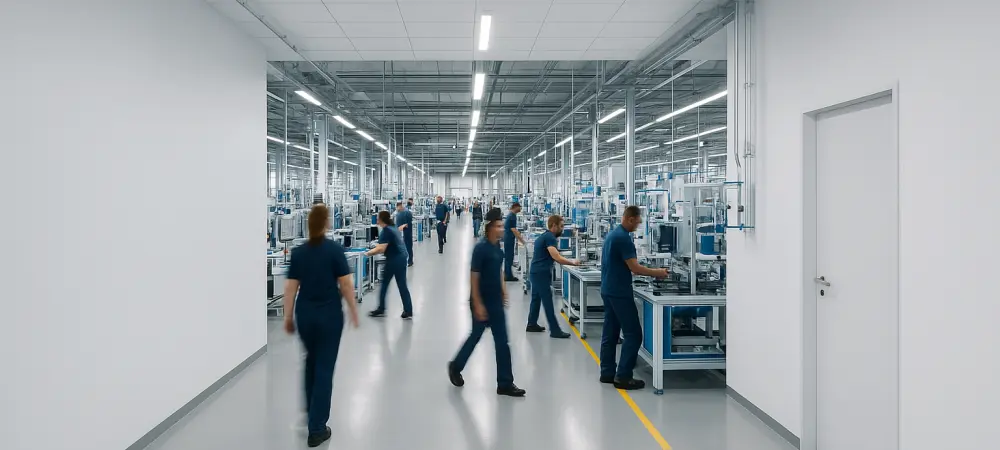
The American industrial sector is currently grappling with a baffling economic anomaly where factories are overflowing with orders while the machinery of recruitment remains stuck in low gear despite an unprecedented surge in job applications. This paradox of prosperity defines the labor landscape of 2026, as surging job openings fail to translate into filled positions at the necessary rate. The modern labor crisis has evolved into a critical concern for industrial growth, reflecting a systemic failure to process talent rather than a lack of candidate interest. This analysis explores the data-driven shifts, the rising influence of younger workers, and the structural hurdles that must be dismantled to ensure continued economic stability.
The Data Behind the Disconnect: Growth Without Fulfillment
Statistical Breakdown: The 2026 Labor Landscape
Workforce data highlights a startling trend where manufacturing openings have climbed to 29% above the 2025 baseline, representing the most aggressive expansion of any domestic sector. However, this growth exists primarily on paper, as actual hiring rates have dipped by 6% during the same period. This discrepancy is particularly frustrating because candidate interest is at a high point, with total applications increasing by 4%. Even with the Bureau of Labor Statistics reporting a net gain of 5,000 jobs, the recovery remains insufficient to quench the thirst of an industry attempting to scale operations.
Real-World Implications: The Talent Bottleneck
Industrial firms now face a state of “growth without fulfillment,” where operational needs outpace recruitment speed, delaying supply chains and production schedules. Recruitment infrastructure is failing to convert high candidate interest into signed contracts, leaving critical roles empty during a period of resurgence. When a high volume of qualified individuals applies but never reaches the factory floor, the resulting vacuum stalls output and forces existing staff to shoulder unsustainable workloads. Many companies are finding that their current vetting systems act as filters that remove potential workers rather than bridges that welcome them.
Expert Perspectives: Structural Inefficiencies
Talent acquisition leaders such as Trent Cotton observe that the primary “hiring engines” of the manufacturing world are currently stalling due to internal friction. Modern labor markets move at a digital pace, yet many HR vetting processes remain anchored in traditional protocols that create unnecessary delays.
This “bottleneck” effect occurs when high application volumes overwhelm legacy systems, leading to a breakdown in communication between the recruiter and the prospective employee. The disconnect between intent and placement is a procedural flaw that requires an overhaul of how talent is evaluated and moved through the pipeline.
The Future of Industrial Talent: Navigating the Generational Shift
The demographic profile of the manufacturing workforce is undergoing a transformation, with the “Under-45” group now making up 85% of the total applicant pool. This influx of tech-savvy talent presents a unique opportunity, yet it also creates tension with an existing workforce where half of the employees are over age 45. Moving toward a more agile system is essential to capture the interest of these younger workers who expect rapid feedback. Manufacturers must evolve their strategies from 2026 to 2028 to ensure that human capital does not become the primary constraint on future production capacity.
Strategic Conclusion: Closing the Manufacturing Hiring Gap
The recruitment crisis was a procedural failure rather than a genuine lack of public interest in industrial careers. Successful firms moved toward modernizing acquisition strategies to align with the digital expectations of a younger labor pool. It became clear that streamlining the path from applicant to employee was the only viable way to sustain the resurgence. Leaders prioritized the elimination of administrative friction, ensuring that the surge in candidate activity finally matched the operational needs of the factory floor.