

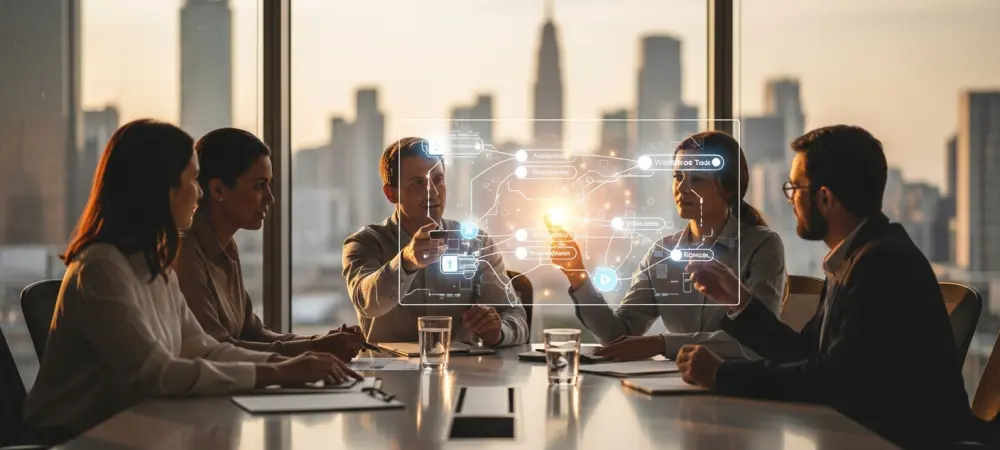
The spectacle of tech titans predicting the obsolescence of human labor while simultaneously selling the software intended to achieve it has created a bizarre psychological tension in the modern enterprise. This phenomenon, often referred to as “doom trolling,” involves a paradoxical marketing strategy where leaders of artificial intelligence firms forecast catastrophic job displacement to emphasize the potency of their technology. This tension places organizations at a critical intersection where technological acceleration must be met with institutional resilience to ensure long-term stability. The current economic landscape demands a shift from traditional job-based planning toward a more sophisticated, task-level redesign that elevates the strategic role of Human Resources.
As technological capabilities expand, the transition from rigid workforce structures to fluid, skills-powered models has become a strategic necessity rather than a theoretical exercise. Organizations are moving away from evaluating entire job titles as candidates for automation, focusing instead on discrete responsibilities that can be optimized or supported by machine learning. This shift allows the Chief Human Resources Officer to lead the charge in defining the new synergy between human intuition and algorithmic efficiency. By focusing on organizational design rather than reactive downsizing, leaders can turn the threat of disruption into a catalyst for significant workforce evolution.
Mapping the Current Landscape of AI Integration and Displacement Risks
Examining Data on Global Talent Trends and Labor Shifts
Worker anxiety has reached a historical peak as projections suggest that fears regarding job loss will rise from 28% to 40% by the end of the current economic cycle. This rising tide of insecurity is often exacerbated by a new corporate tactic known as “AI washing,” where companies attribute unrelated headcount reductions to automation to project an image of innovative efficiency to the market. While such claims may temporarily satisfy a demand for modernization, they frequently mask underlying financial challenges and can erode the internal trust required for a successful digital transformation. In contrast to the superficial allure of labor cost-cutting, data from Mercer’s Global Talent Trends indicates that a staggering 97% of investors now prioritize “skills-powered” talent models over simple headcount reductions. The financial market has matured to the point where it recognizes that institutional knowledge is a vital asset that must be retained and redeployed through sophisticated upskilling. Investors are increasingly wary of companies that discard talent in the short term, only to face a critical shortage of the human expertise required to oversee and refine the outputs of automated systems.
Moving from Theoretical Risks to Operational Realities
Forward-thinking organizations have begun to dismantle the “doom scenario” by applying the “Four Pillars of Work Interaction,” which categorize labor into substitution, augmentation, transformation, and creation. Companies like Moderna, Atlassian, and ServiceNow are already proving that AI does not simply erase roles but redistributes the weight of specific tasks. For instance, by substituting repetitive data entry with automated workflows, these firms allow their employees to engage in transformation—fundamentally changing how they solve complex problems and create value for the customer. To move beyond the rhetoric of displacement, these organizations are implementing proactive workforce redesign strategies that serve as guardrails for long-term institutional health. This involves identifying where human oversight remains essential for ethical decision-making and where machines can provide the heavy lifting for data-intensive processes. By being intentional about these boundaries, companies protect their core intellectual capital while simultaneously harvesting the productivity gains offered by modern automation tools.
Leading Perspectives on the Human-Machine Collaboration
The Strategic Mandate for Human Resources Leadership
Expert insights from Ravin Jesuthasan emphasize that the “burden of action” has shifted decisively from technology providers to the Chief Human Resources Officer. Since AI developers provide the tools but not the roadmap for their ethical application, HR must step in as the strategic governor of human-machine synergy. This role requires moving beyond the administrative functions of hiring and firing to become the central architect of a workforce that is optimized for a hybrid labor environment.
Industry leaders believe the “doom scenario” is a consequence of poor organizational design rather than an inevitability of the technology itself. If the transition is managed with intentionality, the outcome is a more empowered workforce rather than a displaced one. HR leaders are now tasked with ensuring that the deployment of automation serves the broader community and the organizational culture, rather than just the immediate bottom line. This strategic shift positions the human element as the primary driver of technological value.
Shifting Investor Expectations Toward Sustainable Talent Models
The financial market is moving away from rewarding pure headcount reduction as a measure of innovation. There is a growing consensus that the most resilient companies are those that view their workforce as a flexible pool of skills that can be redeployed as needs change. This sustainable approach recognizes that the cost of losing institutional memory often outweighs the savings gained from automated displacement. Consequently, investors are looking for clear evidence that leadership is “bringing the workforce along” through aggressive and transparent upskilling initiatives.
Professional perspectives highlight that the most successful organizations prioritize human expertise to direct and refine the outputs of AI. Without this human-centric oversight, the quality of automated work can degrade, leading to long-term operational risks. By focusing on the redeployment of talent into high-value roles, companies maintain their competitive edge while fostering a culture of adaptability. This approach ensures that the human-machine collaboration is built on a foundation of mutual growth rather than replacement.
Future Projections: Redefining Work Through a Skills-First Lens
Transitioning from Job-Level to Task-Level Workforce Planning
The evolution of workforce planning is moving toward a more granular analysis where the primary unit of evaluation is the task rather than the job title. This transition allows organizations to identify specific areas where AI can take over repetitive duties while preserving the roles that require high-value human interpretation. By decoupling skills from rigid roles, a more fluid labor environment is created, allowing talent to move seamlessly across different functions based on real-time organizational needs.
Granular talent mapping is becoming the standard for identifying the essential human components within automated workflows. This method prevents the unnecessary elimination of roles that still contain vital human-centric tasks such as mentorship, empathy-driven sales, and strategic conflict resolution. As organizations become more agile, the ability to rapidly identify and deploy specific skills will become the defining characteristic of a successful enterprise, far surpassing the efficiency of traditional job structures.
Managing the Emotional and Cultural Impacts of AI Evolution
Current data indicates a significant disconnect between leadership and the workforce, with 62% of employees feeling that management underestimates the psychological toll of technological transitions. Transparent communication and the establishment of robust emotional support systems have become core components of a viable workforce strategy. Failing to address worker anxiety can lead to a collapse in productivity and the erosion of the corporate culture that drives innovation. Long-term organizational stability depends on maintaining a sense of psychological safety during periods of rapid change. Leaders must be honest about the degree of influence employees have over their evolving roles and the specific support systems available to help them transition into new responsibilities. By prioritizing cultural health alongside technical implementation, companies ensure that their workforce remains engaged and committed to the organization’s long-term vision, even as the nature of their work undergoes fundamental changes.
Synthesis and Strategic Path Forward
The transition from job displacement fears to a sophisticated model of task-level augmentation marked a turning point in corporate governance. Leaders who moved beyond the sensationalism of “doom trolling” successfully positioned their organizations for a future where human expertise and artificial intelligence coexisted as complementary forces. By empowering the CHRO to lead this redesign, companies ensured that the ethical and operational deployment of technology remained grounded in human-centric values and institutional stability.
The realization that AI served as a catalyst for a more agile and resilient workforce eventually replaced the outdated narrative of mass obsolescence. Organizations that prioritized “skills-powered” models and transparent communication managed to preserve their vital institutional knowledge while achieving unprecedented levels of efficiency. Ultimately, the successful navigation of this era was defined by a commitment to viewing human talent not as a labor cost to be mitigated, but as the most critical asset in an increasingly automated world.