

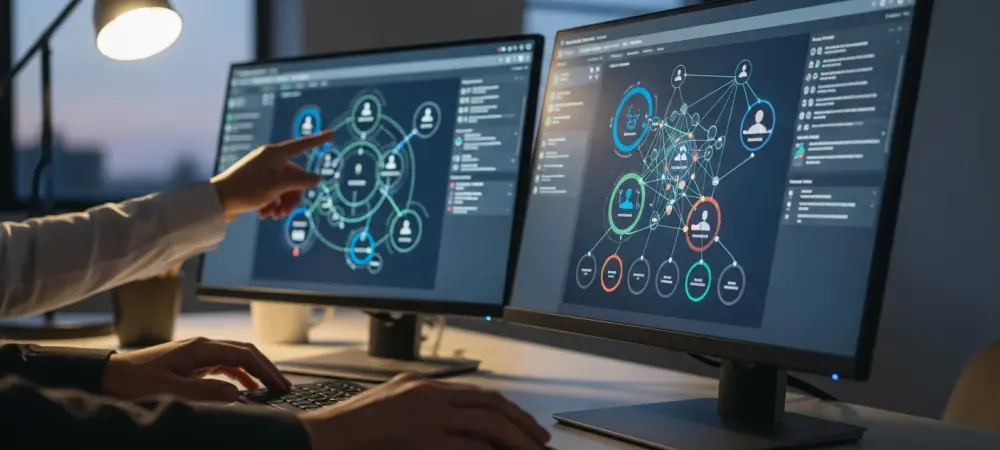
The traditional view of human resources as a paper-heavy administrative function has been completely dismantled by the realization that organizational survival now hinges on how effectively a company can merge biological intelligence with synthetic scale. What was once a series of isolated experiments in the IT department has rapidly migrated to the center of the boardroom. This shift represents a fundamental change in how the modern workforce is constructed, moving away from rigid hierarchies toward a fluid, tech-enabled ecosystem.
Integrating artificial intelligence into the HR framework is no longer a luxury for the early adopters but a mandatory requirement for any entity operating in a volatile market. As labor shortages and rapid skill obsolescence become the norm, the ability to rapidly identify, deploy, and support talent through intelligent systems defines the competitive edge. This evolution necessitates a deep dive into how data-driven trends and expert human oversight are coming together to forge a more resilient professional landscape.
The road ahead is defined by a move toward proactive rather than reactive management. By exploring the nuances of strategic augmentation, organizations are discovering that the most successful outcomes occur when technology is used to enhance, rather than simply replace, the human element. This analysis examines the current trajectory of this integration, highlighting the critical balance between automated efficiency and the empathetic engagement that only a person can provide.
The Evolution of AI Adoption in the Modern Workplace
Market Growth: The Shift Toward Strategic Augmentation
Current investment patterns indicate a massive surge in AI spending within global HR departments, with the focus shifting from simple cost-cutting to value-driven expansion. Most organizations have moved past the initial phase of using algorithms purely for high-volume resume filtering. Instead, the focus from 2026 to 2028 is projected to be on augmentation tools that amplify the productivity of existing staff, ensuring that lean teams can manage increasingly complex global operations.
This transition is particularly evident in how companies are addressing the persistent skills gap. Rather than competing in an ever-tightening external labor market, leaders are using intelligent platforms to map internal capabilities and identify hidden potential. By focusing on augmentation, businesses are finding that they can bridge talent voids more effectively while simultaneously increasing employee satisfaction by removing the drudgery of repetitive data entry and scheduling.
Real-World Applications: From Predictive Analytics to Adaptive Design
Forward-thinking enterprises are now utilizing AI-enabled workforce analytics to anticipate disruptions before they impact the bottom line. By analyzing vast datasets regarding market trends and internal performance, these systems can predict when specific technical skills will become obsolete. This “planning window” allows HR to initiate reskilling programs months or even years in advance, facilitating the seamless movement of talent across different departments without the need for mass layoffs or frantic hiring cycles.
Beyond simple prediction, organizations are implementing intelligent systems to handle the heavy lifting of administrative design. This involves automating routine tasks like benefits enrollment, leave management, and basic compliance reporting. When these burdens are lifted, HR professionals are granted the bandwidth to engage in high-value activities such as leadership coaching, conflict resolution, and cultural development. The result is a more empathetic workplace where technology handles the logic, and people handle the emotion.
Expert Perspectives on the AI-Driven Workforce
The Case for HR-Led Integration: A Human-Centric Focus
Industry thought leaders, including prominent voices like Alex Cass from Aon, argue that the success of any technological implementation rests on who holds the blueprint. They contend that HR must be the primary architect of AI adoption to ensure that the human experience remains the focal point. When IT departments lead alone, the focus often drifts toward technical specifications; however, when HR takes the lead, the emphasis stays on how the tool improves the life of the employee and the health of the culture.
Addressing the Performance Paradox: Moving Beyond Headcount Reduction
There is a growing warning among experts regarding the “performance paradox,” where treating AI solely as a tool for headcount reduction leads to long-term operational decay. While cutting staff may provide a short-term boost to the balance sheet, it often results in cultural resistance and a loss of institutional knowledge that is difficult to recover. Experts suggest that the most profitable organizations are those that view AI as a capacity builder, allowing fewer people to do more impactful work rather than simply doing the same work with fewer people.
The Literacy Mandate: Democratizing Knowledge Across the Organization
For AI integration to be successful, literacy cannot be confined to a specialized few. There is a critical mandate to democratize AI understanding across every level of the company, from entry-level interns to the executive suite. When employees understand how an algorithm works and how it benefits their specific role, engagement levels remain high. This transparency builds the trust necessary for a collaborative environment where humans and machines work in tandem rather than in competition.
The Future Landscape: Resilience, Ethics, and Evolution
The Rise of the Adaptive Workforce Model: Continuous Fluidity
The static annual workforce plan is becoming a relic of the past as AI enables a more fluid, adaptive model. This new approach treats workforce management as a continuous process where roles are constantly reshaped based on real-time data. This agility allows organizations to pivot during economic shifts with a speed that was previously impossible. The workforce of the future is not a fixed structure but a living organism that evolves alongside the technology it utilizes.
Navigating Governance: Building Cultural Trust and Ethical Frameworks
As AI takes a larger role in decision-making, the importance of ethical governance cannot be overstated. Establishing frameworks to mitigate algorithmic bias is essential for maintaining a fair and inclusive workplace. Transparency in how data is collected and used is the bedrock of cultural trust. Without clear human oversight and visible accountability, the risk of alienating the workforce or facing regulatory scrutiny becomes a significant threat to long-term stability.
Long-Term Risks and Rewards: Balancing Innovation With Oversight
The potential rewards of a high-performing, AI-augmented culture are immense, offering unparalleled efficiency and innovation. However, these benefits are countered by the risks of talent attrition if the human element is neglected. Organizations that fail to maintain a “people lens” may find themselves with advanced tools but no one left who wants to use them. Balancing rapid technological advancement with a commitment to employee well-being remains the ultimate challenge for leadership.
Summary and Strategic Outlook
The transformation of the HR function into a strategic tech-hub highlighted a broader shift in corporate philosophy, where resilience was prioritized over mere efficiency. Organizations moved toward a proactive stance, using intelligent systems to map talent trajectories and secure a stable operational future. By positioning HR as the primary catalyst for change, businesses ensured that the human-centric values of the company were protected during periods of intense digital disruption.
Strategic success required leaders to look beyond the immediate cost-savings of automation to the long-term gains of augmentation. Those who treated AI as a partner in human potential found that their teams were more engaged and their operations more flexible. The conclusion of this shift saw the rise of a new corporate standard where the integration of advanced analytics and empathetic management was no longer a binary choice but a unified strategy for sustainable growth. Moving forward, the focus must shift toward creating permanent internal structures for ethical auditing and continuous digital upskilling. Companies should establish dedicated “Human-AI Synergy” units that specifically monitor the impact of automated decisions on employee morale and diversity. By formalizing the relationship between tech governance and talent strategy, organizations will be better prepared to navigate the next wave of cognitive computing without losing the cultural essence that drives true innovation.