

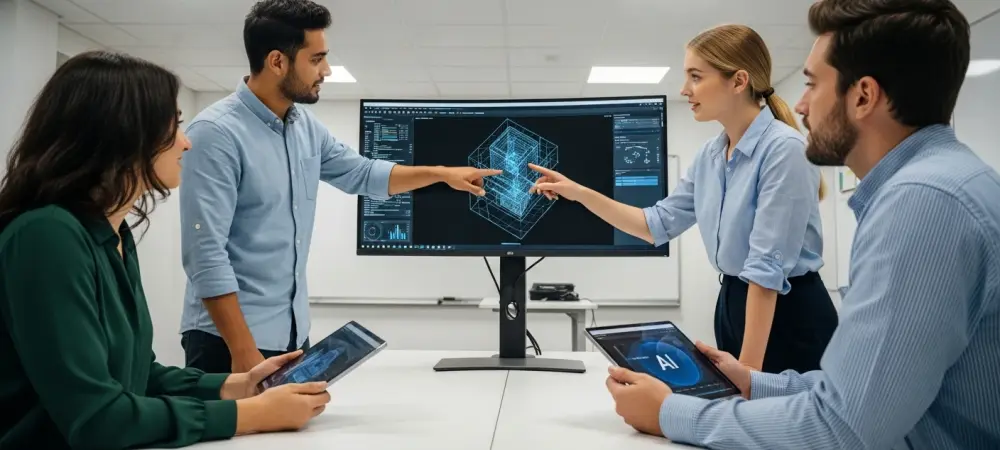
In a striking departure from the pervasive narrative of AI-driven job obsolescence, IBM has announced a plan to triple its entry-level hiring in the United States, signaling a profound shift in how corporate leaders view the future of work. This move is not an act of defiance against automation but a strategic embrace of it, recognizing that the rise of artificial intelligence does not spell the end of human jobs, but rather their fundamental redefinition. This analysis will explore the strategic pivot toward AI-human collaboration, examining the data, expert insights, and long-term implications of building a workforce designed to complement intelligent systems rather than compete with them.
The Data and Dynamics of a Shifting Job Market
The conventional wisdom that AI will hollow out the job market is being actively challenged by the hiring strategies of major technology firms. Instead of mass reductions, these companies are reallocating human capital toward tasks that require uniquely human skills like critical thinking, empathy, and complex problem-solving, which remain beyond the scope of current AI capabilities. This recalibration is creating a new category of entry-level roles that are inherently collaborative with technology.
Statistics on AI Driven Hiring Growth
Concrete data from industry leaders illustrates this emerging trend. IBM’s plan to triple its U.S. entry-level hiring is not confined to one niche but extends “across the board,” affecting departments from software development to human resources. This broad-based investment underscores a company-wide commitment to fostering a new generation of talent adept at working alongside AI. Similarly, Dropbox Inc. is expanding its internship and new graduate programs by 25%, a move explicitly designed to harness the AI proficiency of younger workers. These figures collectively point to a clear strategic direction: leading companies are not cutting their talent pipelines but are actively investing in them, recognizing that early-career professionals are essential for navigating the AI-integrated workplace of tomorrow.
Redefining Roles Real World Examples
The nature of these new roles provides the most compelling evidence of this transformation. At IBM, junior software developers are no longer primarily tasked with writing routine code, a function increasingly handled by AI. Instead, their focus has shifted to higher-value activities such as direct customer interaction and complex system design, where human insight is indispensable.
This pattern is mirrored in other departments. Entry-level human resources staff at IBM have transitioned from answering repetitive employee queries to overseeing sophisticated HR chatbots. Their responsibilities now include monitoring and correcting AI outputs and managing sensitive, human-centric situations that require nuance and emotional intelligence. These examples show a clear evolution from task execution to strategic oversight.
Expert Perspectives The C Suite View on AI and Talent
Leaders in human resources are vocal about this strategic pivot, framing it as a necessary evolution for long-term corporate health. Nickle LaMoreaux, IBM’s chief human resources officer, emphasizes that new roles are specifically designed for humans to “add unique value” where AI systems cannot. This approach moves beyond simply automating tasks to thoughtfully integrating technology to elevate human contribution. LaMoreaux also issues a crucial warning about the significant risks associated with pausing early-career recruitment. While such a move might yield short-term cost savings, it can create a debilitating mid-level management deficit in the future. This forces companies into the more costly and unpredictable process of hiring externally to fill leadership gaps. Consequently, investing in junior talent is not just a growth strategy but a risk mitigation imperative.
Melanie Rosenwasser, chief people officer at Dropbox, offers a powerful analogy for the value of this new generation of workers. She compares their advanced AI skills to those of “professional cyclists,” while many seasoned professionals are still using “training wheels.” This highlights the immense competitive advantage that digitally native employees bring, making them a vital asset for any organization looking to innovate and thrive.
Future Outlook The AI Human Workforce
The integration of AI is poised to create a more dynamic and potentially two-tiered workforce, where proficiency in collaborating with intelligent systems becomes a key differentiator. This shift opens unprecedented opportunities for a tech-savvy generation to accelerate their career trajectories, taking on strategic responsibilities far earlier than their predecessors.
The benefits of this trend are substantial. It promises the creation of more engaging, higher-value jobs focused on creativity and critical oversight, moving junior employees away from rote tasks. Moreover, by investing in talent at the ground level, companies can cultivate a stronger internal pipeline of future leaders who are deeply familiar with an AI-augmented operational model.
However, capitalizing on this opportunity presents a primary challenge for organizations: the need to fundamentally redesign their talent infrastructure. This involves rewriting job descriptions, overhauling training programs to focus on AI collaboration, and creating new career paths that reward human-AI partnership. Success will not be measured by how many people are replaced by AI, but by how effectively a company can build a workforce that leverages intelligent systems to drive innovation and create new value.
Conclusion The Strategic Imperative of AI Collaboration
The analysis demonstrated that the rise of artificial intelligence did not lead to the elimination of entry-level roles as widely predicted. Instead, it catalyzed a profound transformation, reshaping these positions to center on collaboration, strategic oversight, and uniquely human skills. The strategic decisions made by industry leaders like IBM and Dropbox illuminated a clear path forward. Their increased investment in early-career hiring affirmed the value of building a resilient, AI-augmented workforce. Ultimately, the imperative for modern companies became clear: to invest in the next generation of talent, not as a replacement for technology, but as its essential partner in shaping the future.