

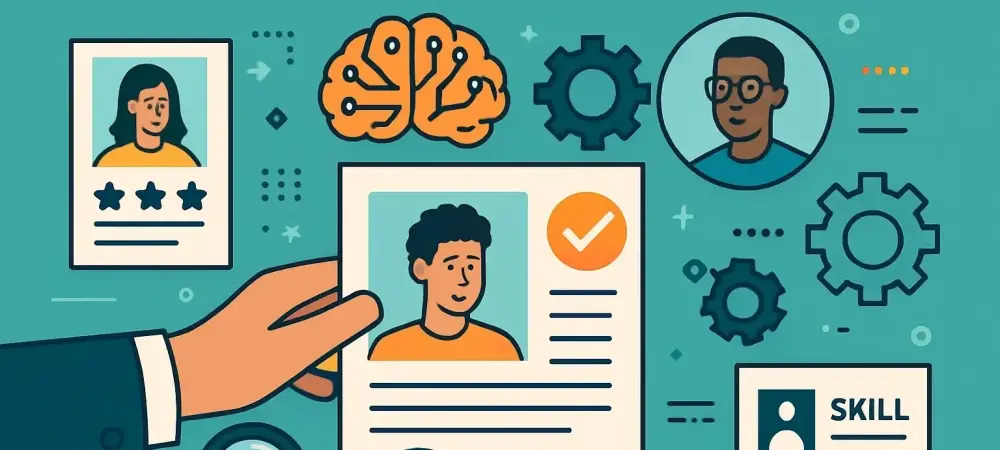
The Dawn of a New Hiring Era
In an era where technology shapes every facet of professional life, a staggering reality emerges: recruiters are drowning in a sea of AI-generated résumés, with some companies reporting a 300% surge in application volume over recent years, according to data from Criteria Corp. This deluge of polished, often indistinguishable submissions has rendered traditional résumés less reliable as a gauge of true talent. As a result, the job market is witnessing a seismic shift toward skills-based hiring, where demonstrable abilities take precedence over static documents. This analysis dives into the dual role of AI in reshaping recruitment, examines the growing emphasis on skills over credentials, incorporates expert insights, and explores future implications alongside actionable strategies for navigating this evolving landscape.
The Surge of AI in Recruitment Dynamics
Adoption Patterns and Key Data
The integration of AI tools in job application processes has skyrocketed, with job seekers increasingly leveraging platforms like generative AI to craft tailored résumés and cover letters. Reports from Criteria Corp indicate that application volumes have swelled significantly, overwhelming hiring teams with content that often lacks originality. This trend reflects broader accessibility to AI, enabling candidates to align their materials closely with job descriptions, but at the cost of authenticity.
On the employer side, AI adoption is equally notable, with a 33% uptick in the use of AI-driven applicant tracking systems over a short span, as per a HireVue survey. These systems aim to filter the influx of applications, yet skepticism persists. A striking 72% of hiring managers distrust self-reported skills on résumés, while 74% struggle to identify skilled talent amidst the noise, highlighting a critical gap in trust and efficiency. This growing mistrust underscores a broader challenge: while AI empowers both candidates and recruiters with efficiency, it also muddies the waters of genuine qualification assessment. The sheer volume of applications, coupled with doubts about their veracity, pushes companies to seek alternative methods to validate candidate potential beyond digital submissions.
Practical Implementations and Case Studies
Leading corporations such as Google, Cisco, and McKinsey have responded to AI-generated application fraud by emphasizing in-person interviews to better gauge authenticity. These firms recognize that face-to-face interactions often reveal nuances that polished documents cannot, offering a countermeasure to the uniformity of AI-crafted materials.
Meanwhile, innovative platforms are stepping in to redefine evaluation standards. HireVue’s AI-driven video interviews provide a dynamic way to assess communication and problem-solving skills in real time, moving beyond static résumés. Similarly, GitHub serves as a vital tool for tech professionals to showcase tangible portfolios, allowing employers to evaluate coding prowess directly through project contributions.
Beyond tech, creative professionals are turning to LinkedIn as a “living résumé,” where ongoing updates, posts, and engagement reflect skills and career progression more vividly than a traditional document. This shift toward digital presence and real-time demonstrations illustrates how industries are adapting to validate expertise in a landscape saturated with AI-enhanced applications.
Expert Voices on AI’s Role in Hiring
Industry leaders offer critical perspectives on navigating AI’s influence in recruitment. Justin Vianello of SkillStorm stresses the necessity of continuous, role-specific training to ensure that AI tools are used ethically, advocating for programs that equip teams to harness technology without compromising integrity. This viewpoint emphasizes preparation as a cornerstone of responsible adoption.
Surveys from Criteria Corp and HireVue reveal a persistent trust gap, with many talent acquisition professionals expressing “skills fatigue” due to ineffective AI tools and implementation hurdles. Concerns center on the risk of over-automation, where the human element in assessing cultural fit and soft skills might be sidelined, leading to mismatched hires.
Thought leaders also underscore the importance of balance, advocating for a “human-in-the-loop” approach. This strategy ensures that AI augments rather than replaces human judgment, maintaining authenticity in candidate evaluation. Such insights highlight a consensus on the need for oversight to preserve the nuanced understanding that technology alone cannot replicate.
Future Horizons for AI in Skills-Focused Recruitment
Looking ahead, AI hiring tools are poised for significant growth, with projections estimating a 35% to 45% adoption rate among companies within the next year. This trajectory suggests a deepening reliance on technology to streamline processes, particularly in high-volume recruitment scenarios where efficiency is paramount.
The benefits of skills-based assessments powered by AI are already evident, with HireVue reporting a 68% improvement in hire quality and a 62% reduction in bias for firms employing such methods. These metrics point to a future where objective, validated evaluations could redefine fairness and effectiveness in talent acquisition, addressing long-standing inequities.
Yet challenges loom large, including a persistent talent gap in AI-related fields, where McKinsey projects demand will outpace supply by two to four times until at least 2027. Uneven adoption across sectors like finance and health, compared to tech, further complicates the landscape. Additionally, the risk of over-reliance on AI threatens to erode human judgment, while the need for agile training programs becomes ever more critical to keep pace with technological advancements.
Reflecting on the Path Forward
Looking back, the journey of AI in hiring revealed a profound transformation, as traditional résumés gave way to skills-based evaluations amidst a flood of AI-generated applications. Trust issues and talent shortages dominated discussions, yet the pivot toward validated assessments offered a promising counterbalance. For job seekers, the next steps involved building robust portfolios and seeking skill validation through certifications and real-world projects. Employers, meanwhile, found value in integrating AI tools with human insight, ensuring a holistic approach to talent selection. This evolving dynamic suggested that investing in continuous learning and adaptable strategies would be essential for staying competitive in a tech-driven hiring world.